Durga Puja 2026 Kolkata: Dates and Pandal Hopping Guide
Official Durga Puja 2026 dates for Kolkata, a zone-by-zone pandal hopping plan with nearest metro stations, and practical tips for food, crowds and safety.
Durga Puja 2026 in Kolkata runs from Maha Shashthi on Saturday, 17 October to Vijaya Dashami on Wednesday, 21 October, according to the West Bengal government’s 2026 holiday list, with Mahalaya on Saturday, 10 October. This guide gives you the day-by-day dates, a pandal-hopping plan for north, central and south Kolkata, the metro stations nearest the big pujas, and practical tips on crowds, food, safety and what to carry.
Key Takeaways
- West Bengal’s official 2026 list: Mahalaya 10 Oct, Chaturthi 15 Oct, Panchami 16 Oct, Shashthi 17 Oct, Saptami 18 Oct, Ashtami 19 Oct, Navami 20 Oct, Dashami 21 Oct. Some panjikas place parts of Shashthi on 16 October.
- Split the city: north Kolkata for heritage and traditional pujas, south Kolkata for large theme pandals, and Lake Town and Salt Lake for the biggest crowds.
- Metro is the fastest way to move between zones. Metro Railway Kolkata announces special Puja timings each year, so check the official site closer to the dates.
- Go early on Panchami or Shashthi, or late at night, to beat the heaviest crowds of Saptami to Navami.
- Carry water, comfortable footwear, a power bank and small change, and fix a meeting point with your group.
Durga Puja 2026 dates in Kolkata
Kolkata follows the Bengali panjika, which sometimes places a tithi on a different day from all-India calendars. The table below uses the Government of West Bengal’s official 2026 holiday list, which is what offices, schools and banks in the state will follow.
| Day | Date (2026) | What happens |
|---|---|---|
| Mahalaya | Saturday, 10 October | Tarpan at the ghats at dawn; the traditional radio broadcast of Mahishasuramardini; start of Devi Paksha |
| Chaturthi | Thursday, 15 October | Many pandals open for visitors; crowds still manageable |
| Panchami | Friday, 16 October | Most big pandals open; good day for early hopping |
| Maha Shashthi | Saturday, 17 October | Bodhon, the awakening of the goddess; unveiling of the face in many pujas |
| Maha Saptami | Sunday, 18 October | Nabapatrika snan at the ghats in the morning; heavy evening crowds |
| Maha Ashtami | Monday, 19 October | Anjali in the morning, Sandhi Puja, Kumari Puja at some venues; the busiest day |
| Maha Navami | Tuesday, 20 October | Last full night of pandal hopping |
| Vijaya Dashami | Wednesday, 21 October | Sindoor khela, bidding farewell to the goddess, immersions begin |
A note on the calendars: Drik Panchang’s Kolkata calendar lists Bilva Nimantran on 16 October and Kalparambha and Akal Bodhon on 17 October, while some Bengali panjikas list Maha Shashthi on 16 October. The main days of Saptami to Dashami (18 to 21 October) match across the sources we checked. For exact ritual timings such as Sandhi Puja on Ashtami, follow your local puja committee or family panjika, because timings differ between the traditional and Bisuddha Siddhanta calendars.
The state list also shows extra government holidays around the Puja, running to Lakshmi Puja on Sunday, 25 October, with Kali Puja on Sunday, 8 November.
Why Kolkata’s Durga Puja is different
In 2021, UNESCO inscribed Durga Puja in Kolkata on its Representative List of the Intangible Cultural Heritage of Humanity. UNESCO’s description highlights the artisans who sculpt clay images from river clay, the painting of the goddess’s eyes, the dhak drumming, and the way the festival brings people of every background onto the streets to look at public art.
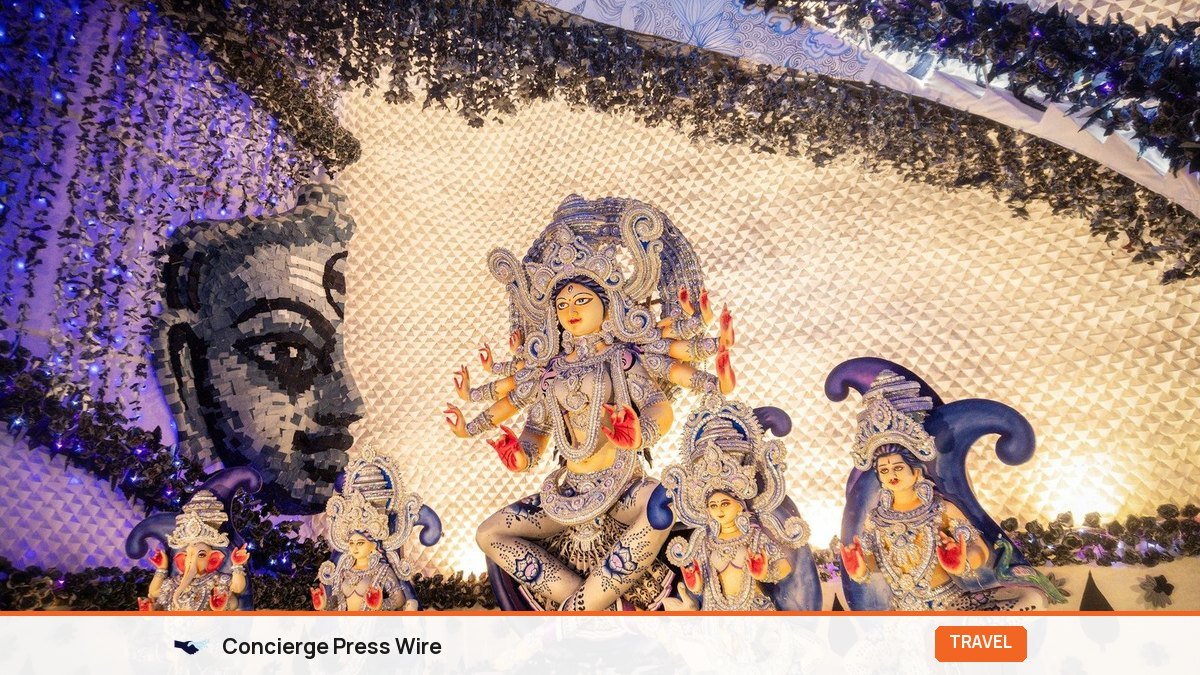
That last point is what surprises first-time visitors. Kolkata’s pujas are not only places of worship. Many community pujas build full-scale temporary structures with a theme, from village crafts to social messages to replicas of famous buildings, and the city turns into an open-air gallery for five nights. Alongside these are the older “bonedi bari” pujas held in family mansions of north Kolkata, with rituals handed down over generations.
Plan your pandal hopping by zone
Trying to cover the whole city in one night is the most common mistake. Traffic, closed roads and queues mean you will spend more time travelling than seeing. Pick one zone per evening.
North Kolkata: heritage and tradition
North Kolkata is where you see the older side of the festival: family pujas in rajbaris, traditional idols with the whole family of the goddess on a single frame, and the lanes of Kumartuli where idol makers work.
- Bagbazar Sarbojanin, near the river: one of the oldest community pujas, known for its traditional idol and a popular sindoor khela on Dashami. Nearest metro: Shyambazar.
- Kumartuli Park and Kumartuli Sarbojanin: pandals in the potters’ quarter. Visit a day or two before Shashthi to see idols being finished in the workshops. Nearest metro: Sovabazar Sutanuti.
- Sovabazar Rajbari: one of the best-known family pujas, in a historic mansion. Nearest metro: Sovabazar Sutanuti.
- Ahiritola and Beniatola: neighbouring pujas in the same area, easy to combine on foot.
- Hatibagan pujas such as Hatibagan Nabin Pally and Nalin Sarkar Street, also near Sovabazar.
A comfortable evening route: start at Bagbazar around 5 pm, walk through Kumartuli and Ahiritola, visit Sovabazar Rajbari, then take the metro south to Girish Park or MG Road.
Central Kolkata: big crowds, big installations
- Santosh Mitra Square (Lebutala Park): known for large, headline-grabbing installations. Nearest metro: Sealdah or Central, depending on the entry route.
- Md Ali Park and College Square: College Square’s lights reflected in the water are best after dark. Nearest metro: Mahatma Gandhi Road or Central.
- Chorbagan, Subodh Mallick Square and Taltala pujas are also close to the Girish Park, MG Road, Central and Chandni Chowk stations.
South Kolkata: theme pandals
South Kolkata has many of the pujas that compete for design awards. Expect long, organised queues and heavy police barricading on the peak nights.
- Bhawanipur area: Bhawanipur Durgotsab, Padmapukur, 23 Pally and Bakul Bagan. Nearest metro: Netaji Bhavan or Jatin Das Park.
- Kalighat and Rabindra Sarobar area: Suruchi Sangha, Badamtala Ashar Sangha, Chetla Agrani, Mudiali and Ekdalia Evergreen are reachable from Kalighat or Rabindra Sarobar stations, with a walk or short auto ride.
- Further south: Naktala Udayan Sangha and Haridevpur Ajay Sanghati are near Gitanjali and Tollygunge stations.
Lake Town, Dum Dum and Salt Lake
The pujas around Lake Town, including Sreebhumi Sporting Club, draw some of the largest crowds of the festival and cause local traffic jams. Give this area its own evening or a late-night slot. Belgachia and Dum Dum are the nearest Blue Line stations, but expect a walk or auto ride. Nearby pujas include Tala Prattoy, Dum Dum Park Bharat Chakra and Tarun Dal. Salt Lake’s block pujas are easier to reach by road than metro.
Getting around: metro, buses and cabs
The metro is usually the fastest option during the Puja because roads near big pandals close to vehicles in the evening. The Blue Line (Dakshineswar to Kavi Subhash) runs north to south through most of the heritage and theme-pandal areas. The Green Line (the East-West Metro) connects Howrah and Sealdah side with Salt Lake Sector V.
Metro Railway Kolkata has run extended Puja services in past years. For example, in 2025 news reports said the Blue and Green lines ran through the night on Saptami, Ashtami and Navami. The 2026 timetable had not been announced when we checked, so look for the official notice on the Metro Railway Kolkata website in the days before Shashthi.
Transport tips
- Buy a Metro smart card or top up your existing one before the festival; ticket queues get long.
- Expect one-way entry and exit at busy stations such as Kalighat, Rabindra Sarobar and Shyambazar.
- App cabs are hard to find and surge heavily near midnight. Plan to leave the busiest areas on foot and book a cab from a quieter main road.
- Yellow taxis and autos work well for short hops between neighbouring pandals.
- If you are driving, check traffic advisories from Kolkata Police, which usually announce road closures and parking restrictions for the Puja.
A sample three-night plan
| Night | Zone | Suggested route |
|---|---|---|
| Panchami (16 Oct) | South Kolkata | Kalighat and Rabindra Sarobar pujas from 6 pm, then Bhawanipur |
| Shashthi (17 Oct) | North Kolkata | Bagbazar, Kumartuli, Ahiritola, Sovabazar Rajbari, then College Square after dark |
| Saptami or Ashtami (18 or 19 Oct) | Lake Town and central | Sreebhumi and Dum Dum area late evening, or Santosh Mitra Square and Md Ali Park |
On Ashtami morning, many people attend pushpanjali at a neighbourhood puja or at a family home. Dashami afternoon is for sindoor khela, when married women smear vermilion on the goddess and on each other before the idol leaves for immersion. Bagbazar’s sindoor khela is one of the best known, and very crowded.
Visiting Kumartuli and photography etiquette
If you have a spare morning in the week before the Puja, walk through Kumartuli, the potters’ quarter near Sovabazar. This is where many of the city’s idols are shaped from straw, bamboo and river clay, then painted and dressed. In the last days before Shashthi, the lanes are full of finished idols waiting to be carried out on trucks to the pandals, which is a sight in itself. Go early, before the heat and the lorries, and wear shoes you do not mind getting muddy.
Kumartuli is a working neighbourhood, not a museum. Stay out of the way of artisans, ask before photographing anyone at work, and do not touch unfinished idols. The same courtesy applies at pandals: many committees do not allow tripods or drones, flash photography can annoy people praying, and selfies in the middle of a moving queue hold everyone up. Step aside, take your photo and move on. At family pujas in north Kolkata, dress modestly and ask before entering the thakur dalan.
Food to try while pandal hopping
Food is half the festival. Most big pandals have stalls nearby, and neighbourhood restaurants stay open late.
- Kathi rolls and mughlai paratha from street stalls.
- Phuchka, Kolkata’s version of pani puri, with tangy tamarind water.
- Telebhaja: beguni, alur chop and other fritters.
- Bhog at community pujas, usually khichuri, labra (mixed vegetables), chutney and payesh. Some pujas distribute it to visitors on Ashtami or Navami.
- Mishti: sandesh, rosogolla and mishti doi from a well-known sweet shop.
Pick busy stalls with fast turnover, carry your own water bottle and go easy on raw chutneys if you have a sensitive stomach.
Practical tips for crowds, weather and safety
What to carry
- A small crossbody bag or a zipped pocket for phone and wallet.
- A power bank; you will use maps and UPI all night.
- Small cash for autos, food stalls and places where UPI networks are congested.
- A water bottle, a small umbrella or raincoat (October can still bring showers), and comfortable, closed footwear.
- Any personal medicines you need, plus a basic ORS sachet.
Crowd and safety sense
- Timing: weekday afternoons and very late nights are calmer. Saptami to Navami evenings are the peak, and 2026’s Saptami falls on a Sunday.
- Meeting point: fix one with your group at every pandal, and save each other’s live location.
- Children and elderly: put a note with a phone number in a child’s pocket. Choose heritage pujas or early hours for elderly relatives.
- Follow barricades and police instructions. Queues move in one direction for a reason.
- Help desks: big pujas usually have information and lost-and-found counters near the entrance.
Frequently Asked Questions
When is Durga Puja 2026 in Kolkata?
According to the West Bengal government’s 2026 holiday list, Maha Shashthi is on 17 October, Saptami on 18 October, Ashtami on 19 October, Navami on 20 October and Vijaya Dashami on 21 October. Mahalaya is on 10 October.
Which day is best for pandal hopping?
Panchami and Shashthi are good if you want to see the big pandals with shorter queues. Saptami to Navami have the full festive atmosphere but the heaviest crowds.
Is the metro open all night during Durga Puja?
Metro Railway Kolkata has run extended and overnight services on the main Puja days in recent years, but it announces the schedule each year. Check the official website shortly before the festival.
Can tourists join sindoor khela?
Sindoor khela is traditionally for married women and takes place on Dashami at the pandal. Visitors can usually watch respectfully; ask the puja committee before joining or photographing people up close.
How many days should I plan for Kolkata during the Puja?
Three or four nights let you cover north, central and south Kolkata plus Lake Town without rushing. Add a day before Shashthi if you want to visit Kumartuli.
Is it safe to go pandal hopping at night?
The main pandal areas are crowded and well policed through the night, but pickpocketing happens in dense crowds. Stay with your group, keep valuables zipped and use official transport.
Make the most of the five days
Book your stay early if you are travelling, pick one zone per night, and keep a buffer for rain and queues. Double-check dates in the West Bengal government’s 2026 holiday list and ritual timings in the Drik Panchang Kolkata calendar, and read UNESCO’s page on Durga Puja in Kolkata to understand why this festival means so much to the city. Shubho Pujo.