Mudra Loan 2026: Shishu, Kishore, Tarun and Tarun Plus Limits
Everything small businesses need to know about Mudra loans in 2026: the four categories and limits, who is eligible, documents and how to apply.
A Mudra loan is a collateral-free business loan of up to Rs 20 lakh for non-corporate, non-farm micro and small enterprises, given by banks, NBFCs and microfinance institutions under the Pradhan Mantri MUDRA Yojana (PMMY). This guide explains the four loan categories (Shishu, Kishore, Tarun and Tarun Plus) with verified limits, who is eligible, the documents banks usually ask for, and a step-by-step process to apply online or at a branch in 2026.
Key Takeaways
- Limits: Shishu up to Rs 50,000; Kishore above Rs 50,000 to Rs 5 lakh; Tarun above Rs 5 lakh to Rs 10 lakh; Tarun Plus above Rs 10 lakh to Rs 20 lakh.
- Tarun Plus is only for borrowers who have taken and successfully repaid an earlier Tarun loan.
- MUDRA itself does not lend. You apply to a bank, RRB, small finance bank, NBFC or MFI, or online through the Udyamimitra portal.
- Loans are for income-generating activities in manufacturing, trading, services and allied agricultural activities.
- There are no official agents. Be wary of anyone charging a fee to “get” you a Mudra loan.
What Is the Pradhan Mantri Mudra Yojana?
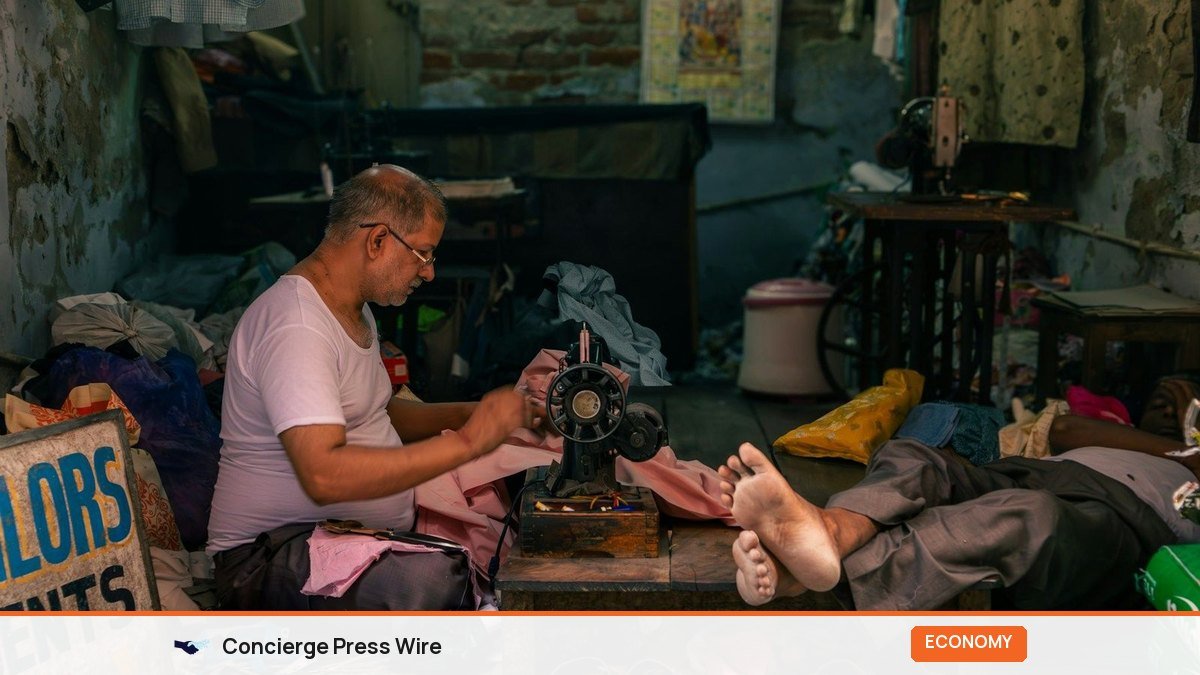
The Pradhan Mantri MUDRA Yojana was launched on 8 April 2015 to bring small businesses into formal credit. Think of the kirana store owner, the tailor with two machines, the tempo operator, the beauty parlour, the small food processor or the repair shop that has always depended on moneylenders or family loans. PMMY was designed for exactly these businesses.
MUDRA stands for Micro Units Development and Refinance Agency Ltd. As the official MUDRA website explains, MUDRA is a refinancing institution and does not lend directly to entrepreneurs. Loans are given by member lending institutions: commercial banks, regional rural banks, small finance banks, cooperative banks, microfinance institutions and NBFCs. MUDRA supports these lenders by refinancing the loans.
The scale is large. The MUDRA website reports over 5 crore loans sanctioned under PMMY in financial year 2025-26, worth more than Rs 6.14 lakh crore. So this is not a rare or exotic product; most bank branches handle Mudra applications regularly.
Mudra Loan Categories and Limits in 2026
The loan limit was raised from Rs 10 lakh to Rs 20 lakh in the Union Budget 2024-25. According to a Press Information Bureau backgrounder, the new limit took effect on 24 October 2024 and introduced the Tarun Plus category. The four categories now are:
| Category | Loan amount | Typical stage | Example use |
|---|---|---|---|
| Shishu | Up to Rs 50,000 | Starting out or very small unit | Buying a sewing machine, a vending cart, initial stock for a small shop |
| Kishore | Above Rs 50,000 and up to Rs 5 lakh | Running business that wants to grow | Expanding a salon, buying equipment for a bakery, working capital for a trader |
| Tarun | Above Rs 5 lakh and up to Rs 10 lakh | Established small business | New machinery for a fabrication unit, a commercial vehicle, a second outlet |
| Tarun Plus | Above Rs 10 lakh and up to Rs 20 lakh | Proven borrower scaling up | Larger expansion, only after a Tarun loan was repaid successfully |
The PIB document also states that the Credit Guarantee Fund for Micro Units (CGFMU) provides guarantee coverage for these loans, which is what allows lenders to offer them without collateral. The names reflect a growth path: a Shishu (child) business grows into Kishore (adolescent) and Tarun (young adult).
Important: Tarun Plus is not for first-time borrowers
You cannot walk into a bank and ask for Rs 18 lakh under Tarun Plus on your first loan. It is designed for those who have previously availed and successfully repaid a Tarun loan. If you are new, plan to start in the category that fits your current size and build a repayment track record.
Who Is Eligible for a Mudra Loan?
Mudra loans are for non-corporate, non-farm small and micro enterprises doing income-generating activities. In practice, that covers:
- Proprietorships and partnerships running small manufacturing, trading or service businesses.
- Shopkeepers, traders and vendors, including fruit and vegetable sellers.
- Service businesses such as salons, gyms, tailoring, repair shops, courier services, photocopy shops and tuition centres.
- Small manufacturers and food processors, such as papad, pickle or snack makers, bakeries and small fabrication units.
- Transport operators buying commercial vehicles such as autos, e-rickshaws or goods carriers for business use.
- Allied agricultural activities such as poultry, dairy, fisheries and beekeeping (but not crop loans).
What is usually not covered
- Personal loans for consumption, weddings or buying a personal vehicle.
- Direct farming or crop cultivation (other schemes such as KCC cover these).
- Large companies beyond the micro and small segment.
Lenders also check your credit history, the viability of your business plan and your ability to repay. Being eligible for the scheme does not guarantee approval; each bank applies its own credit assessment.
Interest Rates, Collateral and Fees
There is no single “Mudra interest rate”. Each lender sets its rate within RBI guidelines and its own policy, based on the loan category, your credit profile and the bank’s benchmark rate. Rates at public sector banks, private banks, small finance banks and MFIs can differ noticeably, so compare.
| Question | What to know |
|---|---|
| Is collateral needed? | No. PMMY loans up to Rs 20 lakh are collateral-free, backed by CGFMU guarantee cover. |
| What is the interest rate? | Set by each lender. Ask for the rate, reset frequency and effective annual cost in writing. |
| Processing fee? | Varies by lender and category. Ask before applying. |
| Repayment period? | Varies by lender, purpose and category. Term loans and working capital limits have different structures. |
| Do I need an agent? | No. MUDRA states that it has not engaged any agents or middlemen. |
Interest rates and fees change, so always confirm the latest terms directly with the lender.
Documents Banks Usually Ask For
Exact requirements vary by lender and loan size, but most applications need the following. Larger loans need more financial proof.
Basic documents (all categories)
- Filled application form
- Identity proof: Aadhaar, PAN, voter ID or passport
- Address proof: Aadhaar, utility bill, rent agreement or passport
- Recent passport-size photographs
- Proof of business: Udyam registration, shop and establishment licence, GST registration or trade licence, as applicable
- Bank account statement for the last six months
- Category certificate if applicable (SC/ST/OBC/minority)
Additional documents (Kishore, Tarun, Tarun Plus)
- Quotations for machinery or equipment you plan to buy, with supplier details
- Income tax returns and balance sheets for the last one to two years
- Projected balance sheet and cash flow for the loan period
- A short business plan or project report
- Details of existing loans, if any
- For Tarun Plus: proof of your earlier Tarun loan and its repayment
Tip: Udyam registration is free and online, and having it ready makes your application look more organised. Keep all documents in the same name and address to avoid delays.
How to Apply for a Mudra Loan: Step by Step
Option 1: Apply online through Udyamimitra
The MUDRA website directs borrowers to apply online through the Udyamimitra portal, run by SIDBI. The portal describes a four-step flow: check eligibility, apply online, get digital approval from a lender, and track your application.
- Visit the Udyamimitra portal and choose the Mudra loan option.
- Register with your mobile number and complete the eligibility questions.
- Fill in personal, business and loan details, and upload documents.
- Select your preferred lender or branch from the options shown.
- Track the application; the lender may call you for verification or a branch visit.
Option 2: Apply at a bank branch
- Visit a branch of your existing bank first; a relationship with the bank helps.
- Ask for the PMMY or Mudra loan application for your category.
- Submit the form with documents and your business plan.
- The bank assesses your application and may visit your business premises.
- If approved, you sign the loan documents and the amount is disbursed, often directly to the supplier for equipment.
A worked example
For illustration, Meena runs a small tiffin service from her home in Indore and wants Rs 3 lakh for a commercial kitchen setup and a delivery two-wheeler. This falls under Kishore. She gets her Udyam registration and FSSAI registration in place, collects quotations for the burners, utensils and vehicle, prepares a simple cash-flow projection showing her current 40 daily customers and her target of 80, and applies through her bank’s branch. The bank checks her credit history and her six months of statements, visits her kitchen and sanctions the loan with part paid directly to the vehicle dealer. After repaying on time for two years, she can apply for a larger Tarun loan to open a small outlet.
Tips to Improve Your Chances of Approval
- Ask for what you need, not the maximum. A clear amount tied to quotations looks credible.
- Keep your credit record clean. Pay existing EMIs and credit card bills on time. Check your credit report before applying.
- Route business income through a bank account. Six months of regular transactions help the bank see your cash flow.
- Prepare a one-page business plan. What you sell, who buys, monthly income and expenses, and how the loan will increase earnings.
- Register your business. Udyam, GST (if applicable) and local licences show you are serious.
- Be honest. Inflated projections are easy for bank officers to spot.
After the loan is sanctioned
Getting the money is only half the job. Keep the loan amount in your business account, spend it on the purpose stated in your application, and keep every bill and receipt, because the bank may ask for proof of how the money was used. Set up auto-debit for EMIs from an account that always has enough balance, and mark the due date on your phone calendar. If business slows down and you think you may miss a payment, speak to your branch manager early; banks have more options before an account becomes overdue than after. A clean repayment record on a Shishu or Kishore loan is the best way to qualify for a bigger loan later.
Common Mistakes and Scams to Avoid
- Paying “Mudra agents”. MUDRA’s website clearly warns borrowers to keep away from people posing as agents or facilitators. There is no official fee for applying.
- Fake websites and calls. Do not share OTPs, Aadhaar or bank details with callers promising instant Mudra loans. Apply only through lenders or the official portal.
- Using the loan for personal expenses. Diverting business loan money can lead to recovery action and damage your credit history.
- Treating it as free money. A Mudra loan is a loan, not a grant or subsidy. Missed EMIs hurt your credit score and future borrowing.
- Borrowing without a repayment plan. Make sure your projected monthly income comfortably covers the EMI.
Frequently Asked Questions
What is the maximum Mudra loan amount in 2026?
The maximum is Rs 20 lakh under the Tarun Plus category, which is available only to borrowers who have successfully repaid an earlier Tarun loan. For most first-time borrowers, the relevant limits are Shishu (up to Rs 50,000), Kishore (up to Rs 5 lakh) and Tarun (up to Rs 10 lakh).
Is a Mudra loan free or a subsidy?
No. It is a regular business loan with interest that you must repay. The benefit is that it is collateral-free and aimed at small businesses that find it hard to get formal credit.
Can I get a Mudra loan to start a new business?
Yes. New businesses can apply, usually in the Shishu or Kishore categories, but you will need a clear business plan and the bank will assess your repayment ability.
Where can I apply for a Mudra loan online?
The official MUDRA website directs applicants to the Udyamimitra portal. You can also apply directly at a commercial bank, RRB, small finance bank, cooperative bank, NBFC or MFI.
What is the interest rate on a Mudra loan?
There is no fixed rate for the scheme. Each lender decides the rate based on its policy, the loan category and your credit profile. Compare offers and ask for the effective annual rate in writing.
Do I need collateral or a guarantor?
PMMY loans are collateral-free, backed by the Credit Guarantee Fund for Micro Units. Lenders may still ask for other documents or conditions as part of their own assessment.
Before You Walk Into the Bank
A Mudra loan can help a small business buy the machine, vehicle or stock that lifts earnings, as long as you borrow a sensible amount and repay on time. Get your Udyam registration, six months of bank statements and supplier quotations ready, pick the right category, and apply through a bank you trust or the official portal. Scheme rules and lender terms change, so confirm the latest details with your bank or the MUDRA website, and speak to a chartered accountant if you are unsure about the numbers.