CGTMSE Scheme: Collateral-Free Business Loans Up to Rs 10 Crore
CGTMSE lets micro and small businesses borrow up to Rs 10 crore without collateral. Here is who qualifies, what the guarantee fee costs and how to apply through your bank.
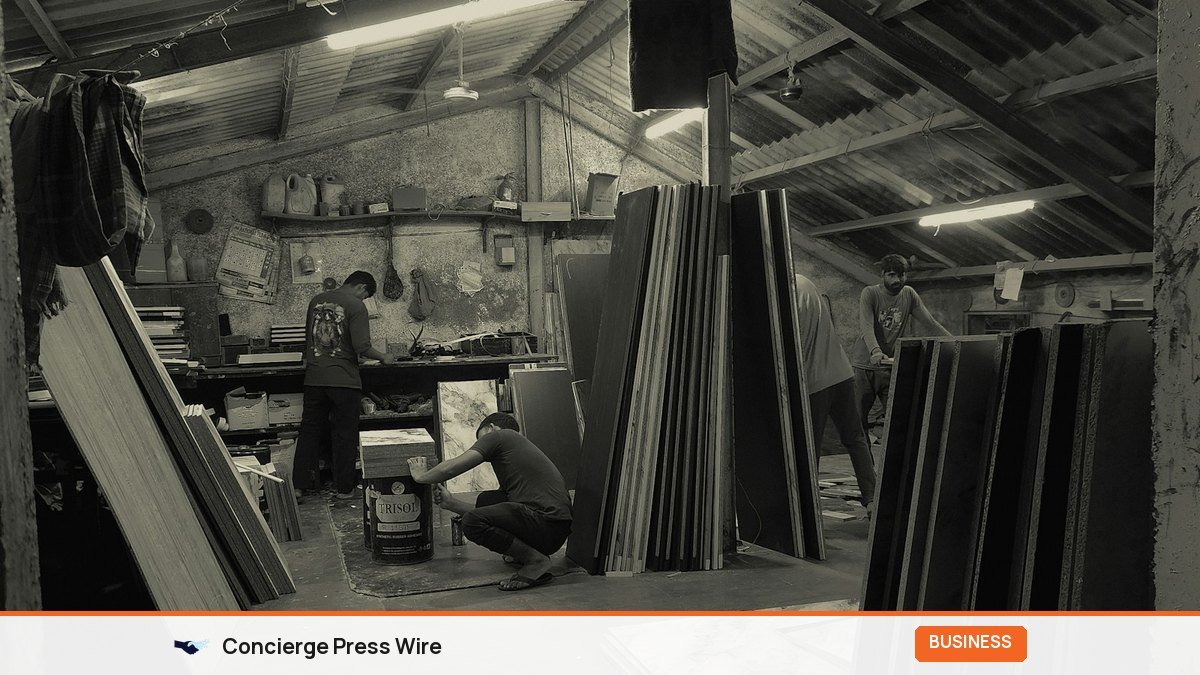
CGTMSE lets a micro or small business borrow up to Rs 10 crore from a bank or NBFC without pledging property or finding a third-party guarantor, because a government-backed trust guarantees most of the loan for the lender. This guide covers who qualifies, how much cover you get, the actual fee slabs, the documents you need and the steps to apply. It also covers the mistakes that get CGTMSE files stuck at the branch.
Key Takeaways
- CGTMSE guarantees the lender, not you. You still repay the full loan with interest; the guarantee only replaces collateral.
- Since 1 April 2025 the ceiling is Rs 10 crore per borrower, up from Rs 5 crore.
- Annual guarantee fees now start at 0.37% a year for loans up to Rs 10 lakh and go up to 1.20% for the Rs 8-10 crore slab, plus GST.
- Only micro and small enterprises with Udyam Registration qualify. Medium enterprises do not.
- You apply through your lender, not directly. Ask for CGTMSE cover by name at the sanction stage.
What CGTMSE actually is (and what it is not)
The Credit Guarantee Fund Trust for Micro and Small Enterprises was set up in 2000 by the Ministry of MSME and SIDBI. Its job is simple. When a bank lends to a small business without collateral, CGTMSE promises to cover a large share of the loss if the loan goes bad. That promise is what makes a branch manager comfortable sanctioning Rs 25 lakh to a three-year-old packaging unit with no factory in its own name.
Three things it is not, because founders mix these up all the time:
- It is not a loan. CGTMSE does not lend money. The bank, NBFC or small finance bank lends, and CGTMSE stands behind that lender.
- It is not a subsidy. There is no write-off and no interest waiver. If you default, the lender can still recover from you, and your credit score takes the hit.
- It is not free. There is an annual guarantee fee. Many lenders pass it on to the borrower, so budget for it.
Think of it as rented collateral. You pay a yearly fee, and in exchange the lender treats a share of your loan as secured.
Who is eligible for a CGTMSE-backed loan
The scheme is for micro and small enterprises (MSEs) in manufacturing, services and trading, including retail and wholesale trade. New units and running businesses can both use it. The basic conditions are:
- You must be a micro or small enterprise under the current MSME definition.
- You must have an Udyam Registration Number. SBI’s CGTMSE page states plainly that Udyam registration is mandatory for guarantee cover.
- The loan must come from a Member Lending Institution (MLI): most public and private banks, many small finance banks and several registered NBFCs are members.
- The loan must be given without collateral or a third-party guarantee, except under the hybrid security model explained below.
- You should not have a previous CGTMSE-backed loan where the guarantee was invoked and the dues are still unsettled.
Micro or small? Check the 2025 limits
The MSME definition was revised with effect from 1 April 2025. A business must meet both the investment and the turnover test for a category.
| Category | Investment in plant, machinery or equipment | Annual turnover | CGTMSE eligible? |
|---|---|---|---|
| Micro | Up to Rs 2.5 crore | Up to Rs 10 crore | Yes |
| Small | Up to Rs 25 crore | Up to Rs 100 crore | Yes |
| Medium | Up to Rs 125 crore | Up to Rs 500 crore | No |
If your Udyam certificate still shows an old classification, update it before you apply. A mismatch between Udyam data and your GST turnover is one of the most common reasons a file goes back to the borrower.
How much cover you get: ceiling and guarantee percentage
From 1 April 2025, the guarantee ceiling went up from Rs 5 crore to Rs 10 crore per MSE borrower, according to the Ministry of MSME’s Credit Guarantee Scheme page. That covers term loans and working capital, alone or together.
The guarantee does not cover 100% of the loan. CGTMSE pays the lender a percentage of the amount in default. The percentages most often quoted are below. The women-led figure is confirmed by the Ministry; the rest come from scheme summaries published by lenders, so confirm the current figure with your branch before relying on it.
| Borrower type | Guarantee cover (share of default) |
|---|---|
| Micro enterprises, loans up to Rs 5 lakh | 85% |
| Women-led MSEs | 90% (raised from 85% by a December 2024 notification) |
| SC/ST entrepreneurs, persons with disabilities and some other specified groups | 85% (as reported by lenders) |
| MSEs in the North Eastern Region, loans up to Rs 50 lakh | 80% (as reported by lenders) |
| All other eligible loans | 75% |
Hybrid security: when you have some collateral
Since 2018, CGTMSE has allowed a hybrid model. If you can offer collateral for part of the loan, say your shop premises worth Rs 40 lakh against an Rs 1 crore requirement, the lender takes that collateral and CGTMSE covers the unsecured portion. Not every lender offers this, so ask.
CGTMSE fees in 2026: the annual guarantee fee table
The guarantee fee was cut sharply for guarantees approved or renewed on or after 1 April 2025. These are the standard rates listed on the CGTMSE website and on SBI’s scheme page, before GST:
| Guaranteed amount | Annual guarantee fee (% a year) |
|---|---|
| Up to Rs 10 lakh | 0.37% |
| Above Rs 10 lakh to Rs 50 lakh | 0.55% |
| Above Rs 50 lakh to Rs 1 crore | 0.60% |
| Above Rs 1 crore to Rs 2 crore | 0.85% |
| Above Rs 2 crore to Rs 5 crore | 1.00% |
| Above Rs 5 crore to Rs 8 crore | 1.10% |
| Above Rs 8 crore to Rs 10 crore | 1.20% |
How the fee works in practice:
- Year one is charged on the guaranteed amount. From year two, it is charged on the outstanding balance, so the fee falls as you repay a term loan.
- Same rate for trading. The standard rate applies to all activities, including retail and wholesale trade.
- Concessions of 10% on the standard rate are listed for women, SC/ST entrepreneurs, persons with disabilities, Agniveers and transgender entrepreneurs, for units in the North East, Jammu and Kashmir, Ladakh, aspirational districts and identified credit-deficient districts, and for ZED-certified MSEs. Check the current circular for limits on each.
- Lender adjustment. Lenders with a strong portfolio get a 10% discount; high-risk lenders can be charged a premium of up to 70% of the standard rate. This is why two banks can quote you different guarantee costs for the same loan.
- Who pays. The lender decides whether to pass the fee to you. Most do. Ask for it in writing in the sanction letter.
Worked example
Take an illustrative case. A garment job-work unit in Tiruppur gets an Rs 40 lakh term loan with CGTMSE cover and no concessions apply. The Rs 40 lakh sits in the 0.55% slab, so the first-year fee is about Rs 22,000, plus GST. If the outstanding balance falls to Rs 30 lakh by the next renewal, the second-year fee is roughly Rs 16,500, plus GST. Compare that with what the same loan would cost you if you had to mortgage your house: legal and valuation charges, stamp duty on the mortgage, and the risk of losing the property.
To see what the loan itself will cost each month, run the numbers through an EMI calculator and add the yearly guarantee fee on top. That gives you the true monthly cost of the facility.
Documents checklist
Lenders differ a little, but this list will cover most CGTMSE files. Keep scanned copies ready before you visit the branch.
- Udyam Registration Certificate, with the current classification
- PAN of the business and of the proprietor, partners or directors
- Aadhaar and address proof of the promoters
- GST registration certificate and the last 12 months of GST returns (where applicable)
- Bank statements for the last 6 to 12 months for all business accounts
- Income tax returns and financial statements for the last two or three years (a projected balance sheet for a new unit)
- A project report: what the loan is for, quotations for machinery, expected sales, and a repayment plan
- Partnership deed, LLP agreement or MoA/AoA, as relevant
- Rent agreement or ownership proof for the business premises
- Existing loan sanction letters and repayment track record, if any
How to apply for a CGTMSE loan: step by step
- Fix your numbers first. Decide how much you need and why. A loan request tied to a specific machine, contract or working capital cycle gets sanctioned faster than “general business expansion”.
- Update Udyam and GST data. Make sure turnover, address and activity code match across Udyam, GST and your ITR.
- Pick a member lender. Start with the bank where your current account and transaction history sit. Branches marked as SME-focused usually process these loans faster. You can also explore government lending portals such as JanSamarth for some loan categories.
- Ask for CGTMSE cover by name. Say clearly that you are seeking a collateral-free loan under CGTMSE. If you do not ask, some branches default to asking for property.
- Submit the application and project report. The lender appraises your business like any other loan: cash flows, credit score, banking conduct.
- Lender applies for the guarantee. After sanction, the lender registers the facility on the CGTMSE portal. You do not log in or apply to CGTMSE yourself.
- Pay the guarantee fee. The first-year fee is paid upfront, usually debited from your account. Cover continues only if the fee is paid each year.
- Disbursement. Once the guarantee is in place, the loan is released as per the sanction terms.
Common mistakes that slow down or kill a CGTMSE file
| Mistake | What to do instead |
|---|---|
| Udyam turnover does not match GST returns | Update Udyam before applying; explain any gap in a short note |
| Cash deposits and withdrawals dominate the bank statement | Route sales through the business account for at least six months before applying |
| Vague purpose (“for business needs”) | Attach quotations, purchase orders or a working capital calculation |
| Low CIBIL score of a promoter due to a missed card payment | Pull your credit report early and settle or correct errors first |
| Assuming CGTMSE means the bank must lend | It does not. The lender still decides on merit; the guarantee only removes the collateral barrier |
| Not budgeting for the yearly fee | Add the guarantee fee and GST to your monthly cost calculation |
CGTMSE compared with other MSME loan routes
CGTMSE is not the only option for collateral-free funding. Here is how it sits next to the schemes small businesses usually ask about:
| Route | Typical size | Best for |
|---|---|---|
| CGTMSE-backed loan | Up to Rs 10 crore | MSEs needing term loans or working capital without property |
| PM Mudra Yojana | Up to Rs 20 lakh (Tarun Plus, for borrowers who repaid an earlier Tarun loan) | Very small non-farm businesses and first-time borrowers |
| Stand-Up India | Rs 10 lakh to Rs 1 crore | Greenfield units promoted by SC/ST or women entrepreneurs |
| Secured business loan | Depends on collateral value | Owners with property who want lower rates |
For a loan under Rs 10 lakh, Mudra may be quicker. Above that, especially for machinery purchases, CGTMSE is usually the better fit. Rules for every scheme change, so confirm the current limits with your lender.
After the money lands, plan how you will tell customers and partners about a new plant, product line or outlet. A clear announcement, written using our guide on how to write a press release in India and sent through the right distribution channels, can bring in the orders that repay the loan faster.
Frequently Asked Questions
What is the maximum CGTMSE loan amount in 2026?
The guarantee ceiling is Rs 10 crore per eligible micro or small enterprise, in force since 1 April 2025. Your actual sanction depends on the lender’s appraisal of your cash flows and repayment capacity.
Can a startup or a new business get a CGTMSE loan?
Yes. New units are eligible as long as they are micro or small enterprises with Udyam Registration and the lender is satisfied with the project. Expect closer scrutiny of the project report, since there is no track record to fall back on.
Are traders and retailers covered under CGTMSE?
Yes. Retail and wholesale trade are eligible activities, and the guarantee fee for trading is the same as for manufacturing and services.
Who pays the CGTMSE guarantee fee?
The lender pays it to CGTMSE, but the lender decides whether to recover it from the borrower. In practice most borrowers pay it. Check the sanction letter.
Does CGTMSE cover mean I do not have to repay if my business fails?
No. The guarantee protects the lender. You remain fully liable for the loan, and a default will hurt your credit history and future borrowing.
Can I apply to CGTMSE directly online?
No. Borrowers apply to a member lending institution. The lender then obtains the guarantee from CGTMSE on your behalf.
Before you visit the branch
Get your Udyam, GST and bank records aligned, write a one-page purpose note with numbers, and ask the lender for CGTMSE cover by name. Budget for the yearly guarantee fee so it does not surprise you at renewal. Scheme rules, fees and coverage percentages are revised from time to time, so check the latest circulars on cgtmse.in or with your lender, and consider a chartered accountant’s help for larger loans.