Rishikesh 3-Day Itinerary: Ganga Aarti, Rafting and Budget
Three days in Rishikesh, planned hour by hour: evening aarti, Shivpuri rafting, the Beatles Ashram, a sunrise temple trip, plus season dates, stays and costs.
Three days is the sweet spot for Rishikesh: enough time for the evening Ganga aarti, a morning on the rapids, a yoga class, the Beatles Ashram and a few long cafe breakfasts by the river. This itinerary lays out each day hour by hour, with the current rafting season, how to get there, where to stay and a realistic budget.
Updated November 2026. Rafting dates and fees are set locally each season, so confirm with a licensed operator before you book.
Quick answer: Spend Day 1 around Ram Jhula, Parmarth Niketan and Triveni Ghat (evening aarti), Day 2 rafting from Shivpuri in the morning and the Beatles Ashram in the afternoon, and Day 3 on a sunrise trip to Kunjapuri or Neelkanth Mahadev plus a yoga class. Commercial rafting generally runs from about mid-September to the end of June and stops in the monsoon; the 2026-27 season reopened on 23 September 2026.
Key Takeaways
- Best months: October-November and February-April for pleasant weather and rafting. December-January is cold but quiet and still good for rafting if you don’t mind chilly water.
- Rafting stops during the monsoon (roughly July to mid-September); helmets, certified life jackets and a trained guide are compulsory.
- The nearest airport is Jolly Grant (Dehradun); Haridwar is the main railway hub with far more trains than Rishikesh station.
- Rishikesh is a vegetarian, alcohol-free town; plan accordingly.
- A comfortable 3-day trip for two costs roughly Rs 15,000 to Rs 35,000 from Delhi (estimate, excluding shopping).
When to visit Rishikesh
The government’s Incredible India portal recommends September to November and February to April as the best times. Here is how the year breaks down:
| Season | Months | Weather | Rafting | Who it suits |
|---|---|---|---|---|
| Post-monsoon | Late Sep – Nov | Pleasant days, cool evenings, green hills | Open (after inspection) | Almost everyone |
| Winter | Dec – Jan | Cold mornings, fog some days | Open, cold water | Yoga retreats, quiet trips |
| Spring | Feb – Apr | Warm and clear | Open, good rapids | Rafting, camping, International Yoga Festival (usually March) |
| Summer | May – June | Hot afternoons, crowded weekends | Open until about end-June | Rafting and camping groups |
| Monsoon | July – mid Sep | Heavy rain, landslide risk on hill roads | Closed | Not recommended for first-timers |
Rafting in Rishikesh: season, routes and rules
Commercial rafting on the Ganga is regulated by the state and opens only after officials inspect water levels and rapids. Reports differ slightly on the exact season dates each year, but the pattern is consistent: it closes for the monsoon around the end of June (sometimes earlier if the river rises) and reopens in mid to late September. For the 2026-27 season, rafting resumed on 23 September 2026, according to NavBharat Live, with helmets, certified life jackets and trained guides compulsory and rafts not allowed to carry more people than their capacity.
| Stretch | Approx. distance | Time on water | Best for |
|---|---|---|---|
| Brahmapuri to Rishikesh | About 6-9 km | 1-1.5 hours | Families and first-timers |
| Shivpuri to Rishikesh | About 16-18 km | 2-3 hours | Most visitors; several named rapids |
| Marine Drive to Rishikesh | About 24-26 km | 3-4 hours | Fitter groups wanting a longer run |
Routes may open in phases depending on water levels, especially early in the season. Prices vary by stretch, day and operator; get quotes from two or three licensed operators and ask what the price includes (transport to the start point, wetsuit in winter, photos or video).
Rafting safety checklist
- Book only with a licensed operator. Ask to see the licence if you are unsure.
- Wear the helmet and life jacket for the entire run, even on calm stretches.
- Listen to the safety briefing and practise the paddling commands before you start.
- No alcohol before rafting (and none is allowed in Rishikesh anyway).
- Non-swimmers can raft, but tell the guide. If you have heart conditions, are pregnant or have had recent surgery, consult a doctor first.
- Keep phones in a waterproof pouch or leave them in the vehicle.
How to reach Rishikesh
| Mode | Route | Approx. time | Notes |
|---|---|---|---|
| Air | Jolly Grant Airport, Dehradun | About 45 minutes by taxi to Rishikesh | Direct flights from Delhi, Mumbai, Bengaluru and others |
| Train | Haridwar Junction, then taxi or bus | About 45-60 minutes from Haridwar | Haridwar has many more trains than Rishikesh’s own station |
| Train | Yog Nagari Rishikesh / Rishikesh station | Direct | Fewer trains; check the National Train Enquiry System |
| Road | Delhi to Rishikesh via Meerut and Haridwar | About 5-7 hours | Government and private buses, Volvo overnight services, self-drive |
From Delhi, the most relaxed option is a morning Shatabdi or Vande Bharat train to Haridwar or Dehradun, then a taxi. Overnight Volvo buses are cheaper and drop you early in the morning, ready for Day 1.
The 3-day itinerary, day by day
This plan assumes you arrive by mid-morning on Day 1 and leave in the late afternoon of Day 3. If you arrive the night before by overnight bus, you gain a full extra morning; use it for a slow breakfast and a walk along the ghats before checking in.
Day 1: Ram Jhula, ashrams and the Ganga aarti
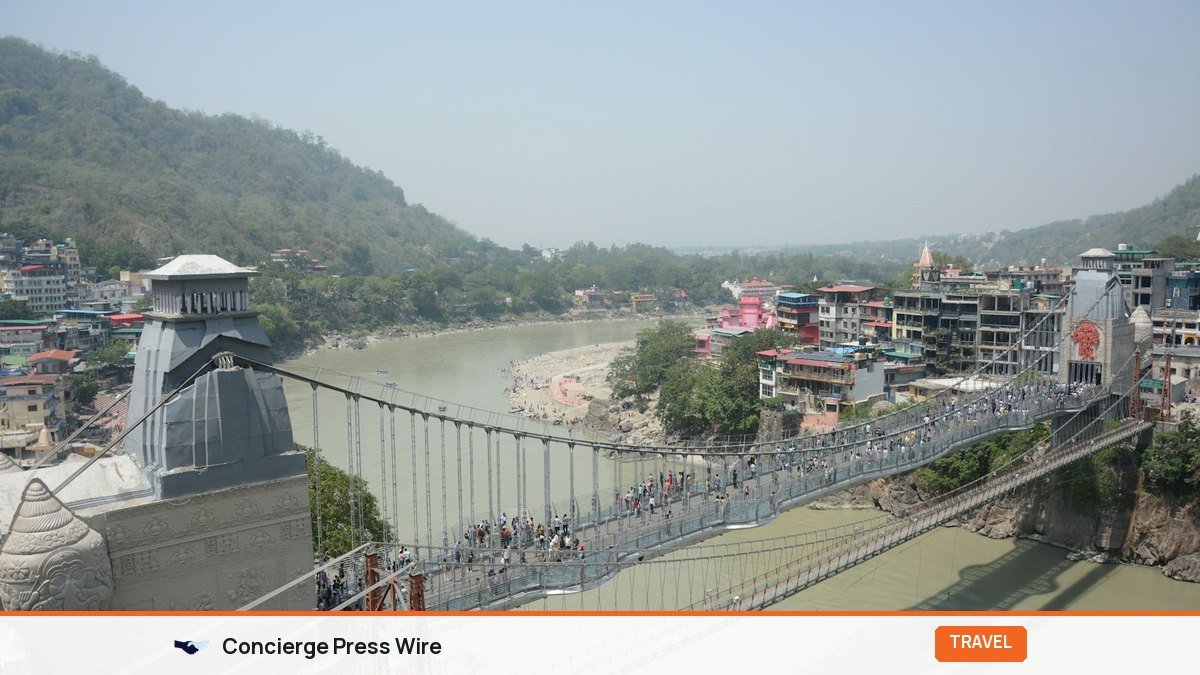
Morning: Check in, have breakfast at a riverside cafe and walk across Ram Jhula, the suspension bridge that links the two banks. Note that the older Laxman Jhula bridge was closed for safety reasons in 2022, and a replacement bridge has been under construction nearby, so check locally what is open for walking.
Afternoon: Explore the Swarg Ashram area on the eastern bank: Gita Bhawan, the small temples, bookshops and stalls selling rudraksha, brass and cotton clothes. Rest through the hottest part of the afternoon if you are visiting in summer.
Evening: Choose one aarti. The Parmarth Niketan aarti on the eastern bank is the best known, with singing, a large fire ritual and a crowd of visitors. The aarti at Triveni Ghat in the main town is more local and traditional. Both take place around sunset, so the start time shifts through the year; reach 45 minutes early to find a place to sit. Remove footwear where asked and keep phone photography discreet during the prayers.
Day 2: Rafting and the Beatles Ashram
Morning: Most operators pick you up from your hotel and drive you upstream to Shivpuri for the 16 km run. You will be back by lunch, wet and hungry. Pack a full change of clothes and a towel.
Afternoon: After lunch, visit the Beatles Ashram (Chaurasi Kutia), where the band stayed in 1968. The old meditation domes and graffiti-covered walls are peaceful and photogenic. There is an entry fee and it closes before dark, so go by mid-afternoon.
Evening: Walk along the riverside path towards the cafes in Tapovan. Rishikesh’s cafe scene is a big part of the experience: wood-fired pizzas, Israeli and Tibetan food, lemon-ginger-honey tea and slow sunsets over the river.
Day 3: Sunrise temple, yoga and departure
Option A: Kunjapuri sunrise: Leave around 4:30-5 am for Kunjapuri Devi temple, about an hour’s drive up the hills. On a clear morning you get sunrise views over the Garhwal Himalaya. Carry a jacket; it is cold at the top even in spring.
Option B: Neelkanth Mahadev: The Neelkanth Mahadev temple, roughly 30 km away by road through forest, is an important Shiva temple. Weekends and Shravan month (July-August) bring very large crowds.
Late morning: a yoga class: Rishikesh calls itself the “Yoga Capital of the World”, and many ashrams and studios offer drop-in classes for beginners. A 60-90 minute class costs a few hundred rupees at most studios. If you want something deeper, look at 3- or 7-day retreats on a future trip.
Afternoon: Pick up souvenirs, have a final river-view lunch and head to Dehradun airport or Haridwar station.
Where to stay
| Area | Vibe | Best for |
|---|---|---|
| Tapovan | Cafes, yoga studios, backpackers | Young travellers, yoga students |
| Swarg Ashram / Ram Jhula | Ashrams, temples, quieter nights | Families, spiritual travellers |
| Near Triveni Ghat (main town) | Busy, close to markets and buses | Short stays, budget travellers |
| Shivpuri and beyond | Riverside camps and resorts | Rafting groups, camping |
Ashram stays are an option, but they come with rules: early mornings, fixed meal times, no outside food and quiet hours. Read the rules before booking.
Budget for 3 days
Rough estimates for two people travelling from Delhi, in normal (non-holiday) weeks:
| Item | Budget | Mid-range |
|---|---|---|
| Travel Delhi-Rishikesh-Delhi | Rs 2,000-3,000 (bus) | Rs 4,000-8,000 (train + taxi) |
| Stay, 2 nights | Rs 2,500-5,000 (hostel/guesthouse) | Rs 7,000-15,000 (hotel or riverside resort) |
| Rafting, 2 people | Rs 1,500-2,500 (short stretch) | Rs 2,500-4,000 (Shivpuri) |
| Food | Rs 2,500-3,500 | Rs 4,000-6,000 |
| Local transport, entries, yoga | Rs 1,500-2,500 | Rs 3,000-5,000 |
| Total | About Rs 10,000-16,500 | About Rs 20,000-38,000 |
Weekend and long-weekend prices can be noticeably higher, particularly for riverside camps. Book camps directly or through well-reviewed platforms, and confirm what is included.
Practical tips before you go
- Food and drink: the Incredible India portal describes Rishikesh as vegetarian-only and alcohol-free. Eggs are not served in many places either.
- Dress: modest clothing is appreciated at ghats, temples and ashrams.
- Monkeys: keep food out of sight near Ram Jhula and temples.
- River safety: the Ganga has strong currents even when it looks calm. Enter the water only at designated safe spots, never after dark and never when local authorities have warned that levels are high.
- Official information: the Uttarakhand Tourism Rishikesh page has the state’s own listings; for road conditions in the monsoon, follow district administration updates.
What to pack
- For rafting: quick-dry shorts or track pants, a synthetic T-shirt (cotton stays cold and heavy when wet), sports sandals with a back strap or old trainers, a full change of clothes and a small towel.
- For temples and the aarti: a light shawl or stole and clothes that cover shoulders and knees; slip-on footwear helps because you will remove it often.
- For the season: a warm jacket, cap and socks from November to February; a sun hat, sunscreen and a refillable bottle from April to June.
- Daypack basics: a waterproof phone pouch, power bank, some cash for small shops and parking, hand sanitiser and any regular medicines.
Common mistakes to avoid
- Booking rafting with the first tout you meet. Prices quoted on the street are often higher, and you cannot easily check the licence or equipment.
- Trying to fit Rishikesh, Haridwar and Mussoorie into three days. You will spend most of the trip in traffic. Pick one extra place at most.
- Arriving at the aarti at the start time. The best spots fill up early, especially on weekends and festival days.
- Ignoring the long-weekend effect. On national holidays, the Delhi-Haridwar road and Rishikesh’s narrow streets jam badly. Travel a day earlier or later if you can.
Frequently Asked Questions
Is rafting open in Rishikesh in December and January?
Yes, rafting usually operates through winter. The water is cold, so operators may offer wetsuits on longer stretches. It is a quieter time with fewer crowds.
When does the rafting season close?
Rafting normally stops around the end of June for the monsoon, and can close earlier if the river level rises. It reopens in mid to late September after a safety inspection; in 2026 it resumed on 23 September.
What time is the Ganga aarti in Rishikesh?
The aarti at Parmarth Niketan and Triveni Ghat is held around sunset, so the time changes with the season, earlier in winter and later in summer. Arrive about 45 minutes ahead to get a good spot.
Is 3 days enough for Rishikesh?
Three days is enough for the main highlights: aarti, rafting, the Beatles Ashram, a temple trip and a yoga class. Add days if you want a yoga retreat, camping or a side trip to Haridwar or Mussoorie.
Is Rishikesh good for families with children?
Yes. Choose the short Brahmapuri rafting stretch with an operator that accepts children (minimum age rules vary), stay near Ram Jhula and plan an early night.
Can I visit Haridwar on the same trip?
Yes. Haridwar is about 25 km away. Many visitors add the Har Ki Pauri evening aarti in Haridwar on the arrival or departure day.
Pack light, slow down
Rishikesh is at its best when you do not rush it. Pick one aarti, one rafting stretch and one sunrise, and leave space for long breakfasts and walks along the river. Check the rafting status and weather a week before you go, keep your plans flexible, and the town will do the rest.