How to Start a Cloud Kitchen in India: Costs, Licences and Steps
A step-by-step guide to launching a delivery-only kitchen in India, including the FSSAI changes effective 1 April 2026, GST rules and a sample budget.
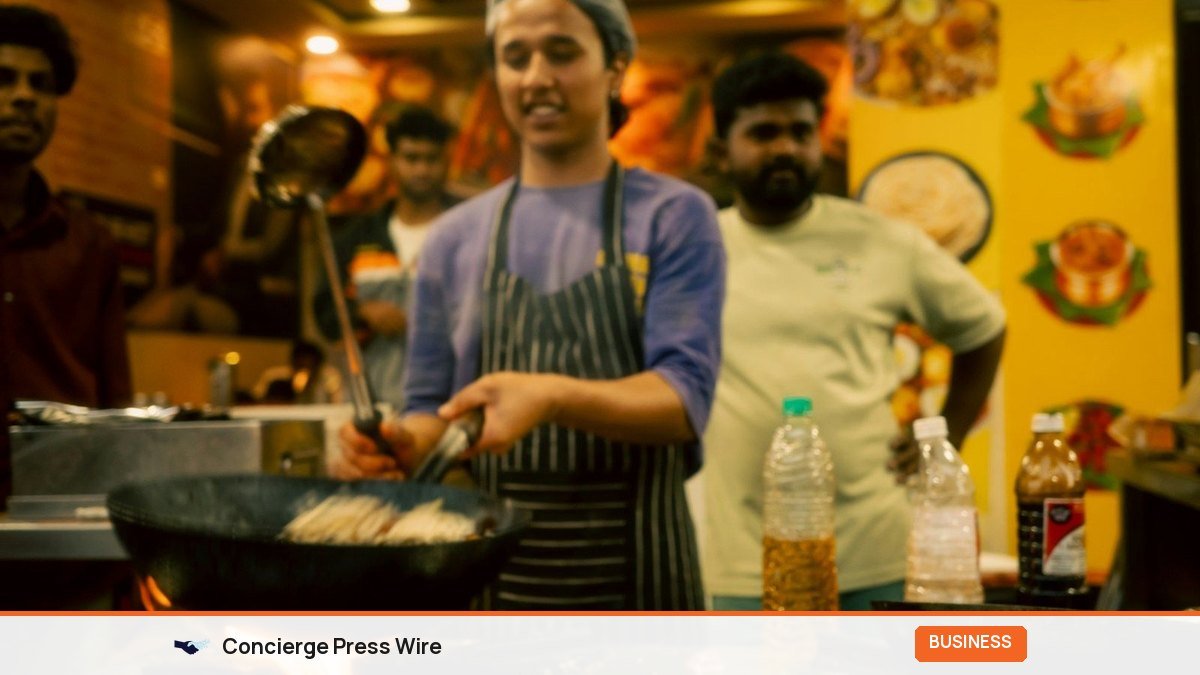
A cloud kitchen lets you sell food through Swiggy, Zomato and your own channels without paying for a dining room, waiters or a high-street location. This guide walks you through the real steps to start one in India: choosing a model, finding a space, the licences you need (including the FSSAI changes that took effect on 1 April 2026), a sample budget, and how to get your first 100 orders.
Key Takeaways
- From 1 April 2026, FSSAI basic registration covers food businesses with turnover up to Rs 1.5 crore (earlier Rs 12 lakh). State licence applies up to Rs 50 crore and central licence above that.
- Cloud kitchens are generally taxed at 5% GST without input tax credit. On Swiggy and Zomato orders, the platform pays that GST under Section 9(5) of the CGST Act.
- Start with one strong brand and a menu of 15-25 items that travel well, rather than five brands on day one.
- Your biggest ongoing costs are aggregator commissions, discounts, packaging and raw material wastage, not rent.
- Licensing rules and municipal requirements vary by state and city. Confirm every requirement on the official portals before you spend money.
What a Cloud Kitchen Is (and Is Not)
A cloud kitchen, also called a dark kitchen or delivery-only kitchen, is a commercial kitchen that sells only through delivery and takeaway. Customers never sit down. Orders come mostly from food delivery apps, and increasingly from WhatsApp, Instagram and your own website.
That model removes the costliest parts of a restaurant: prime frontage, interiors, furniture, and front-of-house staff. But it adds new costs that people underestimate. You pay a commission on every aggregator order, you fund discounts to stay visible, and you depend heavily on ratings, packaging and delivery times you only partly control.
Before you start, be honest about one question: can you make food that people will reorder? A cloud kitchen lives on repeat customers. If your biryani, thali or momos are not something regulars will order every week, no marketing budget will save the numbers.
Step 1: Pick Your Cloud Kitchen Model
| Model | How it works | Best for | Watch out for |
|---|---|---|---|
| Single-brand kitchen | One kitchen, one brand, one cuisine | First-time founders, home chefs going commercial | Limited order volume if the cuisine is niche |
| Multi-brand kitchen | One kitchen runs several virtual brands (for example biryani, rolls and desserts) | Operators with an experienced chef and strong processes | Complexity, inconsistent quality, more menus to market |
| Shared or rented kitchen space | You rent a station in a ready, licensed facility | Testing a concept with lower setup cost | Less control, shared hygiene standards |
| Home-based kitchen | Cooking from a home kitchen, often small scale | Tiffin services, bakers, snack makers | Society rules, local municipal norms, scaling limits |
For most first-time founders, a single brand from a small rented commercial kitchen is the right start. Add a second brand only when the first is profitable and your kitchen has idle capacity at certain hours.
Step 2: Choose the Location Using Delivery Radius, Not Footfall
A cloud kitchen does not need a main road. It needs to sit in the middle of a dense area of people who order food online. Delivery apps show your outlet to customers within a limited radius, so your kitchen’s location decides your market.
- Look for dense residential clusters, PG and hostel areas, and IT parks within a few kilometres.
- Study competition on the apps. Set your delivery address to the proposed location and browse your cuisine. Too many strong competitors means high discount pressure; zero competitors might mean no demand.
- Check practical basics: commercial electricity load, water supply, drainage, ventilation for exhaust, space for delivery riders to wait, and landlord permission for commercial cooking.
- Use a commercially zoned property where possible. Municipal trade licences and fire NOCs are much harder to get for residential premises.
A kitchen of roughly 200-400 sq ft is workable for a single brand with a limited menu. Multi-brand setups need more space for separate stations and cold storage.
Step 3: Get Your Licences and Registrations
This is where many founders either overspend on agents or cut corners and face trouble later. Here is what a typical cloud kitchen needs. Requirements differ by state and city, so treat this as a checklist to verify locally.
FSSAI registration or licence (mandatory)
Every food business in India must be registered or licensed under the Food Safety and Standards Act. Applications are made online on the FoSCoS portal.
The thresholds changed recently. According to an FSSAI press release dated 13 March 2026, with effect from 1 April 2026:
- Basic registration: turnover up to Rs 1.5 crore (the earlier limit was Rs 12 lakh).
- State licence: turnover above Rs 1.5 crore and up to Rs 50 crore.
- Central licence: turnover above Rs 50 crore.
The same release says the government has approved perpetual validity for FSSAI registrations and licences, removing the need for periodic renewal, and that the new registration process is meant to be instant with no pre-inspection for small businesses. This is good news for new cloud kitchens, since most will fall under basic registration in their early years. Check the FoSCoS portal for the current fee and procedure at the time you apply, as implementation details can be updated.
Once registered, display your FSSAI number on your menu, packaging and aggregator listing. Delivery apps will not let you go live without it.
GST registration
Cloud kitchens are classified as restaurant services and generally charged 5% GST without input tax credit. For orders placed through Swiggy, Zomato and similar e-commerce operators, the platform collects and pays that GST under Section 9(5) of the CGST Act. You still need to account for direct orders you take yourself. Registration is compulsory once you cross the threshold, and aggregators may ask for your GSTIN during onboarding. Register on the GST portal and speak to a chartered accountant about which return filings apply to you.
Other common registrations
- Shop and Establishment registration under your state’s Shops and Establishments Act (called Gumasta licence in some states).
- Trade licence or health trade licence from your municipal corporation.
- Fire safety NOC, depending on your kitchen size, gas setup and local rules.
- Pollution control consent from the State Pollution Control Board may be needed in some cities for commercial kitchens.
- Udyam registration as an MSME. It is free and can help with loans and government schemes.
- Trademark application for your brand name, ideally before you spend on branding.
- Current bank account and PAN in the business name for aggregator payouts.
Step 4: Plan Your Budget Realistically
Costs vary widely between a tier-2 city and Mumbai or Bengaluru. The table below is an illustrative budget for a small single-brand kitchen in a mid-sized city. Use it to structure your own quotes, not as a price list.
| Expense head | Illustrative range (Rs) | Notes |
|---|---|---|
| Rent deposit and first month’s rent | 50,000 – 2,00,000 | Depends heavily on city and area |
| Kitchen equipment | 2,00,000 – 5,00,000 | Burners, refrigeration, exhaust, work tables; buying used can cut costs |
| Minor civil work and plumbing | 30,000 – 1,50,000 | Tiling, drainage, washing area |
| Licences and professional fees | 10,000 – 50,000 | Varies by city and whether you use a consultant |
| Branding, photos and packaging design | 20,000 – 75,000 | Good food photos are worth the money |
| Initial raw material and packaging stock | 40,000 – 1,00,000 | Keep it lean for the first month |
| Working capital (3 months of salaries, rent, marketing) | 2,00,000 – 5,00,000 | Do not skip this; most kitchens take months to break even |
The most common mistake is spending everything on setup and keeping no working capital. Aggregator payouts arrive on a cycle, early months are slow, and you will need money for discounts and ads while ratings build.
Step 5: Design a Menu That Travels Well
Delivery food spends 20-40 minutes in a box. Some dishes survive that journey; many do not.
- Good travellers: biryani, rice bowls, curries with rotis packed separately, wraps and rolls, khichdi, pasta, baked goods, thalis in sealed compartments.
- Risky: dosas, crispy fried snacks, pani puri, anything served sizzling, delicate salads.
- Keep the menu tight: 15-25 items for one brand. Fewer items means fewer raw materials, less wastage and faster cooking.
- Price for commissions: calculate the food cost, packaging, platform commission, GST impact and discount before fixing a menu price. If a dish leaves no margin after all of that, remove it or re-engineer it.
- Standardise recipes: write exact grams and steps for every dish so quality does not depend on one cook.
Invest in packaging. Leak-proof containers, tamper-proof seals and separate packing for gravies and breads directly protect your ratings. A spilled curry costs you far more than the extra few rupees for a better container.
Step 6: Go Live on Aggregators and Build Your Own Channel
Onboarding on Swiggy and Zomato
Both platforms have partner sign-up pages. You will typically need your FSSAI registration, PAN, bank account details, GSTIN (if registered), a menu with prices, and food photos. Read the commission structure, payout cycle and cancellation policy carefully and ask for them in writing. Commission rates and ad programmes change, so compare the current terms of each platform before you sign.
Getting the first 100 orders
- Launch with a limited opening offer on the apps, but set an end date so discounts do not become permanent.
- Seed your first orders through friends, family, housing society WhatsApp groups and nearby offices, and ask for honest ratings.
- Use professional photos. On delivery apps, the photo is the storefront.
- Answer every review, especially negative ones, calmly and quickly.
- Put a small card in each order with your WhatsApp number for direct orders and a repeat-order discount.
Why direct orders matter
Every direct order through WhatsApp, a phone call or your own website saves the aggregator commission. Over time, aim to move loyal customers such as office lunch groups and tiffin subscribers to direct ordering, while using the apps for discovery.
Step 7: Run the Kitchen Like a Business
- Track daily numbers: orders, average order value, food cost percentage, wastage, and ratings. A simple spreadsheet is enough to start.
- Control wastage: use first-in-first-out storage, prep according to expected orders, and review what goes in the bin weekly.
- Maintain hygiene visibly: caps, gloves, clean uniforms, pest control records and regular deep cleaning. Some platforms highlight hygiene ratings, and FSSAI inspections are risk-based.
- Watch delivery times: slow preparation hurts your ranking on the apps. Time your kitchen from order acceptance to packing.
- Check payouts: reconcile every aggregator settlement against your order data. Mistakes in deductions and refunds do happen.
Frequently Asked Questions
How much does it cost to start a cloud kitchen in India?
It depends on city, space and equipment. A small single-brand kitchen in a mid-sized city can often be started for a few lakh rupees, while a multi-brand kitchen in a metro can cost much more. Always keep three months of working capital on top of setup costs.
Which FSSAI licence does a new cloud kitchen need in 2026?
From 1 April 2026, food businesses with turnover up to Rs 1.5 crore need basic FSSAI registration, those between Rs 1.5 crore and Rs 50 crore need a state licence, and those above Rs 50 crore need a central licence. Apply on the FoSCoS portal and check the current rules at the time of application.
Can I run a cloud kitchen from home?
Many home chefs do run small operations with FSSAI registration. However, housing society rules, municipal norms and aggregator requirements can limit this, and scaling up usually requires a commercial kitchen. Check local rules before you start.
Do I need to charge GST on Swiggy and Zomato orders?
For restaurant services supplied through e-commerce operators, the platform is responsible for collecting and paying the 5% GST under Section 9(5). You remain responsible for GST on direct orders once registered. Take advice from a chartered accountant on your filing obligations.
How long does a cloud kitchen take to become profitable?
There is no fixed timeline. It depends on your menu, location, pricing, marketing spend and repeat rate. Many operators take several months to reach break-even, which is why working capital is essential.
Should I start with one brand or multiple brands?
Start with one. Master consistent quality, packaging and ratings first. Add a second brand when your kitchen has spare capacity and the first brand is profitable.
Start Small, Measure Everything
A cloud kitchen is one of the most accessible food businesses in India today, especially with the simpler FSSAI thresholds from April 2026. But low setup cost does not mean low effort. Focus on a tight menu that travels well, get your licences right from day one, protect your margins from commissions and discounts, and build direct relationships with your regular customers. Rules, fees and platform terms change, so always confirm the latest requirements on official portals before you commit money.