Festive Season Healthy Eating: Enjoy Sweets Without Overdoing It
Practical tips to enjoy festive food from Navratri to Diwali without feeling heavy: sweet quotas, lighter mithai swaps, a sample eating plan and simple exercise ideas.
You can enjoy Navratri leftovers, Diwali mithai and wedding-season feasts without feeling heavy for a month if you plan your portions, swap a few heavy sweets for lighter ones, keep your regular meals simple, and stay active every day. This guide gives you practical portion rules, a list of lighter mithai swaps, a sample festive-day eating plan, easy exercise ideas for busy weeks, and tips for handling pressure from relatives to “just have one more”.
Key Takeaways
- ICMR-NIN’s Dietary Guidelines for Indians (2024) advise keeping added sugar below 5% of daily energy, which is roughly 25 g a day on a 2,000 kcal diet.
- Decide your sweet quota before the day starts: for example, one or two small pieces, eaten slowly after a proper meal, not on an empty stomach.
- Choose sweets made from dry fruits, milk, jaggery or roasted besan in small sizes, and go easy on fried, syrup-soaked and heavy khoa items.
- Keep non-festival meals light: dal, sabzi, salad, curd and fruit balance out the rich days.
- WHO recommends at least 150 minutes of moderate activity a week for adults. A 20-30 minute walk daily during the festive season covers most of it.
This article is general information. If you have diabetes, heart disease, kidney disease, are pregnant or take regular medication, consult your doctor or a registered dietitian before changing your diet or exercise routine.
Why the Festive Season Is So Hard on Our Bodies
From Navratri through Diwali, Bhai Dooj and then the wedding season, many Indian families go through six to eight weeks of irregular meals. Office boxes of kaju katli, relatives dropping by with laddoos, late-night garba snacks and back-to-back dinners all add up.
The problem is rarely one sweet. It is the pattern:
- Sweets eaten between meals, “just one piece”, many times a day.
- Fried namkeen and chakli always open on the table.
- Skipped proper meals because everyone is “full” from snacking.
- Late dinners and less sleep.
- Exercise routines dropped because of travel, cleaning and guests.
Once you see it as a pattern, you can change a few habits instead of trying to avoid festivals altogether, which never works anyway.
What the Guidelines Say About Sugar, Salt and Fat
The Dietary Guidelines for Indians (2024) from ICMR-National Institute of Nutrition give useful anchors:
- Added sugar should be less than 5% of total daily energy. The guidelines describe more than 25 g a day (on an average 2,000 kcal intake) as “high” sugar, and note that where sugar is consumed, it should be restricted to about 25-30 g a day with cereals reduced to adjust calories.
- Salt intake above 5 g a day is considered high, and the guidelines note that savoury snacks, namkeen, papads and pickles are hidden sources.
- Foods high in fat, sugar and salt and ultra-processed foods should be minimised.
To put 25 g of sugar in perspective: a teaspoon of sugar is roughly 4-5 g. Many festive sweets contain several teaspoons’ worth in one piece, and a cup of sweet chai adds more. You do not need to count every gram, but the number shows why “just three pieces a day” quickly goes beyond a sensible limit.
Portion Rules That Actually Work
Set your quota in the morning
Decide before the day starts how many sweets you will have. For many healthy adults, one or two small pieces on a festival day is a reasonable plan. Having a number stops the “one more won’t hurt” drift.
Eat sweets after a meal, not instead of one
A sweet after a meal with dal, vegetables and protein is less likely to leave you hungry and snacking again an hour later than a sweet eaten alone on an empty stomach.
Use small plates and small pieces
Cut barfi and cake into smaller squares when serving. Put sweets on a quarter plate instead of eating from the box. The same satisfaction comes from the first few bites.
Slow down
Sit down, eat without the phone and taste what you are eating. Most people finish festive sweets standing, while talking, and barely register them.
Close the boxes
Keep mithai and namkeen boxes in a cupboard, not open on the dining table or office desk. Out of sight genuinely reduces how often you reach for them.
Share and send forward
If you receive ten boxes, keep one or two and share the rest with your building’s staff, security guards, domestic help or a nearby shelter, before they sit in the fridge tempting you for three weeks.
Lighter Mithai Swaps
No sweet is truly “healthy”, but some are easier on your plate than others, mainly because of how they are cooked and how big a normal serving is. The table below compares common choices in general terms; actual nutrition depends heavily on the recipe, size and how much ghee and sugar is used.
| Instead of | Try | Why it is lighter |
|---|---|---|
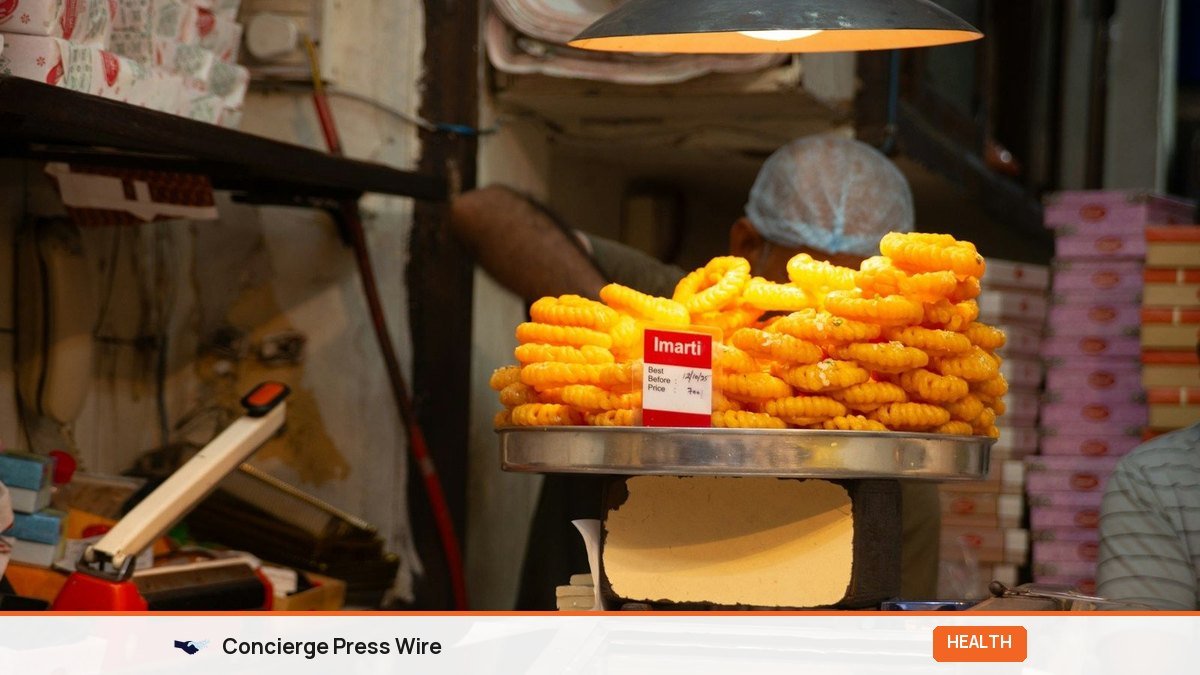
| Jalebi, imarti (deep fried and syrup-soaked) | A small piece of dry-fruit barfi or date roll | Not fried; sweetness comes largely from dates and nuts |
| Gulab jamun in syrup | Baked or steamed sandesh, or a small rasgulla with syrup squeezed out | Chhena based, not fried |
| Rich khoa barfi | Homemade besan or oats laddoo with jaggery, made small | You control ghee and sweetener; smaller size |
| Large bowl of kheer | Small bowl of low-sugar kheer with toned milk, or phirni with nuts | Less sugar and fat per serving |
| Deep-fried namkeen mix | Roasted makhana, roasted chana, or baked mathri | Roasted rather than fried; more protein in chana |
| Sweetened drinks and cold drinks | Buttermilk, nimbu pani with little sugar, coconut water | Less added sugar |
Two cautions. First, jaggery, honey and dates are still sugars. They may bring some minerals or fibre, but a laddoo made with jaggery is not “sugar-free”. Second, “sugar-free” sweets from shops often use sugar substitutes but can still be high in fat and calories. Read labels and treat them as sweets.
A Sample Festive Day Eating Plan
This is an illustrative plan for a healthy adult on a festival day with an evening puja and dinner. Adjust quantities to your own needs and medical advice.
| Time | What to eat |
|---|---|
| Morning | Water, then a light breakfast with protein: moong dal chilla, poha with peanuts, or vegetable upma with curd |
| Mid-morning | A fruit (guava, orange, papaya) or a handful of roasted chana |
| Lunch | Simple home meal: dal, sabzi, salad, curd, one or two rotis or a moderate portion of rice |
| Evening | Tea with less sugar, a few roasted makhana or nuts, not a full plate of namkeen |
| After puja | Prasad in a small portion, plus your planned one or two festive sweets |
| Dinner | Choose two or three festive dishes you really love, fill half the plate with salad and vegetables, and skip the dishes you only eat out of habit |
The idea is balance across the day. If lunch and breakfast are simple, the festive dinner does not tip you over.
Handling Parties, Office Boxes and Relatives
At parties and weddings
- Eat a small healthy snack before you leave home so you do not arrive starving.
- Walk around the whole buffet before taking anything. Pick what you truly want.
- Fill half your plate with salad, dal and vegetables first.
- Take a single serving of dessert, or share one with someone.
- Go easy on sweetened drinks and alcohol, which add calories quickly and make you less mindful of food.
With relatives who insist
“Arre, ek aur lo!” is part of Indian hospitality, and saying no can feel rude. A few polite lines help:
- “It is delicious. I will take one home for later.”
- “I just had one at the last house. Let me have some chai with you instead.”
- “Doctor ne bola hai thoda kam karo,” if that is actually true for you.
Take a small piece and eat it slowly. Most hosts are happy you tasted it; they are not counting.
In the office
Put the gift boxes in the pantry, not on desks. If you manage a team, consider dry fruits, fruit baskets, plants or useful gifts instead of more mithai.
Staying Active Through the Festive Rush
The World Health Organization recommends that adults get at least 150 minutes of moderate-intensity physical activity per week, plus muscle-strengthening activities on two or more days. WHO also notes that any amount of activity is better than none.
During festivals, aim for consistency rather than intense workouts:
- Daily brisk walk of 20-30 minutes, morning or after dinner. A post-meal walk after a heavy dinner is an easy habit to keep.
- Garba and dandiya count. A couple of hours of dancing is real movement, as long as the snacks afterwards do not cancel it out.
- Cleaning is activity. Diwali cleaning, climbing ladders and moving furniture are physical work; stay hydrated and lift carefully.
- Short strength sessions at home: squats, wall push-ups, lunges and planks, 10-15 minutes, two or three times a week.
- Take the stairs when visiting relatives in apartment buildings, where it is safe.
If you have joint problems, heart conditions or have been inactive for a long time, check with your doctor before starting a new exercise routine.
Sleep, Water and the Day After
- Sleep: late nights make you hungrier the next day, especially for sweet and fried foods. Try to keep a roughly regular wake-up time even during the holidays.
- Water: thirst is easy to mistake for hunger. Keep a bottle with you while visiting and shopping.
- The day after: do not “punish” yourself by skipping meals. Go back to simple, regular meals with plenty of vegetables, dal, curd and fruit. One heavy day does not undo weeks of good habits, and one light day does not undo a heavy one either.
Special Care for People with Diabetes and Other Conditions
People with diabetes, high blood pressure, heart or kidney disease need extra care during festivals. General points to discuss with your doctor:
- Whether and how much sweet is acceptable for you, and when in the day.
- How to adjust medication timing if meals are delayed or you fast during puja.
- How often to check blood sugar on festival days.
- Salt limits, since namkeen, pickles and papads carry a lot of hidden salt.
Do not change insulin or medicine doses on your own based on festival eating.
Frequently Asked Questions
How many sweets can I eat in a day during Diwali?
There is no single number for everyone. ICMR-NIN guidelines advise keeping added sugar below 5% of daily energy, around 25 g a day on a 2,000 kcal diet, which many festive sweets can reach in one or two pieces. For healthy adults, planning one or two small pieces a day is a sensible approach; people with medical conditions should ask their doctor.
Are jaggery sweets healthier than sugar sweets?
Jaggery is still a form of sugar. It may contain small amounts of minerals, but sweets made with jaggery should be eaten in the same limited portions as sugar-based ones.
Are sugar-free sweets safe to eat freely?
No. They may still be high in fat and calories from khoa, ghee and nuts. Check labels and eat them in normal sweet portions. People with diabetes should ask their doctor about sugar substitutes.
What are the lightest sweets to choose during festivals?
Generally, small portions of non-fried sweets such as sandesh, dry-fruit rolls, homemade besan or oats laddoos with controlled ghee, or a small bowl of low-sugar kheer are lighter than fried, syrup-soaked sweets like jalebi and gulab jamun.
How do I avoid weight gain between Navratri and Diwali?
Keep regular meals simple, set a daily sweet quota, avoid open snack bowls, walk every day and protect your sleep. Consistency over the weeks matters more than any single day.
Is it okay to skip dinner after eating too many sweets?
Skipping meals often leads to more snacking later. A light dinner with vegetables, dal and curd is usually a better choice than skipping, unless your doctor advises otherwise.
Celebrate the Festival, Not the Food Coma
Festivals are about family, light and gratitude, and good food is part of that. You do not have to refuse every sweet. Set a daily quota, choose the sweets you really love, keep the rest of your meals simple, and move your body every day. You will still enjoy every celebration, and you will not start the new year feeling like you need a reset.