PR for NGOs in India: Impact Stories, Media and CSR Visibility
How Indian nonprofits can turn field work into media coverage: story types, consent rules, pitch emails, CSR partner visibility and a press release template.
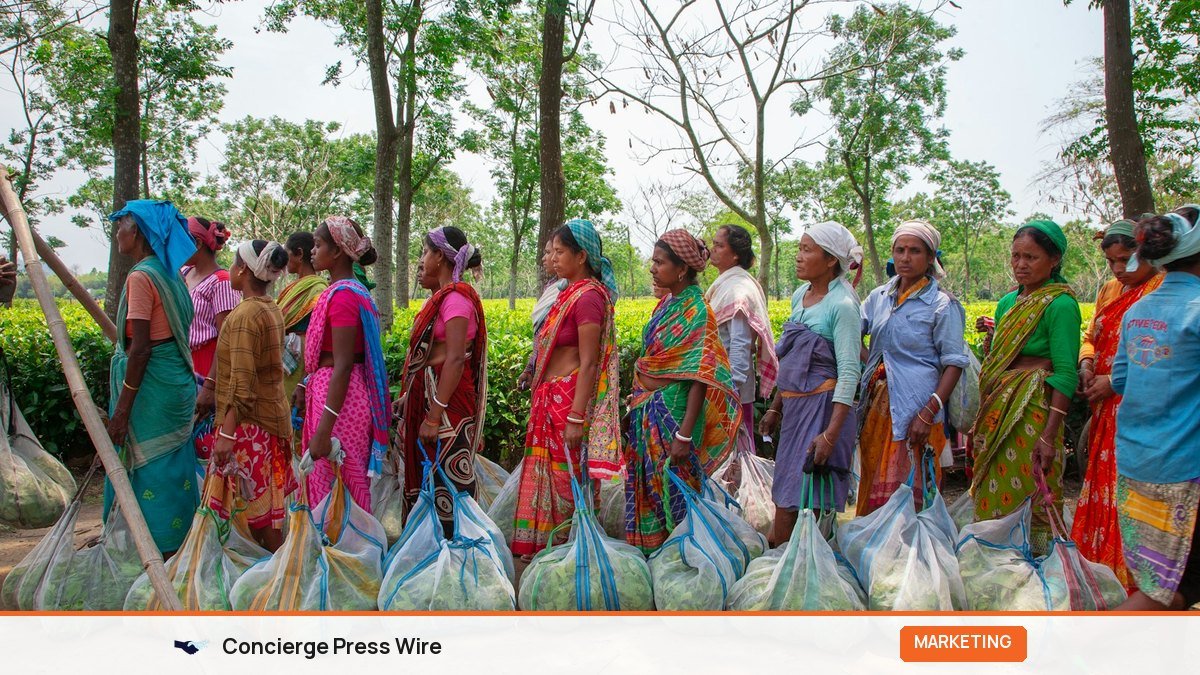
Good PR for an NGO in India comes down to three things: one clear impact story told with real numbers and a real person, a news angle that gives a journalist a reason to cover it this week, and visible credit for the donors and CSR partners who made it possible. This guide shows Indian nonprofits how to find those stories, pitch them to the right media, handle CSR partner visibility without turning coverage into an advert, and write a press release using the ready template near the end.
Key Takeaways
- Journalists cover change, not activity. “Distributed 500 kits” is activity; “Girls’ attendance rose after a bus route started” is change.
- Collect stories with written consent and protect the identity of children and vulnerable people, even if that means a weaker photo.
- CSR money is large and reported publicly. Companies filed Rs 34,908.75 crore of CSR spending for FY 2023-24, which means CSR teams need credible, publishable outcomes from partners.
- Credit CSR partners in a fixed, agreed way (one line in the release, logo on the project board), and let the beneficiary story lead.
- Local and regional-language media are usually the best first targets for NGOs. National media follows data, scale or a strong human story.
Why NGOs Need PR (and What It Is Not)
For a nonprofit, media coverage does three jobs. It builds credibility with donors and CSR teams who search your name before signing a cheque. It helps recruit volunteers and staff. And it can push an issue onto a district collector’s or ministry’s desk. What PR is not: a substitute for results, or a way to make a small project look bigger than it is. Inflated claims hurt NGOs more than businesses, because trust is the whole product.
Corporate social responsibility is a big reason this matters now. Under Section 135 of the Companies Act, 2013, companies above certain size thresholds (net worth of Rs 500 crore or more, turnover of Rs 1,000 crore or more, or net profit of Rs 5 crore or more) must spend at least 2% of their average net profit of the previous three years on CSR. According to a Ministry of Corporate Affairs reply in Parliament, reported on PIB, development CSR spending reached Rs 34,908.75 crore in FY 2023-24, up from Rs 30,932.08 crore in FY 2022-23. Every one of those rupees ends up in a company’s annual CSR report. Partners who can show and publicise outcomes clearly are easier to fund again.
Finding Your Impact Stories
Most NGOs have strong stories buried in field reports. Build a simple system to surface them.
The change-over-time test
A publishable impact story usually has a before, an intervention and an after, ideally with a number. Ask your field team every month:
- What changed for one person or one village this month that would not have happened without us?
- Can we show it with a number (attendance, income, test scores, crop yield, distance walked for water)?
- Will that person speak about it, on record, with consent?
Story types that work
| Story type | Example angle (illustrative) | Best media fit |
|---|---|---|
| Individual change | A woman in a self-help group in Assam starts a tea-processing unit and hires four neighbours | Regional newspapers, features, radio |
| Data milestone | Clinic network crosses 1 lakh consultations in a district, with outcomes | Business and development media, local news |
| Problem spotlight | Survey of 300 households shows how far families travel for drinking water in summer | National and regional news, data journalists |
| Model worth copying | A school-readiness method adopted by government anganwadis in a block | Education and policy media, government newsletters |
| Partnership or launch | New skilling centre opened with a CSR partner, with intake numbers and job links | Local news, trade media for the partner’s sector |
| Calendar hook | Programme results released on a relevant observance day (World Water Day, International Day of Persons with Disabilities) | All media on that day; pitch 10 to 14 days ahead |
Consent and dignity rules
- Get written consent (in the person’s language) for name, photo and quotes. Explain where the story will appear.
- Do not identify children who are survivors of abuse, trafficking or legal proceedings. Indian law protects their identity, and so should your PR. Use blurred or back-facing photos and changed names, and say that names have been changed.
- Avoid “poverty photos” that strip people of dignity. Show people doing things (working, learning, leading), not waiting to be helped.
- Let beneficiaries speak in their own words. A quote from a farmer beats a quote from your director.
Media Angles That Get NGOs Covered
Journalists are busy. Your pitch must answer “why this, why now, why our readers” in the first two lines.
- Newness. First in the district, first in the state, a new method, a new partnership. Be accurate: only claim “first” if you can prove it.
- Numbers with meaning. “Rs 4.2 lakh in extra annual income across 60 households” says more than “empowered 60 families”.
- Timeliness. Tie your story to monsoon floods, exam results, a heatwave, a new government scheme or an observance day.
- Local pride. Regional papers love stories about people from their area doing something remarkable.
- Policy relevance. If your data says something about a government scheme’s delivery, policy reporters may want it, presented fairly and without political spin.
Who to pitch
- District and city reporters of Hindi, English and regional-language dailies: the most reliable coverage for grassroots NGOs.
- Development and social-sector publications for programme design and learning stories.
- Business media CSR desks for partnership stories with measurable outcomes.
- Community radio and local TV for rural audiences.
- The CSR partner’s own channels: newsletters, LinkedIn, annual reports. These often reach the decision-makers who renew funding.
A short pitch email that works
Keep pitches under 150 words and personalise the first line. An illustrative example:
Subject: Girls’ attendance in [Block] up from 61% to 84% after village bus route
Hi [Name], I read your recent piece on school dropouts in [District]. Our team has a year of attendance data from 12 villages where we started a free bus route for girls in Classes 9 to 12. Attendance rose from 61% to 84%. Two students and their mothers are willing to speak on record, and the block education officer has seen the data. Happy to share the dataset and photos. Would this work for your page this week?
Follow up once after three or four days. If there is no reply, move on to the next journalist rather than sending repeated reminders.
CSR Partner Visibility Without Turning It Into an Advert
CSR partners want credit; journalists dislike corporate promotion. Handle both with an agreed visibility plan signed at the start of the project.
| Asset | Partner visibility | What to avoid |
|---|---|---|
| Press release | One line in the body (“supported by X under its CSR programme”) and a partner quote, plus boilerplate | Partner name in the headline unless the partnership itself is the news |
| Project site | Board or plaque with both logos | Branding on beneficiaries’ clothing or homes |
| Photos and video | Partner volunteers at work, with consent from everyone in frame | Staged cheque handovers as the main image |
| Social media | Tag the partner; share their posts | Posting before the partner’s communications team approves the wording |
| Impact report | Joint report with outcomes and honest learnings | Only success stories; reviewers notice |
Keep in mind that larger CSR programmes come with formal accountability. The PIB release notes that under Rule 8 of the Companies (CSR Policy) Rules, 2014, companies with an average CSR obligation of Rs 10 crore or more must commission an independent impact assessment of projects with outlays of Rs 1 crore or more. Clean data and well-documented stories make that assessment easier, and the assessment itself can become a credible news story when results are good.
Before you publicise any partnership, make sure your compliance basics are in place: valid registration of the trust, society or Section 8 company, 12A and 80G registrations (applied for on the income tax e-filing portal), CSR-1 registration if you receive CSR funds, and FCRA registration if you receive foreign contributions. A journalist or donor will check.
Press Release Template for NGOs
Use this structure. Keep it to 400 to 500 words. For more formats, see our press release samples for India, or draft one with the press release template generator.
FOR IMMEDIATE RELEASE
[Headline: the change, with a number] e.g. “School attendance among girls in [Block] rises to [X]% after free bus route launched by [NGO]”
[City], [Date]: [One sentence: who did what, where, and the result.] [Second sentence: why it matters, with context such as the district average or baseline.]
[Paragraph 2: How the programme works, in plain language. Duration, number of people reached, partners.]
“[Quote from a beneficiary, in their words, translated if needed],” said [Name, age, village] (with consent).
“[Quote from the NGO head explaining what comes next or what others can learn],” said [Name, designation, NGO].
[Paragraph 3: Partner credit. “The programme is supported by [Company] under its CSR initiative.” Optional partner quote.]
[Paragraph 4: Next steps or call to action: expansion plans, volunteer drive, report link.]
About [NGO]: [2 to 3 sentences: registration type, year founded, focus areas, states of work, website.]
Media contact: [Name, phone, email]. Photos and interviews available on request.
Check the most common reasons releases get ignored before you send it. Our list of press release rejection reasons covers vague headlines, missing contacts and promotional language.
A 90-Day PR Plan for a Small NGO
| Days | Focus | Actions |
|---|---|---|
| 1 to 30 | Foundations | Update website and social bios; build a media list of 20 to 30 local and sector journalists; create a consent form; collect 5 story leads from field teams |
| 31 to 60 | First stories | Write one press release and two short story pitches; pitch local media first; share a photo story on LinkedIn and Instagram |
| 61 to 90 | Partners and data | Release one data-based story (survey or milestone); co-publish a case study with your CSR partner; review what got coverage and why |
Measure what matters
Track coverage, but also track what it led to: donor enquiries, volunteer sign-ups, government meetings, CSR conversations. A single story in a district paper that gets your programme into the collector’s review meeting is worth more than ten online mentions.
Common PR Mistakes NGOs Make
- Leading with the organisation, not the person. “XYZ Foundation organised an event” rarely gets published.
- Jargon. “Holistic capacity-building interventions for marginalised stakeholders” means nothing to readers. Say what you did.
- No photos, or unusable photos. Send 3 to 5 sharp, captioned, consented images with every release.
- Sending on the event day. Pitch features a week or two before; send event releases the same day with photos within hours.
- Ignoring regional languages. A release in Hindi, Marathi, Tamil or Bengali often gets better pickup in local papers than an English one.
Frequently Asked Questions
Should a small NGO hire a PR agency?
Usually not at the start. One staff member spending a few hours a week on a media list, story collection and two pitches a month can get steady local coverage. Consider outside help for a major report launch or a crisis.
Can we name our CSR partner in the headline?
Only if the partnership itself is the news, such as a large new commitment. Otherwise lead with the impact and credit the partner in the body. Agree on wording with the partner in advance.
How do we protect beneficiaries’ privacy in media stories?
Take written informed consent, use changed names and non-identifying photos where there is any risk, and never identify child survivors or people in sensitive legal or health situations.
What numbers should an NGO press release include?
The baseline, the change, the number of people reached, the time period and, where possible, the cost per person. Make sure every figure comes from your own records and can be shown to a journalist if asked.
Which companies have to spend on CSR?
Under Section 135 of the Companies Act, 2013, companies meeting any one of these in the preceding financial year: net worth of Rs 500 crore or more, turnover of Rs 1,000 crore or more, or net profit of Rs 5 crore or more. Rules change, so check MCA’s current notifications.
Is media coverage useful for CSR funding?
It helps, mainly as proof of credibility and outcomes. CSR teams still decide based on compliance, track record and measurable results.
Tell the Story Your Work Has Earned
Pick one programme this month, find one person whose life measurably changed, get consent, and write it up using the template above. Pitch it to three local journalists before you think about national media. Consistent, honest stories build the reputation that keeps funding, volunteers and attention coming back.