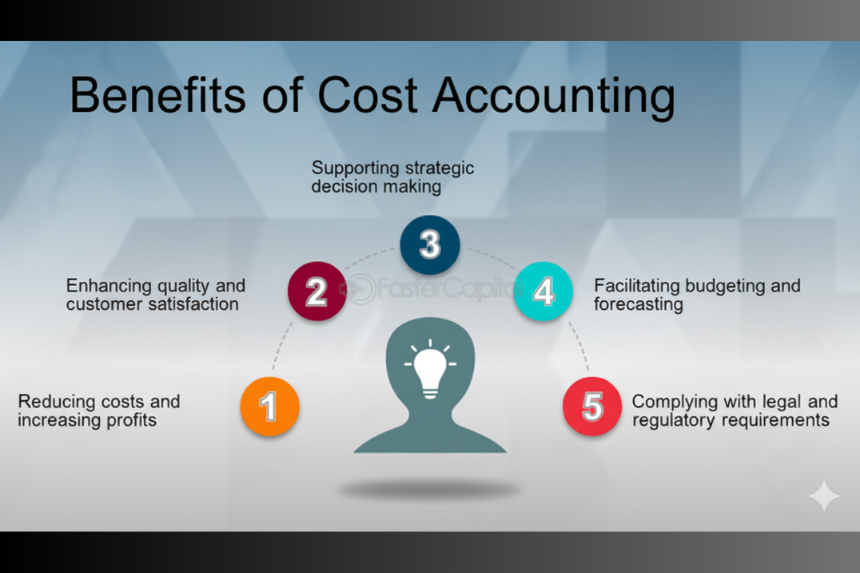
Running a profitable business in today’s competitive environment requires more than strong sales; it demands precise cost visibility, smarter financial decisions, and the ability to control expenses before they become a problem. That is exactly where the advantages of cost accounting come into play. Many companies struggle because they rely only on financial accounting, which records results but doesn’t explain why costs rise, where money leaks, or how managers can optimize spending. Without visibility into cost drivers, cost centers, and operational inefficiencies, profitability becomes uncertain and unpredictable.
- What Is Cost Accounting? Understanding the Foundation
- The Key Advantages of Cost Accounting
- 1. Improves Cost Control Across Departments
- 2. Supports Accurate Pricing Decisions
- 3. Enhances Profitability Through Better Decision-Making
- 4. Boosts Operational Efficiency and Resource Utilization
- 5. Strengthens Budgeting and Forecasting Accuracy
- 6. Facilitates Inventory Valuation and Cost Allocation
- 7. Helps Identify and Eliminate Unprofitable Products or Activities
- 8. Improves Communication Between Departments
- How Cost Control Drives Profitability
- Practical Tips for Implementing Cost Accounting Effectively
- Common Pitfalls and How to Avoid Them
- Mini Summary Before the Conclusion
- Conclusion
- FAQs
- 1. What are the main advantages of cost accounting for a business?
- 2. What is cost accounting in simple terms?
- 3. How does cost control improve profitability?
- 4. What are cost centers in cost accounting?
- 5. How does cost accounting help in pricing decisions?
- 6. What skills should an accountant cost specialist have?
- 7. Is cost accounting relevant for service businesses too?
Cost accounting fills this gap by offering detailed, decision-ready insights into production expenses, overhead allocation, labor efficiency, and resource utilization. Whether you’re a manufacturing firm seeking better cost control or a service business evaluating project profitability, cost accounting provides the transparency leaders need. This article breaks down the core advantages, practical methods, cost control strategies, and real-world examples. You’ll also learn what cost accounting is, how accountant cost structures vary, and how businesses use these techniques to reduce waste, support pricing decisions, and improve profit margins. Let’s explore how cost systems create sustainable financial performance.
What Is Cost Accounting? Understanding the Foundation
Cost accounting is a specialized branch of managerial accounting that measures, analyzes, and reports the costs associated with producing goods or delivering services. Unlike financial accounting focused on external reporting, cost accounting supports internal decision-making.
It provides granular insight into:
- Raw material consumption
- Labor utilization
- Manufacturing overhead
- Department or process-specific expenses
- Profitability per product, customer, or project
A key feature of cost accounting is its ability to isolate costs by cost centers. A cost center can be a department (like production), a process (like machining), or even a machine responsible for specific output. This enables accurate cost allocation and better control over resource consumption.
Types of Cost Accounting Systems
Different businesses adopt different systems based on their operations. The major systems include:
- Standard Cost Accounting: Assesses performance by comparing actual costs to predefined standards.
- Marginal Costing: Focuses on variable costs and contribution margin.
- Activity-Based Costing (ABC): Allocates overhead based on cost drivers rather than broad averages.
- Job Order Costing: Suitable for customized projects or small batches.
- Process Costing: Ideal for mass production industries such as chemicals or textiles.
Each method helps organizations measure efficiency and profitability more accurately, strengthening long-term financial control.
The Key Advantages of Cost Accounting
Cost accounting delivers a powerful mix of financial and operational benefits. Here are the most important advantages businesses rely on.
1. Improves Cost Control Across Departments
One of the biggest advantages of cost accounting is its ability to strengthen cost control. By analyzing expenses across cost centers, businesses can identify where inefficiencies occur and what corrective action is needed.
How Cost Accounting Enhances Cost Control
- Tracks expenses in real time
- Detects cost overruns early
- Links spending to production output
- Helps set budgets for materials, labor, and overhead
For example, if labor costs rise in the assembly department, cost accounting reveals whether the issue is overtime, low productivity, or scheduling inefficiencies. Managers can then adjust staffing levels, training, or process design.
Practical Cost Control Measures
- Establishing cost benchmarks
- Using variance analysis for quick feedback
- Monitoring machine efficiency and downtime
- Implementing monthly cost reports
These steps keep expenses aligned with production goals and improve operational discipline.
2. Supports Accurate Pricing Decisions
Pricing can make or break profitability. Without knowing the true cost of production, companies risk underpricing, which erodes profits, or overpricing, which drives customers away.
How Cost Accounting Helps Set the Right Price
- Calculates cost per unit with precision
- Identifies overhead absorption rates
- Measures variable vs fixed cost behavior
- Provides contribution margin analysis
Consider a furniture manufacturer evaluating the cost of a custom table. Cost accounting allows the firm to include direct materials, labor hours, machine time, and an accurate share of overhead. This ensures pricing reflects true costs while maintaining competitive margins.
3. Enhances Profitability Through Better Decision-Making
Every management decision has cost implications. Cost accounting equips leaders with data-driven insights to evaluate alternatives.
Examples of Cost-Informed Decisions
- Whether to expand production or outsource
- Choosing between manual labor and automation
- Determining which products to discontinue
- Evaluating new market entry or new product lines
A simple cost-volume-profit (CVP) analysis can reveal how changes in price, costs, or volume affect profit. Managers can model scenarios before committing to major decisions, minimizing financial risks.
4. Boosts Operational Efficiency and Resource Utilization
Many businesses experience invisible waste, unused machine time, excess material scrap, or bottlenecks in production. Cost accounting uncovers these inefficiencies.
Key Efficiency Metrics Tracked
- Labor productivity
- Machine utilization
- Scrap and rework percentages
- Inventory turnover
For instance, identifying a high scrap rate in the cutting department may prompt a review of equipment calibration or operator training. These adjustments directly reduce cost and increase output efficiency.
5. Strengthens Budgeting and Forecasting Accuracy
Effective budgeting requires realistic, data-backed assumptions. Cost accounting provides detailed historical cost records and trends.
Budgeting Benefits
- Reliable cost estimates for future production
- Department-wise spending limits
- More accurate cash flow projections
- Forecasting seasonal or cyclical variations
Managers can compare actual results to the budget, investigate variances, and revise spending plans accordingly. Budget discipline ultimately leads to better cost control and improved profitability.
6. Facilitates Inventory Valuation and Cost Allocation
Inventory valuation directly affects gross profit and tax liabilities. Cost accounting ensures accurate inventory tracking using systematic cost allocation.
Inventory Methods Supported
- FIFO
- LIFO
- Weighted average cost
- Standard costing
Accurate cost allocation helps determine the true cost of items in stock, the cost of goods sold (COGS), and the profitability of product lines.
7. Helps Identify and Eliminate Unprofitable Products or Activities
Not all products or projects contribute equally to profitability. Cost accounting highlights areas where returns are low.
How It Identifies Unprofitable Segments
- Segment-wise profit reporting
- Contribution margin analysis
- Overhead absorption comparison
- Customer or project-level cost visibility
For example, a product with high sales but low margins might lead to hidden losses due to excessive overhead consumption. Cost accounting exposes these issues, helping companies streamline offerings.
8. Improves Communication Between Departments
Cost accounting creates a shared financial language for production, marketing, procurement, and finance.
Why This Matters
- Aligns goals across departments
- Reduces conflicts over resource allocation
- Enhances accountability
- Builds transparency in decision-making
Regular cost reports encourage collaboration and continuous improvement.
How Cost Control Drives Profitability
Cost control transforms raw cost data into actionable improvements. It focuses on regulating future expenses to ensure operations remain efficient.
1. Establishing Cost Standards and Benchmarks
Standard costs act as a target for material usage, labor performance, and overhead expenditure. Comparing actual costs with standards reveals gaps that impact profitability.
Example
If the standard direct material cost is $30 per unit but the actual cost rises to $35, managers investigate causes such as supplier price hikes or waste.
2. Implementing Variance Analysis
Variance analysis helps businesses understand whether deviations are favorable or unfavorable.
Common Variances
- Material price variance
- Labor efficiency variance
- Overhead expenditure variance
Quickly spotting variances allows timely correction, preventing long-term financial impact.
3. Monitoring Key Performance Indicators (KPIs)
Cost accounting supports KPI tracking across cost centers, enabling constant improvement.
Relevant Cost KPIs
- Cost per unit
- Overtime ratio
- Process cycle time
- Average inventory holding cost
These insights improve productivity and reduce unnecessary expenditure.
4. Supporting Lean and Six Sigma Initiatives
Cost accounting provides the financial baseline for waste reduction programs.
Examples of Waste Identified
- Overproduction
- Excess inventory
- Waiting time
- Motion inefficiencies
By quantifying waste, cost accounting helps justify process improvements.
Practical Tips for Implementing Cost Accounting Effectively
To fully enjoy the advantages of cost accounting, businesses must apply the right practices and tools.
1. Choose the Right Costing Method
Select a system aligned with operations ABC for complex overhead, process costing for mass production, and job costing for customized work.
2. Create Clear Cost Centers
Define departments, machines, or activities as separate cost centers for precise tracking.
3. Invest in Modern Costing Software
Tools like SAP, Oracle, or QuickBooks Advanced automate cost allocation and reporting.
4. Train Managers to Interpret Cost Reports
Reports are useful only if decision-makers understand them.
5. Review and Update Cost Standards Regularly
Inflation, wage changes, or new technology can make old standards irrelevant.
Common Pitfalls and How to Avoid Them
Even with a strong system, businesses can make mistakes.
1. Over-Allocation of Overhead
Using broad averages leads to inaccurate product costs.
Solution: Use activity-based costing or machine-hour rates.
2. Ignoring Indirect Costs
Many firms track direct costs but overlook hidden overhead.
Solution: Identify all cost drivers and assign overhead fairly.
3. Relying Only on Historical Data
Old data may not reflect current performance.
Solution: Balance historical analysis with real-time tracking.
Mini Summary Before the Conclusion
- Cost accounting provides granular visibility into production costs.
- Major advantages include better cost control, accurate pricing, and improved decision-making.
- Cost centers and cost allocation help identify inefficiencies.
- Strong cost control directly leads to higher profitability.
- Implementing the right costing system ensures sustainable financial performance.
Conclusion
Understanding the advantages of cost accounting is essential for any business aiming to strengthen profitability and financial resilience. By providing accurate cost insights, identifying waste, improving pricing decisions, and supporting better planning, cost accounting becomes the backbone of strategic decision-making. When combined with disciplined cost control, companies gain the power to operate efficiently even in fluctuating markets. While the system requires thoughtful implementation and ongoing monitoring, the long-term benefits of greater transparency, better margins, and stronger competitiveness are undeniable. Whether you’re a small business or a growing enterprise, cost accounting remains one of the most effective tools for building sustainable profitability.
FAQs
1. What are the main advantages of cost accounting for a business?
Key advantages include better cost control, accurate pricing, improved decision-making, and enhanced profitability.
2. What is cost accounting in simple terms?
It’s a system that measures and analyzes the costs of producing goods or delivering services for internal decision-making.
3. How does cost control improve profitability?
By reducing waste, regulating expenses, improving process efficiency, and preventing cost overruns.
4. What are cost centers in cost accounting?
Cost centers are departments, machines, or processes where costs are separately tracked for analysis and control.
5. How does cost accounting help in pricing decisions?
It calculates true product costs, ensuring prices reflect expenses and support healthy profit margins.
6. What skills should an accountant cost specialist have?
They should understand cost allocation, variance analysis, budgeting, and managerial accounting tools.
7. Is cost accounting relevant for service businesses too?
Yes service firms use cost accounting to analyze project costs, labor efficiency, and service profitability.