Gita Jayanti 2026: Date, Mokshada Ekadashi and Kurukshetra Mahotsav
Gita Jayanti and Mokshada Ekadashi fall on Sunday, 20 December 2026. Here are the timings, the meaning of the day and how to observe it.
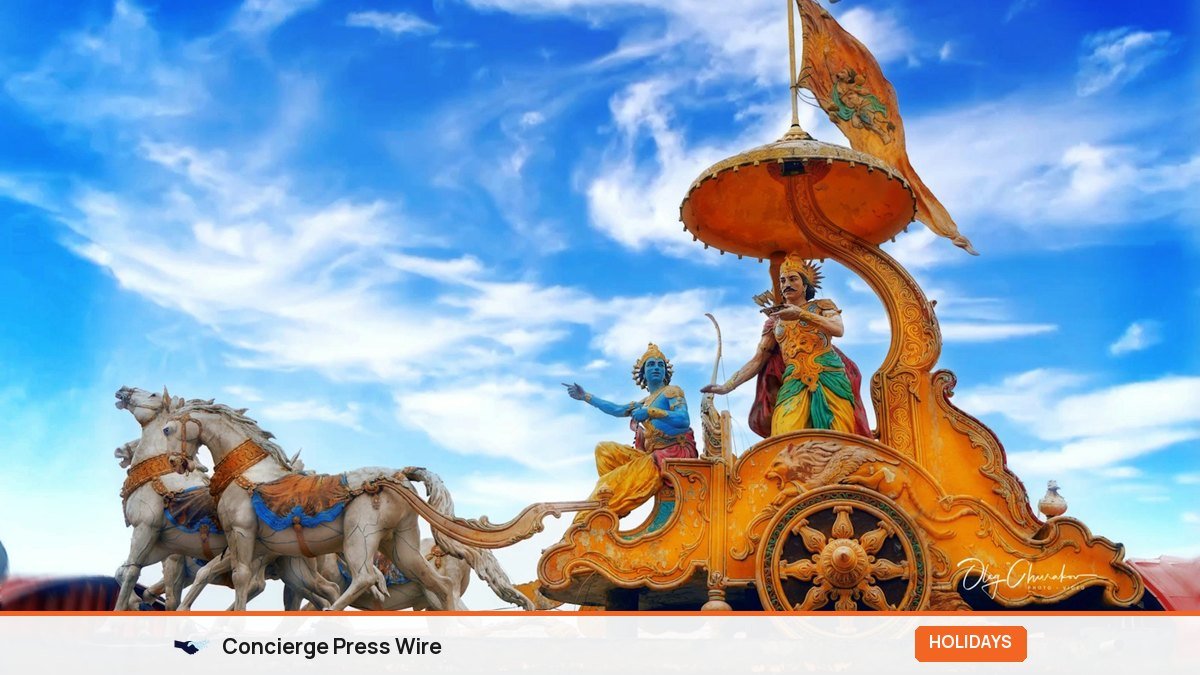
Gita Jayanti 2026 falls on Sunday, 20 December 2026, the Shukla Ekadashi of Margashirsha, which is also observed as Mokshada Ekadashi. This guide gives you the verified tithi timings, why the day is special, what happens at the International Gita Mahotsav in Kurukshetra this year, and a simple plan to observe the day at home, whether you fast or not.
Key Takeaways
- Gita Jayanti 2026 is on Sunday, 20 December 2026, as per Drik Panchang for New Delhi. It marks the 5163rd anniversary of the Bhagavad Gita by the traditional count.
- Ekadashi tithi begins at 10:09 PM on 19 December and ends at 8:14 PM on 20 December 2026.
- The same Ekadashi is observed as Mokshada Ekadashi, a fast associated with liberation and with praying for ancestors.
- The International Gita Mahotsav in Kurukshetra runs from 5 to 25 December 2026, according to its official website.
- At home, reading or listening to even one chapter of the Gita, with a simple puja and optional fast, is the heart of the observance.
Quick answer (Updated November 2026): Gita Jayanti and Mokshada Ekadashi 2026: Sunday, 20 December 2026. Ekadashi tithi: 10:09 PM, 19 December to 8:14 PM, 20 December 2026 (New Delhi). International Gita Mahotsav, Kurukshetra: 5 to 25 December 2026.
Gita Jayanti 2026 date and timings
| Detail | 2026 |
|---|---|
| Gita Jayanti | Sunday, 20 December 2026 |
| Also observed as | Mokshada Ekadashi |
| Hindu month | Margashirsha, Shukla Paksha |
| Ekadashi begins | 10:09 PM, Saturday, 19 December 2026 |
| Ekadashi ends | 8:14 PM, Sunday, 20 December 2026 |
| Anniversary | 5163rd year of the Gita (traditional count) |
| Timings for | New Delhi (IST) |
Source: Drik Panchang, Gita Jayanti 2026. Timings shift a little by city. Those keeping the Ekadashi fast should also check the parana (fast-breaking) time for 21 December in their own city on the panchang, and some Vaishnava calendars may observe Ekadashi on a different day in certain years, so follow your sampradaya’s calendar.
What Gita Jayanti celebrates
Gita Jayanti marks the day Lord Krishna spoke the Bhagavad Gita to Arjuna on the battlefield of Kurukshetra, just before the Mahabharata war. Arjuna, seeing his teachers, cousins and elders on the opposing side, put down his bow and refused to fight. Krishna, serving as his charioteer, answered his doubts in a conversation of 700 verses across 18 chapters.
The Gita is part of the Bhishma Parva of the Mahabharata. Its teaching covers duty (dharma), action without attachment to results (karma yoga), knowledge (jnana yoga) and devotion (bhakti yoga). It is one of the most translated and commented-upon texts from India, read by spiritual seekers, students, leaders and ordinary families alike.
A few verses people return to
- Chapter 2, verse 47: “You have a right to your action, but never to its fruits.” This is the most quoted line on work and stress.
- Chapter 2, verse 20: the soul is not born and does not die.
- Chapter 4, verses 7 and 8: Krishna says he appears in every age whenever dharma declines.
- Chapter 18, verse 66: the closing call to surrender, often called the essence of the Gita.
Translations differ in wording, so read a version from a translator or tradition you trust.
Mokshada Ekadashi: meaning and story
“Mokshada” means “giver of liberation”. The Ekadashi of Margashirsha Shukla Paksha carries this name, and in most calendars it falls on the same day as Gita Jayanti, as it does in 2026.
A popular story linked to this Ekadashi tells of King Vaikhanasa, who dreamed that his late father was suffering in the lower worlds. He asked sages what to do. On the advice of the sage Parvata, he observed the Mokshada Ekadashi fast with his family and offered its merit to his father, who was then freed. Because of this story, many families pray for their ancestors on this day.
| Observance | Gita Jayanti | Mokshada Ekadashi |
|---|---|---|
| Focus | The birth of the Bhagavad Gita | Fasting for spiritual liberation and ancestors |
| Main practice | Reading, chanting and discussing the Gita | Ekadashi fast, Vishnu or Krishna puja |
| Who observes | Gita readers, schools, temples, ISKCON and many sampradayas | Vaishnavas and Ekadashi-keepers |
| 2026 date | 20 December | 20 December |
International Gita Mahotsav 2026 in Kurukshetra
Kurukshetra in Haryana, identified in tradition as the battlefield of the Mahabharata, hosts the International Gita Mahotsav every year. The official International Gita Mahotsav website lists the 2026 edition from 5 to 25 December 2026, and news reports from November 2026 describe it as a 21-day festival.
What to expect
- Brahma Sarovar: the main venue, a vast sacred tank where evening aarti, cultural performances and craft stalls draw large crowds.
- Jyotisar: a short drive from the town, traditionally identified as the spot where Krishna spoke the Gita, with a banyan tree said to be a witness to the discourse.
- Saras and crafts mela: artisans from many states sell handloom, handicraft and regional food. The festival has partner states and partner countries each year; check the official site for 2026.
- Gita path and seminars: mass recitation of the Gita, seminars on its teachings and spiritual discourses, usually around Gita Jayanti itself.
- Deepotsav and aarti: lamps lit around the sarovar in the evenings around the main day.
Planning a visit
- Reach: Kurukshetra has a railway station and is close to the Delhi-Ambala highway. Delhi is roughly three to four hours by road, depending on traffic.
- Best days: Gita Jayanti (20 December) is the most crowded and the most special. Weekdays earlier in the festival are calmer for the craft fair.
- Stay: book early in Kurukshetra, or stay in nearby towns. Check Haryana Tourism for state-run options.
- Weather: December mornings and nights in Haryana are cold and can be foggy. Carry woollens, and plan for slower road travel in fog.
- Programme: event schedules are posted on the official website and local media closer to the date, so check before you go.
How to observe Gita Jayanti at home
A simple morning puja
- Wake early, bathe and wear clean clothes.
- Place a picture of Krishna and Arjuna on the chariot, or of Krishna alone, along with a copy of the Bhagavad Gita, on a clean cloth.
- Light a ghee diya and incense. Offer flowers, tulsi leaves, chandan and fruit.
- Offer a flower to the Gita book itself, treating it as a living teacher.
- Read at least one chapter. If you are new to the Gita, Chapter 2 or Chapter 12 (Bhakti Yoga, only 20 verses) are good starting points.
- End with aarti and share prasad.
Mokshada Ekadashi fast
Traditional Ekadashi fasting avoids grains and beans. Some people keep a nirjala (waterless) fast, others take fruit, milk and nuts, and others eat one sattvic meal without grains. The fast is broken the next morning, 21 December, during the parana time given in your local panchang.
Fasting is a personal choice. If you are pregnant, elderly, diabetic, on medication or have any health condition, consult your doctor before fasting, or simply observe the day through reading and prayer.
A one-day Gita reading plan
| Time | Reading | Why |
|---|---|---|
| Morning | Chapter 2 (Sankhya Yoga) | The core teaching on the soul and on action |
| Afternoon | Chapter 12 (Bhakti Yoga) | Short, devotional and easy for children to follow |
| Evening | Chapter 15 (Purushottama Yoga) | Traditionally recited before meals in many homes |
| Before sleep | Chapter 18, last verses | The summary and closing message |
If a full chapter feels like too much, read the 18 shlokas many families pick as a “one verse from each chapter” set, or listen to a recitation while commuting.
Ideas for families, schools and workplaces
- Families: each person reads one verse aloud and says what it means to them in one sentence. Children remember this far better than a lecture.
- Schools: shloka recitation, a short drama on the Kurukshetra scene, or a drawing competition of Krishna as charioteer.
- Housing societies: a group Gita path in the clubhouse, with a simple prasad.
- Workplaces: a voluntary 20-minute session on Chapter 2, verse 47 and what “work without attachment to results” means for deadlines and stress. Keep it optional and respectful of all faiths.
- Giving: gift a Bhagavad Gita copy in a regional language to a library, school or a family that does not have one.
Businesses that sell books, puja items or devotional music often plan small Gita Jayanti offers; keep them in good taste and focused on the text rather than discounts.
Lessons from the Gita for daily work and business
Many people who never read scripture still turn to the Gita when work feels overwhelming. You do not have to treat it as a management book, but a few of its ideas translate naturally into everyday life.
Do your work, let go of the outcome
Chapter 2, verse 47 is not an instruction to stop caring about results. It asks you to give full attention to the action in front of you, and not to let fear of the result freeze you, as it froze Arjuna. A shop owner who keeps worrying about this month’s sales can still choose to serve the next customer well.
Steadiness in success and failure
The Gita describes the sthitaprajna, a person of steady wisdom, who stays balanced in gain and loss. For founders and professionals, this is a reminder that one good quarter or one bad review does not define you.
Your own duty, even if imperfect
Krishna tells Arjuna that it is better to do one’s own dharma imperfectly than another’s perfectly (Chapter 3, verse 35). In daily terms, focus on the role you have taken on, rather than copying someone else’s path because it looks easier from outside.
Clarity before action
The whole Gita is a conversation that happens before the battle begins. Arjuna asks hard questions first and acts afterwards. Taking time to think clearly before a major decision is itself part of doing the work well.
Read these verses in a translation you trust and reflect on what they mean for your own life; interpretations vary across traditions and teachers.
Choosing a Gita translation
A good translation makes the difference between giving up after a chapter and reading the whole text. Some practical guidance:
- Read in your own language. The Gita is available in Hindi, Gujarati, Marathi, Tamil, Telugu, Bengali, Kannada, Malayalam and many more. Gita Press, Gorakhpur publishes low-cost editions in several languages.
- Pick one with the Sanskrit and word meanings if you want to learn the shlokas, or a prose version if you want the flow of the conversation.
- Know the tradition. Commentaries from Advaita, Vaishnava and other schools emphasise different things. Neither is wrong; just know which one you are reading.
- Try audio. Many temples and organisations offer free recitations with meaning, useful for elders with weak eyesight.
Frequently Asked Questions
When is Gita Jayanti in 2026?
Gita Jayanti 2026 is on Sunday, 20 December 2026. The Ekadashi tithi runs from 10:09 PM on 19 December to 8:14 PM on 20 December 2026, as per Drik Panchang for New Delhi.
Are Gita Jayanti and Mokshada Ekadashi the same day?
They are both observed on the Shukla Ekadashi of Margashirsha month. In 2026 both fall on 20 December. Some calendars may differ in some years, so check your local panchang.
How many years old is the Bhagavad Gita?
By the traditional count used by Drik Panchang, 2026 marks the 5163rd anniversary of the Gita. Historians and scholars date the text differently, so treat this as the traditional reckoning.
When is the International Gita Mahotsav 2026?
The official website lists 5 to 25 December 2026 in Kurukshetra, Haryana. Gita Jayanti on 20 December is usually the peak day.
What should I read on Gita Jayanti if I am a beginner?
Start with Chapter 12, which is short and devotional, or Chapter 2, which carries the core teaching. A translation with simple commentary helps.
When should the Mokshada Ekadashi fast be broken in 2026?
On the morning of 21 December 2026, during the parana window listed for your city in the panchang. Do not break it before sunrise on 21 December.
Make one chapter yours this year
Mark Sunday, 20 December 2026 on your calendar and pick one chapter to read slowly with your family. If you can travel, spend a day at Brahma Sarovar and Jyotisar during the Gita Mahotsav. Event schedules and local timings can change, so check the official festival site and your city’s panchang a few days before.