How to Build a Media List in India: Beats, Contacts and Template
A step-by-step guide to building a focused, lawful media list for Indian journalists, with beat mapping, regional desks and a ready spreadsheet template.
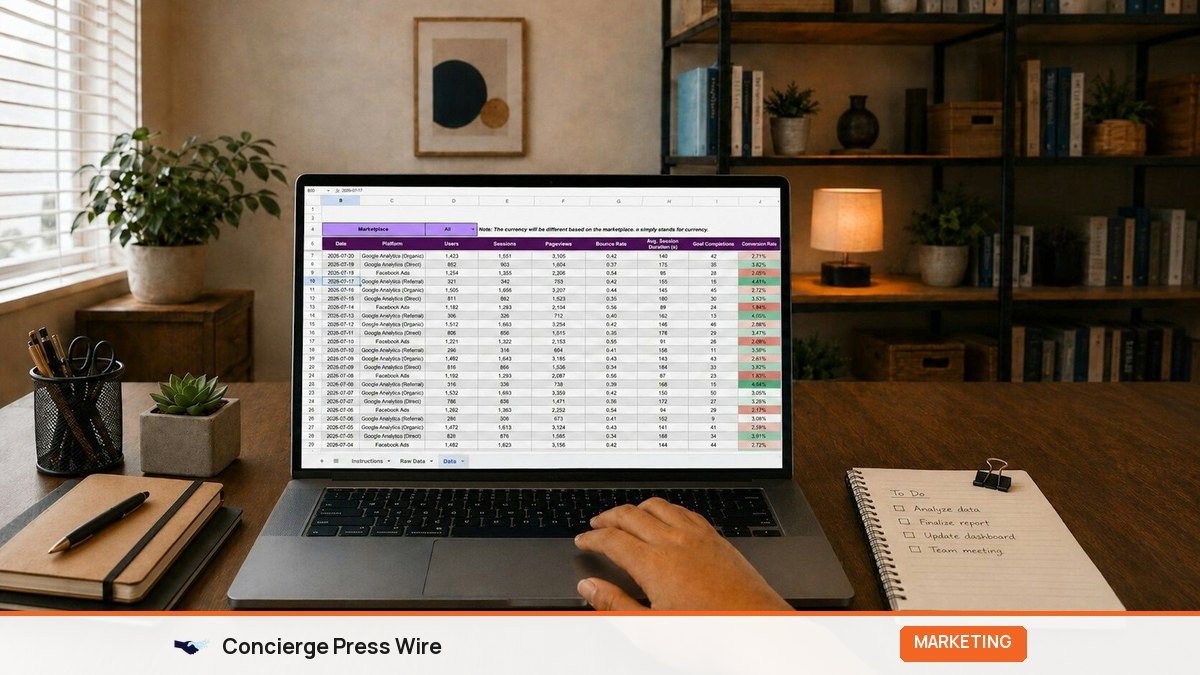
A good media list is a short, accurate spreadsheet of the reporters who actually cover your subject, and it is the single biggest reason some Indian businesses get coverage while others get silence. This guide walks you through building one from scratch: how Indian newsrooms divide beats, where to find the right reporters on X, LinkedIn and in bylines, how to cover regional desks, a ready spreadsheet template, and how to keep the list legal under India’s data protection law.
Key Takeaways
- Build your list around beats, not publications. The startup reporter at a business daily matters more than the paper’s general inbox.
- Start from recent bylines: anyone who wrote about your sector in the last three months is a candidate. Check X and LinkedIn to confirm their current role.
- Do not ignore regional-language and city desks. For many MSMEs, a Marathi, Tamil or Gujarati paper is a more realistic and valuable first win.
- A focused list of 30 to 60 well-researched contacts beats a bought list of 5,000 emails.
- Journalists’ names and emails are personal data under the Digital Personal Data Protection Act, 2023. Collect only what you need, keep it secure and remove people who opt out.
What a media list is (and is not)
A media list is your working database of journalists, editors, producers, newsletter writers and podcasters who might cover your news, with notes on what each one writes about and how they like to be contacted. It is not a mass-mail database. The goal is to send each story to the five or ten people for whom it is genuinely relevant.
A strong list helps in three ways:
- Relevance: you stop pitching a fintech story to a lifestyle writer.
- Speed: when news breaks, you know exactly who to call in the first hour.
- Relationships: notes on past conversations let you build on them instead of starting cold every time.
How Indian newsrooms are organised
Understanding the structure tells you who to look for.
| Outlet type | Who to target | Notes |
|---|---|---|
| National English dailies | Beat reporters, city editors, supplement editors | City supplements often cover local businesses, events and launches |
| Business dailies | Sector reporters (startups, retail, auto, banking, telecom, FMCG) | Often split by city bureau: Mumbai, Delhi, Bengaluru, Chennai |
| News agencies (wires) | Bureau reporters, business desk | A wire story can be republished by many outlets |
| Regional-language papers | District correspondents, city desk, business page editor | Huge readership; often more open to local business stories |
| TV channels | Assignment desk, show producers | Need visuals and a spokesperson available on short notice |
| Digital news and startup media | Staff reporters, contributing writers | Fast-moving; active on X and LinkedIn |
| Trade publications | Editors and correspondents | Small audience, but exactly the right one for B2B |
| Newsletters and podcasts | Writers and hosts | Growing fast; often reachable directly |
Common beats to search for
Startups and funding, technology, telecom, e-commerce and retail, consumer goods, auto and EVs, banking and fintech, real estate, healthcare and pharma, education, agriculture, energy and climate, travel and hospitality, food, fashion and lifestyle, personal finance, careers and HR, and city news. List the three or four beats your business genuinely fits before you start searching.
Step-by-step: building the list
- Define your story types. Funding, product launch, expert commentary, local event, data report, hiring. Each attracts different reporters.
- Pick target outlets. Write down 15 to 25 outlets your customers actually read, across national, regional, trade and digital.
- Search recent bylines. For each outlet, search your sector keywords (for example “D2C skincare”, “EV charging”, “MSME exports”) and note who wrote relevant stories in the last three months.
- Confirm on social profiles. Check each reporter’s X and LinkedIn bio to confirm their current outlet and beat. Journalists move jobs often.
- Find the right contact route. Many reporters list a work email in their bio or author page. If not, use the outlet’s published newsroom or desk email, or a LinkedIn message.
- Add regional and city desks. Identify the business or city desk for the language papers in your state.
- Tier the list. Tier 1: perfect fit, pitch personally. Tier 2: good fit, pitch with tailored notes. Tier 3: wider net for formal announcements.
- Record notes. Recent articles, interests, preferred contact method, past interactions.
Finding reporters on X and LinkedIn
On X (formerly Twitter)
- Use advanced search for keywords plus terms like “reporter”, “correspondent” or “journalist” in bios, filtered to India-relevant terms such as city names.
- Search for phrases journalists use when looking for sources, such as “looking to speak to” or “reach out if”, combined with your sector.
- Look at who shares and comments on stories in your sector; journalists often amplify each other’s work.
- Many journalists keep public lists of other reporters on their beat. These are goldmines.
On LinkedIn
- Search people by title (“Senior Correspondent”, “Assistant Editor”, “Principal Correspondent”) and filter by current company.
- Check the activity tab to see what they have written recently.
- Connect with a short note that references a specific article. Do not pitch in the connection request.
Other places to find the right reporters
- Author pages: most news sites have an author page listing every story a reporter has written, which is the fastest way to confirm their beat.
- Event speaker lists: industry conferences and startup events often feature journalists as moderators; their bios name their beat.
- Award juries and panels: editors who sit on sector award juries usually cover that sector closely.
- Newsletters: sign up for the free newsletters of outlets in your sector and note the writers who cover your space.
- Your own coverage: anyone who has written about your competitors or your category is a strong candidate, because they already understand the context.
Avoid scraping tools that harvest contact details in bulk. They tend to collect wrong or personal details and can create legal and reputational problems.
Etiquette that protects your reputation
- Do not DM a pitch to someone who says in their bio “no pitches via DM”.
- Never add journalists to WhatsApp groups or broadcast lists without permission.
- Do not call a reporter’s personal phone number unless they have given it to you for that purpose.
Covering regional and language media
India’s press is overwhelmingly regional and multilingual. The Press Registrar General of India (PRGI), which registers newspapers and periodicals under the Press and Registration of Periodicals Act, 2023, publishes lists of registered titles and its annual Press in India reports. These help you discover publications in your state and language you may not know about.
Practical steps for regional coverage:
- Buy or browse the main language papers in your city for two weeks and note the business page bylines and the district correspondents.
- Call the paper’s city office and ask who handles business or local enterprise news. A polite call is normal and often welcome.
- Prepare your press note in the language of the paper, or at least a translated summary. Our guide to writing a press release for Indian media covers structure that translates well.
- Include photos with captions; regional papers use local photos heavily.
Your media list spreadsheet template
Use Google Sheets or Excel with these columns. Keep one row per person, not per outlet.
| Column | What to record | Example (illustrative) |
|---|---|---|
| Tier | 1, 2 or 3 | 1 |
| Name | Full name as in byline | [Reporter name] |
| Outlet | Publication or channel | [Business daily] |
| Role and beat | Title and coverage area | Senior Correspondent, startups and D2C |
| City / bureau | Where they are based | Bengaluru |
| Language | Language they write in | English |
| Work email / contact route | Only publicly listed or shared work contacts | Work email from author page |
| X / LinkedIn | Profile links | Profile URLs |
| Recent relevant stories | Two links and dates | Story on D2C funding, Sept 2026 |
| Interests / angle notes | What they look for | Likes data-led stories, founder profiles |
| Preferred contact | Email, LinkedIn, phone | Email, no calls |
| Last contact | Date and topic | 12 Aug 2026, launch pitch |
| Outcome | Covered, declined, no reply | Covered |
| Source of contact | Where you found the details | Byline page |
| Opt-out | Yes / No | No |
Size guide
- Local business or MSME: 20 to 40 contacts.
- Funded startup with national ambitions: 60 to 120 contacts across tiers.
- Multi-sector company: separate tabs per business line.
Keeping the list accurate and lawful
Maintenance routine
- Monthly: check that Tier 1 contacts are still in the same role.
- Before every pitch: read the reporter’s last three stories.
- Quarterly: remove bounced emails and people who changed beats; add new names from recent bylines.
- Always: honour any request to stop contacting someone, immediately.
Data protection
Journalists’ names, emails and phone numbers are personal data. The Digital Personal Data Protection Act, 2023 and the DPDP Rules, 2025 set out how organisations must handle such data. According to the PIB release of 14 November 2025, the Rules provide an 18-month phased compliance timeline and are built on principles including purpose limitation, data minimisation, storage limitation and security safeguards. In practical terms for a media list:
- Collect only what you need to pitch (name, outlet, beat, work contact).
- Prefer contact details the journalist has made public for work, and record where you found them.
- Restrict access to the sheet; do not share it publicly or with unrelated vendors.
- Delete or update details that are out of date, and act on opt-outs promptly.
This is general guidance, not legal advice. Rules are being phased in, so check the current requirements or speak to a lawyer if you handle large contact databases.
Why not just buy a list?
Purchased lists are usually out of date, include people who never agreed to be contacted, and lead to spam complaints that hurt your email domain. A wire distribution service is a separate option for formal announcements; see our overview of press release distribution in India for how that differs from personal pitching.
Worked example: a 30-name list for a Pune D2C brand
This example is illustrative. A Pune-based millet snacks brand wants coverage for a new product line and a factory expansion.
- Tier 1 (8 names): food and FMCG reporters at two business dailies; startup reporters at two digital startup outlets; Pune city editors at one English and one Marathi daily.
- Tier 2 (12 names): health and nutrition writers; food newsletters; a regional business TV producer; a trade magazine for food processing.
- Tier 3 (10 names): lifestyle supplement editors, two podcast hosts on food entrepreneurship, district correspondents near the new factory.
The factory story goes first to the Marathi daily and the trade magazine, which care about local jobs and capacity. The product story goes to food and lifestyle writers. Nobody receives both unless both are relevant to them.
Frequently Asked Questions
How many journalists should be on my media list?
For most small businesses, 20 to 60 carefully chosen contacts are enough. Quality and relevance matter far more than size.
Is it legal to collect journalists’ emails in India?
Collecting work contact details that journalists publish for professional purposes is common practice, but the data is still personal data under the DPDP Act. Use it only for relevant pitching, keep it secure and respect opt-outs. Check with a lawyer for large-scale use.
Should I pitch journalists on WhatsApp?
Only if the journalist has given you their number for that purpose. Never add reporters to groups or broadcast lists without permission.
How often should I update the media list?
Check Tier 1 contacts monthly and do a full clean-up every quarter. Journalists change outlets and beats often.
Do regional-language journalists accept English press releases?
Some do, but a version in their language, or at least a translated summary, greatly improves your chances of coverage.
What is the difference between a media list and a distribution service?
A media list is your own curated set of contacts for personal pitching. A distribution service sends a formal release through its network. Many businesses use both for different purposes.
Start with ten names this week
You do not need a perfect database to begin. Find ten reporters who wrote about your sector in the last three months, confirm their roles, note what they cover and add them to the template. Grow it a little every week, keep it clean and lawful, and you will have the most valuable PR asset a small business can own.