Navratri 2026: Dates, 9 Days’ Colours, Goddesses and Significance
Sharad Navratri 2026 begins on 11 October. Here is the full day-by-day calendar with colours, goddesses, muhurats and why Ashtami and Navami fall together this year.
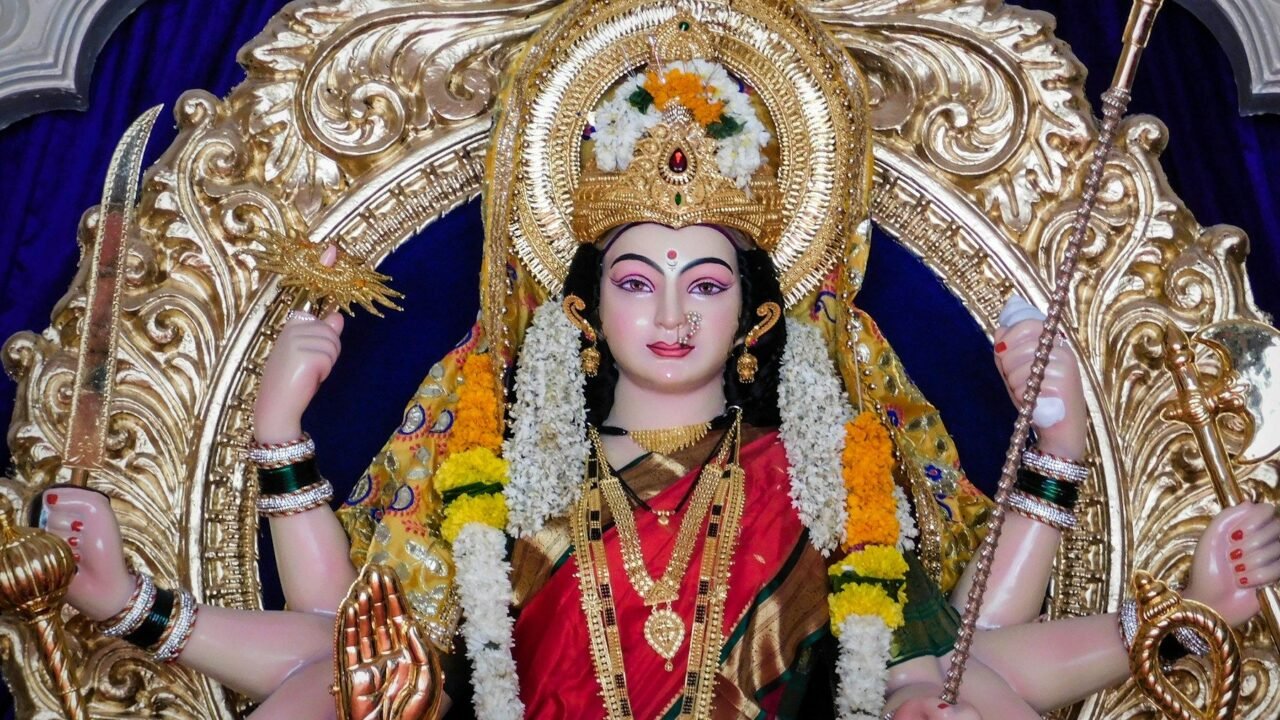
Sharad Navratri 2026 begins with Ghatasthapana on Sunday, 11 October and ends with Vijayadashami (Dussehra) on Tuesday, 20 October. This guide gives you the day-by-day calendar, the colour for each of the nine days, the goddess worshipped on each day, the key muhurats, and what the festival actually means, so you can plan puja, fasting and garba nights without hunting through five different websites.
Key Takeaways
- Sharad Navratri 2026 runs from Sunday, 11 October to Monday, 19 October; Dussehra falls on Tuesday, 20 October.
- Ghatasthapana is on 11 October, with the main morning muhurat roughly between 6:19 AM and 10:12 AM (New Delhi timings).
- Because Navratri starts on a Sunday this year, the colour sequence begins with orange and ends with peacock green.
- Drik Panchang lists Durga Ashtami and Maha Navami together on Monday, 19 October for New Delhi, so check your local panchang before fixing Kanya Pujan.
- Mysuru Dasara follows its own panchang this year, with Jamboo Savari on Wednesday, 21 October.
Navratri 2026 Dates at a Glance
Sharad Navratri, also called Shardiya or Ashwin Navratri, starts on the Pratipada (first day) of the bright half of the Hindu month of Ashwin. In 2026 that falls on Sunday, 11 October. The nine nights of worship run until Monday, 19 October, and Vijayadashami is celebrated on Tuesday, 20 October.
The dates below follow the Drik Panchang Shardiya Navratri calendar for New Delhi. Tithis are calculated from sunrise, so dates can shift by a day in some cities and in regional calendars such as the Bengali panjika or the Mysuru panchanga.
| Day | Date | Goddess | Colour | Main ritual |
|---|---|---|---|---|
| Day 1 | Sun, 11 Oct | Shailputri | Orange | Ghatasthapana (Kalash Sthapana) |
| Day 2 | Mon, 12 Oct | Brahmacharini | White | Chandra Darshan |
| Day 3 | Tue, 13 Oct | Chandraghanta | Red | Sindoor Tritiya |
| Day 4 | Wed, 14 Oct | Kushmanda | Royal Blue | Kushmanda Puja |
| Day 5 | Thu, 15 Oct | Skandamata | Yellow | Upang Lalita Vrat |
| Day 6 | Fri, 16 Oct | Katyayani | Green | Saraswati Avahan |
| Day 7 | Sat, 17 Oct | Kalaratri | Grey | Saraswati Puja |
| Day 8 | Sun, 18 Oct | Mahagauri | Purple | Ashtami tithi begins during the day |
| Day 9 | Mon, 19 Oct | Siddhidatri | Peacock Green | Durga Ashtami, Sandhi Puja, Maha Navami |
| Day 10 | Tue, 20 Oct | — | — | Navratri Parana, Durga Visarjan, Vijayadashami |
Why Ashtami and Navami fall on the same day this year
This is the question most families will ask in 2026. Hindu festival dates follow the tithi that prevails at sunrise. This year the Ashtami tithi begins after sunrise on Sunday, 18 October and ends before noon on Monday, 19 October. So sunrise on the 18th still belongs to Saptami, and sunrise on the 19th belongs to Ashtami, which then gives way to Navami later that morning.
The result: Drik Panchang lists Durga Ashtami, Mahagauri Puja, Sandhi Puja and Maha Navami together on Monday, 19 October for New Delhi, with Sandhi Puja from about 10:27 AM to 11:15 AM. Some other calendars show Durga Ashtami on Sunday, 18 October. Neither is a mistake; they apply slightly different rules. If your family does Kanya Pujan on Ashtami, ask your purohit or follow the panchang your household has always used.
Bengal keeps its own schedule. Durga Puja in Kolkata runs roughly from Shashthi on 17 October to Bijoya Dashami on 21 October, with Maha Ashtami on the 19th and Maha Navami on the 20th.
Ghatasthapana 2026: Muhurat and How to Do It
Ghatasthapana marks the formal start of Navratri. A kalash (pot) is set up to invoke the goddess, and barley or wheat seeds are sown in a bed of soil beside it. The sprouts, called jawara or khetri, are watched over for nine days.
For New Delhi, the widely published morning muhurat on 11 October 2026 is roughly 6:19 AM to 10:12 AM. If you miss it, the Abhijit muhurat around midday (approximately 11:44 AM to 12:31 PM) is treated as the backup window. Timings change with your city’s sunrise, so confirm locally.
What you need
- A clay or copper kalash, filled with clean water, a coin, supari, akshat (rice) and a few mango leaves around the mouth
- A coconut wrapped in red cloth or chunri, tied with mauli, placed on the kalash
- A shallow clay tray, clean soil and barley (jau) seeds for the jawara
- Roli, haldi, kumkum, flowers, a diya with ghee, incense and a red cloth for the chowki
- An image or idol of Maa Durga
Simple step-by-step
- Clean the puja area and spread a red cloth on a wooden chowki facing east or north.
- Spread soil in the tray, sow the barley, and sprinkle a little water.
- Place the kalash in the middle or beside the tray, draw a swastika on it with roli, and fill it.
- Arrange the mango leaves and set the coconut on top.
- Invoke Lord Ganesha first, then Maa Durga, and light the akhand jyoti if your family keeps one burning for nine days.
- Water the seeds lightly each morning. Healthy green sprouts by Navami are traditionally seen as a good sign for the household.
The Nine Goddesses of Navratri and What They Represent
Each day is dedicated to one of the Navadurga, the nine forms of Goddess Durga. Knowing the story behind each form makes the daily puja feel less like a checklist.
Day 1 – Maa Shailputri
The daughter of the mountain king Himavan, and a rebirth of Sati. She rides a bull and holds a trident and lotus. She represents strength rooted in stability, which is why Navratri starts with her.
Day 2 – Maa Brahmacharini
Parvati in her years of severe penance to win Lord Shiva. She walks barefoot with a rosary and kamandal. Her day is linked to discipline, patience and self-control, the same qualities a nine-day vrat asks of you.
Day 3 – Maa Chandraghanta
She wears a half-moon shaped like a bell on her forehead and rides a tiger. She is the fierce protector who remains calm for her devotees. Many married women observe Sindoor Tritiya on this day.
Day 4 – Maa Kushmanda
Believed to have created the universe with her smile. Pumpkin (kushmanda) is associated with her, which is why some households offer petha or kaddu dishes on this day.
Day 5 – Maa Skandamata
The mother of Kartikeya (Skanda), shown with the child in her lap. She stands for a mother’s protective love.
Day 6 – Maa Katyayani
Born to sage Katyayan, she is the warrior form who defeated Mahishasura. Unmarried girls traditionally pray to her for a good life partner, a practice mentioned in the Bhagavata Purana’s story of the gopis.
Day 7 – Maa Kalaratri
The darkest and fiercest form, who destroys fear, negativity and evil. Despite her frightening appearance she is also called Shubhankari, the one who does good.
Day 8 – Maa Mahagauri
Radiant and white, she symbolises purity and forgiveness. Kanya Pujan is performed on Ashtami in many North Indian homes, where young girls are invited, their feet washed, and they are served halwa, puri and kala chana.
Day 9 – Maa Siddhidatri
The giver of siddhis, or spiritual powers. She is seated on a lotus and worshipped by gods and humans alike. Navami ends with havan in many homes.
Navratri 2026 Colours: The Full List and How It Is Decided
The practice of wearing a fixed colour each day of Navratri is most popular in Maharashtra and Gujarat, and has spread across offices and colleges all over India. The colours are tied to the day of the week, not to a fixed date. Since Navratri begins on a Sunday in 2026, the sequence starts with orange.
- 11 Oct (Sunday) – Orange: warmth, energy and enthusiasm
- 12 Oct (Monday) – White: peace and purity
- 13 Oct (Tuesday) – Red: passion, strength and the goddess’s shakti
- 14 Oct (Wednesday) – Royal Blue: depth, calm and trust
- 15 Oct (Thursday) – Yellow: joy, optimism and learning
- 16 Oct (Friday) – Green: growth, fertility and new beginnings
- 17 Oct (Saturday) – Grey: balance and humility
- 18 Oct (Sunday) – Purple: ambition and devotion
- 19 Oct (Monday) – Peacock Green: uniqueness and compassion
A practical tip: if you are heading to garba every night, lay out all nine outfits the Sunday before Navratri. Grey, royal blue and peacock green are the three colours people most often discover they do not own, and buying them during Navratri week means paying festival prices.
Why Navratri Is Celebrated: The Significance
The best-known story comes from the Devi Mahatmya, part of the Markandeya Purana. The buffalo demon Mahishasura had received a boon that no man or god could kill him. The gods combined their energies to create Goddess Durga, who fought him for nine days and killed him on the tenth. Vijayadashami, the “victory tenth”, celebrates that win.
In North India, the same tenth day also marks Lord Rama’s victory over Ravana. Ramlila performances run through the nine nights in towns such as Varanasi, Ayodhya and across Delhi, ending with the burning of Ravana effigies on Dussehra.
There is a seasonal meaning too. Sharad Navratri comes at the turn from monsoon to autumn, when the old agricultural calendar moved towards the kharif harvest. The sowing of barley at Ghatasthapana reflects this link between the festival and the earth’s fertility.
Philosophically, many teachers describe the nine days in three sets of three: the first three to remove negativity (Durga), the next three to build positive qualities (Lakshmi), and the last three for knowledge and wisdom (Saraswati).
How Different States Celebrate Navratri
The same nine nights look completely different depending on where you are in India.
- Gujarat: Nine nights of garba and dandiya raas around a decorated garbo (earthen lamp). Gujarat Tourism highlights Vadodara and Ahmedabad as the biggest hubs, along with Shakti Peeth visits to Ambaji, Pavagadh and Bahucharaji.
- West Bengal, Assam, Odisha, Tripura: Durga Puja pandals, dhunuchi dance, sindoor khela on Dashami and immersion processions.
- Maharashtra: Ghatasthapana at home, the nine-colour tradition, bhondla songs in rural areas and garba in cities like Mumbai.
- Karnataka: Mysuru Dasara, with the illuminated palace and the Jamboo Savari elephant procession. In 2026 the state has scheduled Jamboo Savari for Wednesday, 21 October, a day after Dussehra in most national calendars.
- Tamil Nadu, Andhra Pradesh, Telangana: Golu or Bommai Kolu doll displays in Tamil homes and Bathukamma floral festivities in Telangana. Saraswati Puja and Ayudha Puja are major days.
- Himachal Pradesh: Kullu Dussehra, which begins on Vijayadashami and continues for about a week with processions of village deities.
- Punjab, Haryana, Delhi, Uttar Pradesh: Fasting, jagrata (all-night devotional singing), Kanya Pujan and Ramlila.
Fasting During Navratri 2026: Basic Rules
Families follow very different fasting practices. Some eat one sattvic meal a day, some only fruit and milk, and some fast just on the first and last days. Common rules in North and West India:
- No grains like wheat, rice or regular dals. Kuttu (buckwheat), singhara (water chestnut) flour, rajgira and samak rice are used instead.
- Sendha namak (rock salt) replaces regular table salt.
- No onion, garlic, meat, eggs or alcohol.
- Potatoes, sweet potatoes, arbi, pumpkin, raw banana, sabudana, makhana, peanuts, dairy and fruits are allowed in most homes.
- Many avoid turmeric, hing and mustard seeds, but jeera, black pepper, green chilli and ginger are generally accepted.
Parana, the breaking of the fast, is done on Dashami (20 October) in the Drik Panchang calendar, after the Navami rituals are complete. If you have diabetes, blood pressure issues, are pregnant or take regular medicines, speak to your doctor before a strict nine-day fast. A modified fast with fruit, curd and one proper meal is perfectly acceptable in most traditions.
Dussehra 2026 and the Days After
Vijayadashami falls on Tuesday, 20 October 2026. Across North India, Ravana, Meghnad and Kumbhakarna effigies are burnt at dusk. In Maharashtra and Karnataka, people exchange apta (Shami or Bauhinia) leaves as “gold”. Ayudha Puja, the worship of tools, vehicles and instruments, is done by many South Indian families on Navami or Dashami, and it is considered a good day to start a new venture, buy a vehicle or begin learning something new (Vidyarambham in Kerala).
Diwali follows about three weeks later. With Navratri starting on 11 October this year, the whole festive season shifts later than in 2025, which matters if you are planning leave, travel bookings or shopping.
Frequently Asked Questions
When does Navratri start in 2026?
Sharad Navratri 2026 starts on Sunday, 11 October with Ghatasthapana and ends on Monday, 19 October. Vijayadashami (Dussehra) is on Tuesday, 20 October.
What is the colour for the first day of Navratri 2026?
Orange. The first day falls on a Sunday, and the colour sequence is decided by the weekday on which Navratri begins.
Is Durga Ashtami on 18 or 19 October 2026?
Drik Panchang lists Durga Ashtami and Maha Navami together on Monday, 19 October for New Delhi, because the Ashtami tithi begins after sunrise on the 18th. Some calendars show Ashtami on the 18th. Follow your local panchang or family purohit.
What is the Ghatasthapana muhurat for 2026?
For New Delhi, the morning muhurat on 11 October 2026 is approximately 6:19 AM to 10:12 AM, with an Abhijit muhurat around 11:44 AM to 12:31 PM as a backup. Check your city’s timings, as they vary with sunrise.
When is Mysuru Dasara Jamboo Savari in 2026?
The Karnataka government has scheduled the Jamboo Savari floral tribute for Wednesday, 21 October 2026, between 4:10 PM and 4:35 PM, based on the Mysuru panchanga. Dasara festivities are inaugurated on 11 October.
Can I drink tea or coffee during the Navratri fast?
Most households allow tea, coffee and milk during a Navratri vrat, but some strict fasts permit only water and fruit. There is no single rule; follow your family tradition.
Plan Early and Celebrate Well
Navratri 2026 starts later than last year, and the Ashtami-Navami overlap on 19 October is the one detail most likely to cause confusion at home. Fix your Ghatasthapana time for 11 October, lay out your nine colours in advance, and confirm the Kanya Pujan date with your local panchang. Once that is sorted, the nine nights are yours to enjoy, whether that means a quiet puja at home, a Durga Puja pandal hop, or dancing garba until midnight.