20 Navratri Vrat Recipes: Easy Sabudana, Kuttu and Samak Dishes
Twenty tested Navratri fasting recipes for breakfast, lunch, dinner and sweets, with quantities, common mistakes and a simple meal plan for all nine days.
These 20 Navratri vrat recipes cover breakfast, lunch, dinner, snacks and sweets using the flours and ingredients most Indian households allow during the fast: sabudana, kuttu, singhara, rajgira, samak rice, makhana, potatoes and dairy. Each recipe comes with quantities for two to three people and the one mistake that usually ruins it, so you can cook nine days of meals without repeating the same aloo sabzi every night.
Key Takeaways
- Sharad Navratri 2026 runs from 11 to 19 October, so plan and stock vrat flours in the first week of October.
- Soak sabudana correctly (just enough water to cover it) and you avoid 90 percent of sticky khichdi problems.
- Kuttu and singhara flour go rancid quickly; buy small, sealed packs and check the manufacturing date.
- Balance each fasting day with protein (paneer, curd, makhana, peanuts) and not just fried potato dishes.
- Rules differ by family; check what your household allows before cooking.
What You Can and Cannot Eat During the Navratri Vrat
There is no single national rulebook for a Navratri fast. What follows is the most common practice in North and West Indian homes. If your family avoids something on this list, skip that recipe.
| Generally allowed | Generally avoided |
|---|---|
| Kuttu (buckwheat), singhara (water chestnut), rajgira (amaranth) flours | Wheat, maida, rice, suji, besan |
| Samak (barnyard millet, also called sama or vrat ke chawal) | Regular dals and rajma |
| Sabudana, makhana, peanuts, dry fruits | Onion and garlic |
| Potato, sweet potato, arbi, pumpkin, raw banana, lauki | Common salt (replaced by sendha namak) |
| Milk, curd, paneer, ghee, butter | Turmeric, hing and mustard seeds in many homes |
| Jeera, black pepper, green chilli, ginger, coriander, lemon | Meat, eggs and alcohol |
Note that kuttu is a seed, not a cereal, and samak is a millet that is treated as a fasting food in most traditions. Some families in Maharashtra and Gujarat eat only fruit, milk and sabudana; others take one full vrat meal a day. Both are valid.
Stock your vrat pantry before 11 October
Navratri 2026 begins on Sunday, 11 October. Shops raise prices of kuttu and singhara flour during the festival week, and kuttu flour has a poor safety record in festival season. During Navratri in September 2025, around 200 people in north-west Delhi were hospitalised with vomiting and dizziness after eating food made from kuttu atta, according to The Tribune, and similar outbreaks have been reported in earlier years. Buy from a trusted brand or a busy local chakki, and keep the flour in an airtight container in the fridge.
A basic nine-day pantry for a family of three:
- Sabudana: 1 kg
- Kuttu atta: 500 g
- Singhara atta: 500 g
- Rajgira atta or rajgira puffs: 250 g each
- Samak rice: 1 kg
- Makhana: 250 g
- Raw peanuts: 500 g
- Sendha namak: 1 packet
- Ghee: 500 g to 1 kg depending on how much you fry
- Potatoes, sweet potatoes, arbi, pumpkin, lemons, green chillies, ginger and coriander bought fresh every two or three days
Sabudana Recipes (1 to 5)
1. Sabudana Khichdi
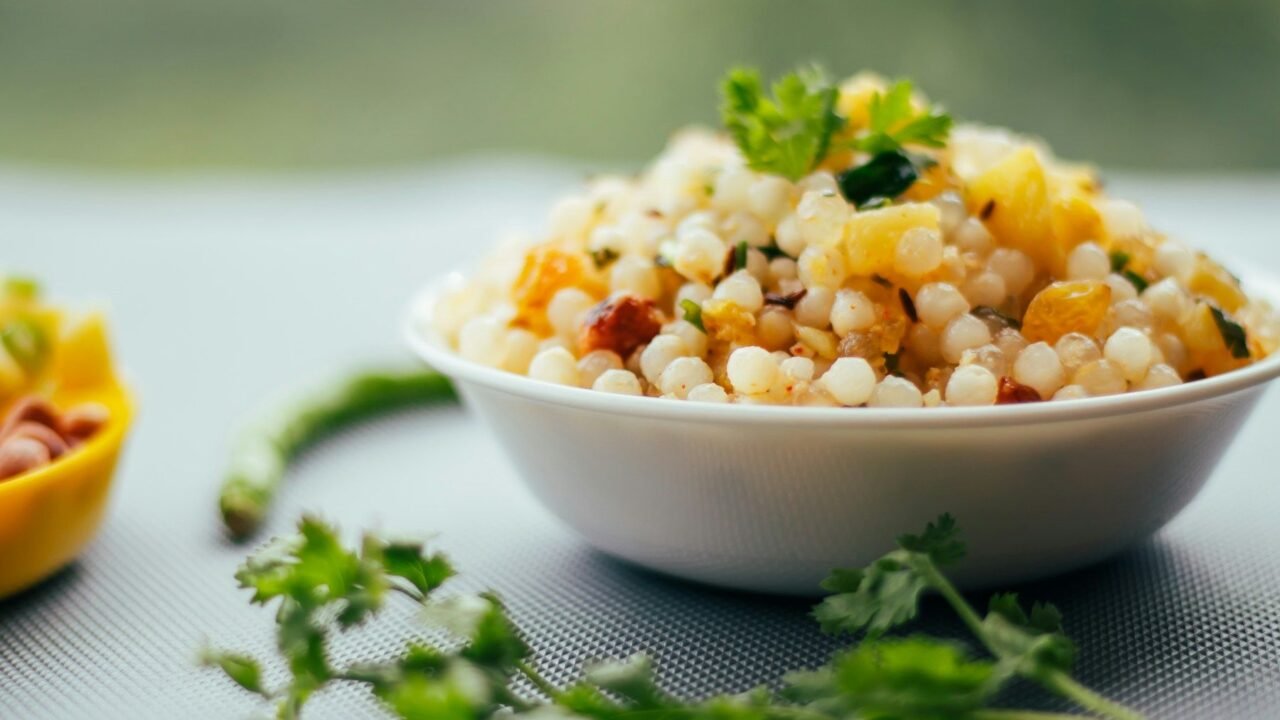
You need: 1 cup sabudana, 1 boiled potato (cubed), 1/3 cup roasted and coarsely crushed peanuts, 1 tsp jeera, 2 green chillies, sendha namak, 1 tsp sugar (optional), lemon, coriander, 2 tbsp ghee.
Method: Rinse the sabudana two or three times until the water runs mostly clear. Add water just to the level of the pearls, not above, and soak for 5 to 6 hours or overnight. Press a pearl between your fingers; it should mash easily. Mix the peanuts, salt and sugar into the soaked sabudana. Heat ghee, add jeera and chillies, then potato, then the sabudana. Cook on low flame for 5 to 7 minutes, stirring gently, just until the pearls turn translucent. Finish with lemon and coriander.
The common mistake: too much water while soaking, or overcooking. Both give you glue. Switch off the flame the moment the pearls turn clear.
2. Sabudana Vada
Mash 1 cup soaked sabudana with 2 boiled potatoes, 1/2 cup crushed peanuts, green chilli, ginger, jeera, coriander and sendha namak. Shape into flat discs and deep fry in medium-hot oil until golden. For a lighter version, cook them in an appam pan with a teaspoon of ghee in each cavity. Serve with curd-based green chutney.
3. Sabudana Thalipeeth
A Maharashtrian flatbread. Use the same mix as vada, add 2 tbsp rajgira or singhara flour to bind, and pat it thin on a greased plastic sheet or banana leaf. Transfer to a hot tawa, poke three or four holes, drizzle ghee into them and cook covered until crisp on both sides.
4. Sabudana Kheer
Soak 1/4 cup sabudana for an hour. Boil 1 litre full-cream milk, add the sabudana and cook on low for 15 to 20 minutes, stirring often, until the pearls are clear and the milk thickens. Add 4 tbsp sugar, cardamom powder and a few strands of saffron. Garnish with chopped almonds. Good for Ashtami bhog.
5. Sabudana Tikki with Curd Dip
Take leftover sabudana khichdi, mash in 1 boiled potato and 1 tbsp singhara flour, shape into small tikkis and shallow fry. This is the easiest way to use up khichdi that turned a bit sticky.
Kuttu Recipes (6 to 9)
6. Kuttu Ki Puri
You need: 1 cup kuttu atta, 1 medium boiled potato, sendha namak, ajwain is avoided in many homes so use a pinch of jeera instead, water as needed.
Kuttu has no gluten, so the dough breaks easily. The boiled potato acts as the binder. Grate it into the flour, add salt, and knead with very little water into a firm dough. Roll between two greased sheets of plastic and fry in hot oil. Serve with aloo sabzi made in curd or tomato gravy.
7. Kuttu Paratha
Use the same dough as puri, but roll slightly thicker and cook on a tawa with ghee. Stuff with spiced mashed paneer for a more filling meal that also gives you protein.
8. Kuttu Pakode
Make a thick batter with kuttu atta, sendha namak, green chilli and water. Dip thin slices of potato, raw banana or paneer and fry. Kuttu batter absorbs more oil than besan, so keep the oil properly hot and drain on kitchen paper.
9. Kuttu Dosa
Mix 1 cup kuttu atta with 1/2 cup curd and water into a pouring batter. Rest for 20 minutes. Spread thin on a hot, greased tawa and fill with dry aloo bhaji made with jeera, green chilli and sendha namak. A good South Indian twist for anyone tired of puris.
Samak Rice Recipes (10 to 12)
Samak (barnyard millet) cooks faster than regular rice. Wash it well, and use about 2 cups water for 1 cup samak for a fluffy texture.
10. Samak Pulao
Heat ghee, add jeera, green chilli, cubed potato and a handful of peanuts. Add 1 cup washed samak, sauté for a minute, then 2 cups water and sendha namak. Cover and cook on low for 10 to 12 minutes. Finish with coriander and a squeeze of lemon. Serve with plain curd or a vrat-style kadhi.
11. Samak Khichdi
Cook 1/2 cup samak with 1 cup chopped lauki, potato and a handful of peanuts in 2 1/2 cups water with ginger and sendha namak. Mash lightly at the end. This is the gentlest option for elders or anyone with acidity.
12. Samak Kheer
Cook 1/4 cup washed samak in 750 ml milk until soft, about 20 minutes on low flame. Sweeten with sugar or jaggery (add jaggery only after switching off the flame so the milk doesn’t split). Flavour with cardamom.
Singhara and Rajgira Recipes (13 to 15)
13. Singhara Atta Halwa
Roast 1/2 cup singhara atta in 4 tbsp ghee on low flame for about 8 minutes until it turns light brown and smells nutty. Slowly add 1 1/2 cups hot water with 1/2 cup sugar dissolved in it, stirring constantly to avoid lumps. Cook until it leaves the sides of the pan. This is a classic Ashtami prasad in many homes.
14. Rajgira Paratha
Mix 1 cup rajgira atta with 1 boiled potato, sendha namak and chopped coriander. Knead into a soft dough, roll with a light hand, and cook on a tawa with ghee. Rajgira has a slightly grassy taste that pairs well with curd.
Tip on mixing flours: many cooks mix kuttu and singhara in equal parts for puris and parathas. Singhara makes the dough softer; kuttu adds flavour. Try it once and you may not go back.
15. Rajgira Ladoo
Melt 1/2 cup jaggery with 2 tbsp water to a one-string consistency. Switch off the flame, add 2 cups rajgira puffs and a pinch of cardamom, mix fast and shape into ladoos with greased palms while still warm. They keep for a week in an airtight tin.
Makhana, Potato and Other Dishes (16 to 20)
16. Roasted Makhana
Dry roast 2 cups makhana on low flame for 6 to 8 minutes until crisp. Add 1 tsp ghee, sendha namak and black pepper. This is the snack to keep in a jar for the whole nine days instead of reaching for fried chips.
17. Makhana Kheer
Roast 1 cup makhana in a teaspoon of ghee, crush half of it coarsely, and cook everything in 750 ml milk for 15 minutes. Add sugar, cardamom and chopped dry fruits.
18. Vrat Wale Aloo (Jeera Aloo)
Cube 4 boiled potatoes. Heat 2 tbsp ghee, add 1 tsp jeera, 2 slit green chillies and 1 tsp grated ginger. Add potatoes, sendha namak, black pepper and a little amchur if your family allows it. Toss on high heat for 3 minutes. Serve with kuttu puri or eat as it is.
19. Arbi Fry
Boil arbi until just tender, peel, flatten each piece with your palm, and shallow fry in ghee with jeera, ajwain (if allowed), sendha namak and red chilli. Crisp outside, soft inside.
20. Kaddu Ki Sabzi (Khatta Meetha Pumpkin)
Cook 500 g cubed pumpkin with jeera, ginger, green chilli and sendha namak in a covered pan until soft. Add 1 tsp sugar or jaggery and 1 tsp amchur or lemon juice. Mash lightly. It is traditionally paired with kuttu puri on Ashtami.
A Sample 3-Day Navratri Meal Plan
Rotate recipes so you are not eating the same fried dish every evening. Here is a simple rotation you can repeat three times across nine days.
| Day | Morning | Lunch | Evening snack | Dinner |
|---|---|---|---|---|
| Day 1 | Fruit bowl and a glass of milk | Samak pulao with curd | Roasted makhana | Kuttu puri, jeera aloo |
| Day 2 | Banana lassi | Sabudana khichdi, cucumber raita | Handful of peanuts and dates | Rajgira paratha, kaddu sabzi |
| Day 3 | Paneer cubes with pepper | Samak khichdi | Sabudana vada (2 pieces) | Kuttu dosa with curd chutney |
Staying Healthy While Fasting
A nine-day vrat can end up heavier on oil, sugar and potatoes than your normal diet. A few habits help:
- Add protein at every meal. Paneer, curd, milk, makhana and peanuts are all fasting-friendly. The ICMR-NIN Dietary Guidelines for Indians (2024) repeatedly stress limiting deep-fried foods and added sugar, which is harder to do during a festival but not impossible.
- Fry less often. Keep puris and pakodas to one meal a day. Tawa parathas, dosas and roasted snacks can cover the rest.
- Drink enough water. October days are still warm in most of India. Nimbu pani with sendha namak, coconut water and buttermilk help.
- Don’t skip meals and then overeat. Long gaps followed by a large fried dinner are the usual reason for acidity during Navratri.
- Consult a doctor if you have a condition. People with diabetes, blood pressure problems, kidney disease, pregnant women and anyone on regular medication should check with their doctor before a strict fast.
Common vrat cooking mistakes to avoid
- Using regular salt by habit. Keep the sendha namak jar separately so nobody reaches for the wrong one.
- Adding too much water to kuttu dough. Without gluten it turns sticky fast. Add water a spoon at a time.
- Frying in oil that is not hot enough. Kuttu and sabudana soak up oil when the flame is low.
- Storing flour at room temperature. Kuttu and singhara flours contain oils that turn rancid; keep them in the fridge.
- Cooking every dish in the same ghee. Keep one pan of fresh ghee for sweets so they don’t pick up the flavour of pakodas.
Frequently Asked Questions
Can we eat rice during the Navratri fast?
Regular rice is avoided during a Navratri vrat. Samak rice (barnyard millet), also sold as vrat ke chawal or sama ke chawal, is used instead and cooks in 10 to 12 minutes.
Why does my sabudana khichdi become sticky?
Usually because of too much water during soaking or cooking for too long. Soak with water just to the level of the pearls, drain any excess, and cook on low flame only until the pearls turn translucent.
Is kuttu atta the same as buckwheat flour?
Yes. Kuttu is the Hindi name for buckwheat, which is a seed rather than a true grain and is naturally gluten-free. That is why it needs potato or another binder to hold a dough together.
Can diabetics keep a Navratri vrat?
Some people with diabetes do fast, but sabudana, potatoes and sweets can raise blood sugar quickly. Anyone with diabetes should speak to their doctor first and plan meals with more paneer, curd, makhana and vegetables.
Is tea allowed during Navratri fasting?
In most households, yes. Tea, coffee and milk are generally allowed, though some very strict fasts permit only water and fruit.
Which vrat recipe is best for Ashtami prasad?
Singhara atta halwa, sabudana kheer and kaddu sabzi with kuttu puri are the traditional choices in many North Indian homes. Families who do Kanya Pujan with regular food usually serve suji halwa, puri and kala chana instead.
Cook Simply, Rotate Often
With twenty recipes you can go the entire 11 to 19 October stretch without eating the same dish twice in a day. Stock fresh flours in early October, soak your sabudana properly, and balance the fried favourites with samak, makhana and curd-based dishes. Your fast will feel lighter, and the family will actually look forward to dinner.