How to Choose a Phone Under Rs 20,000: Specs That Actually Matter
A plain-English guide to choosing a smartphone under Rs 20,000 in 2026: what each spec means, what numbers to look for, and a 10-point checklist before you pay.
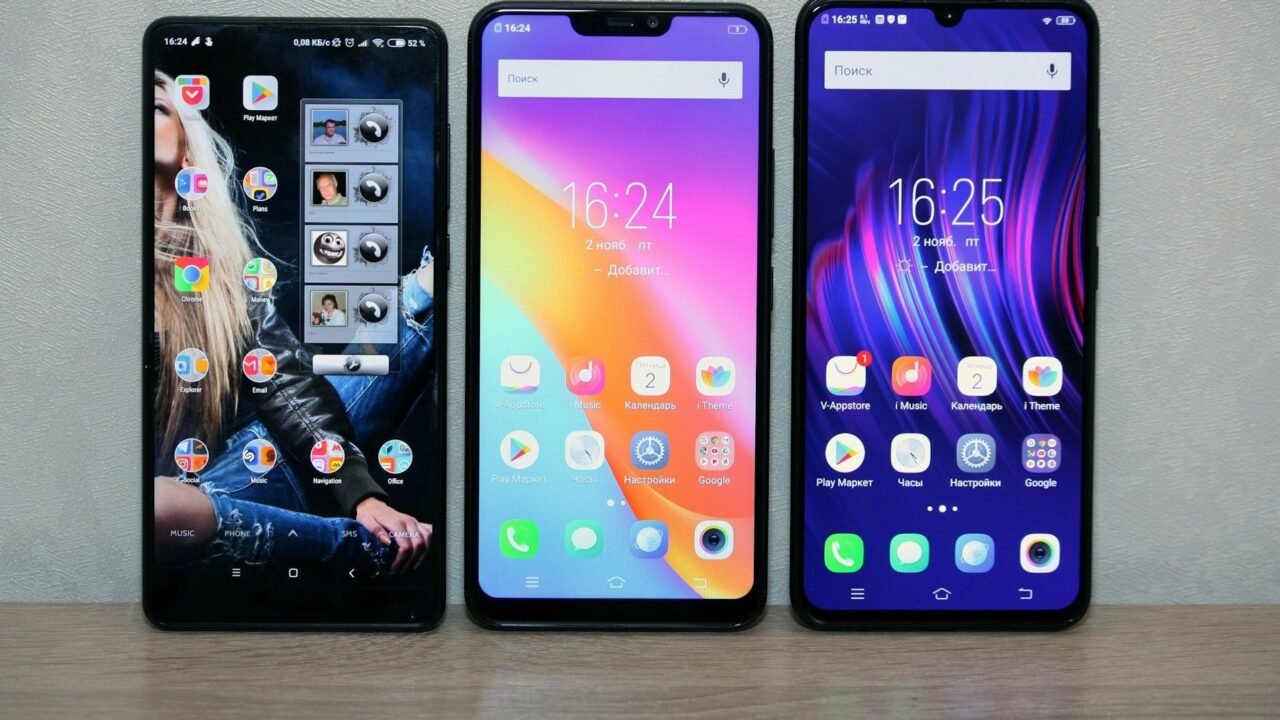
To pick a good phone under Rs 20,000, focus on five things in this order: the processor, the software update promise, the display, the battery and charging, and the main camera sensor. RAM numbers, megapixel counts and “AI” labels on the box matter far less than brands suggest. This guide explains what each spec actually means, what numbers to look for in this budget in late 2026, how rising memory prices are changing the segment, and a checklist to use before you pay.
Key Takeaways
- A global memory chip shortage has pushed up smartphone prices in India through 2026, so Rs 20,000 buys slightly less than it did a year ago.
- Prioritise the chipset and the number of years of Android and security updates the brand promises over RAM and megapixels.
- An AMOLED display with a 120Hz refresh rate, 8GB RAM and 128GB of UFS storage are sensible targets in this budget.
- Check that the phone supports n78 and n28 5G bands for Jio and Airtel coverage.
- Verify a new phone’s IMEI through the government’s Sanchar Saathi service, and check the brand’s service centre network in your city before buying.
Why the Rs 20,000 Segment Feels Different in 2026
If you last bought a phone in 2023 or 2024, prices may surprise you. Memory makers have diverted production toward AI data centre chips, and that has raised the cost of the RAM and storage inside phones. Business Today reported that budget buyers would feel this most in 2026, and industry trackers have since reported falling shipments in India as average prices rose.
What this means for you:
- Some brands are launching new models with less RAM or storage than the previous version at the same price. Compare the actual specs, not only the model number.
- Last year’s model at a discounted price can be better value than this year’s model at launch price.
- Festive season sale prices are worth waiting for if you are not in a hurry, but check the “before” price was not raised just before the sale.
The Specs That Actually Matter, in Order
| Spec | What to look for under Rs 20,000 | Why it matters |
|---|---|---|
| Processor (chipset) | A recent mid-range chip built on a modern process (6nm or better); check independent reviews for sustained performance | Decides speed, battery life, camera processing and how long the phone stays smooth |
| Software updates | At least 3 Android version upgrades and 4 years of security patches; more is better | A phone without updates becomes less secure and loses app support |
| Display | AMOLED, 120Hz, at least full HD+ resolution, good peak brightness | You look at it every waking hour; sunlight readability matters |
| Battery and charging | 5,000 mAh minimum; many new phones offer 6,000 mAh or more; 33W or faster charging | A full day of heavy use without a power bank |
| Main camera | A good sensor with OIS (optical image stabilisation) matters more than megapixels | Sharper low-light photos and steadier video |
| RAM and storage | 8GB RAM, 128GB storage, UFS 2.2 or better (UFS 3.1 ideal) | Enough for multitasking; faster storage makes apps open quicker |
| Build and protection | IP64 or better dust and water resistance, Gorilla Glass or similar | Survives monsoon rain, dust and the odd drop |
| 5G bands | n78 and n28 at minimum; n1, n3, n5, n8, n40, n41 are a bonus | Reliable 5G with Jio and Airtel |
1. Processor: The Spec You Cannot Upgrade Later
The chipset (also called the SoC) is the brain of the phone. In this price range you will mostly see mid-range chips from Qualcomm’s Snapdragon 6 and 7 series and MediaTek’s Dimensity 6000 and 7000 series, plus some in-house chips from brands.
How to compare chips without getting lost
- Newer is usually better within a series. A current-generation mid-range chip often beats an older higher-tier one in efficiency.
- Look at the manufacturing process. Chips built on 4nm or 6nm processes generally run cooler and use less battery than older 8nm or 12nm chips.
- Read or watch at least two independent reviews that test gaming, heating and battery drain. Benchmark scores alone do not show how a phone behaves after 20 minutes of use.
- Ignore “AI processor” marketing. Most on-device AI features in budget phones are light, and their usefulness varies.
Do this: if you play BGMI or other heavy games, prioritise the chip and cooling above everything else. Not this: pick a phone because it has “16GB RAM” printed on the box, which usually includes “virtual RAM” borrowed from storage.
2. Software Updates: The Most Underrated Spec
A phone that stops getting Android updates after two years starts to show its age quickly. Security patches protect you from malware and banking frauds, and newer apps (including UPI and banking apps) eventually drop support for old Android versions.
Several brands now promise multiple years of Android upgrades and security patches on budget and mid-range models. The promise differs by brand and even by model within a brand, so check the official product page before buying. A phone with slightly weaker hardware but two more years of updates can be the better buy if you keep phones for four or five years.
Watch out for bloatware
Some phones in this range come with many pre-installed apps and aggressive notifications from built-in “app stores” and browsers. Most can be disabled, but a cleaner interface is a genuine advantage. Reviews usually mention this.
3. Display and Battery: Where You Feel the Difference Daily
Display: AMOLED and 120Hz are now standard
At Rs 20,000, you should not settle for an LCD screen unless the phone offers something else you really need. AMOLED panels give deeper blacks, better colours and usually better battery life with dark mode.
- Refresh rate: 120Hz makes scrolling feel smooth. 90Hz is acceptable; 60Hz feels dated.
- Brightness: Look for high peak brightness figures and, more importantly, reviews that confirm the screen is readable in direct sunlight.
- Size and shape: Flat screens are easier to protect with tempered glass. Curved screens look premium but can register accidental touches and are costlier to repair.
- PWM dimming: If you get headaches or eye strain from phone screens, check reviews for high-frequency PWM dimming.
Battery and charging
Battery capacities have jumped. Newer silicon-carbon battery technology has allowed several brands to fit 6,000 mAh or larger batteries into slim budget phones. Even so, battery life depends as much on the chip and software as on the mAh number.
- 5,000 mAh is the minimum you should accept today.
- Charging at 33W to 45W is common and takes roughly an hour for a full charge; faster charging is a bonus.
- Check whether a charger is in the box. Some brands have removed it, which adds a hidden Rs 1,000 to Rs 2,000 to the cost.
- Look for battery health or charge-limit features that stop charging at 80 or 85 percent to extend battery life over the years.
4. Camera: Ignore the Megapixel Race
A “108MP” or “200MP” label does not guarantee better photos. What matters:
- Sensor size: A larger sensor captures more light, which means better low-light shots.
- OIS: Optical image stabilisation makes a visible difference for night photos and walking video. It is increasingly available under Rs 20,000; prioritise it if you take a lot of photos.
- Processing: Two phones with the same sensor can produce very different results. Compare real sample photos in reviews, especially skin tones and indoor shots.
- Extra lenses: A decent ultra-wide is useful. 2MP macro and depth cameras are mostly there to fill the spec sheet.
- Video: Check whether the phone records 4K and whether stabilisation works at that resolution.
RAM, Storage and 5G: Get the Basics Right
RAM
8GB of physical RAM is comfortable for most users in 2026. 6GB works for light use. Ignore “virtual RAM” or “RAM extension” claims; they use slower storage and do not match real RAM.
Storage
128GB is the practical minimum, as WhatsApp media and photos fill space fast. Check the storage type: UFS 3.1 is noticeably faster than UFS 2.2 when opening apps and saving photos. Very few phones in this range now have a microSD slot, so buy enough storage upfront.
5G bands for India
According to Jio’s help page, Jio’s 5G network runs on the n28 (700 MHz) and n78 (3,500 MHz) bands, along with n258 mmWave in some places. Airtel’s 5G also relies mainly on n78. Almost every 5G phone sold in India supports n78; check n28 support if you use Jio in areas with weaker coverage, since that low band travels farther and works better indoors.
Before You Pay: A 10-Point Checklist
- Compare the exact variant (RAM plus storage) and not only the model name.
- Check the brand’s official update policy for that specific model.
- Read at least two independent reviews that test heating and battery life.
- Look at real camera samples, especially low-light and indoor photos.
- Confirm n28 and n78 5G band support.
- Check whether a charger and case are included.
- Find the nearest authorised service centre and read reviews of it. After-sales service varies a lot by brand and city.
- Compare the online price with your local store, which may match it or add accessories.
- Use bank card offers carefully; “no-cost EMI” often has processing fees.
- After buying, verify the IMEI. Dial *#06# to see the IMEI, then check it through the Department of Telecommunications’ Sanchar Saathi portal or by sending “KYM” followed by the 15-digit IMEI to 14422 by SMS. The reply should show the correct brand and model.
New vs refurbished vs last year’s model
With prices rising, many buyers are looking at alternatives. A quick comparison:
| Option | Advantages | Risks |
|---|---|---|
| New current model | Longest update window, full warranty | Highest price, specs sometimes cut to hold price |
| Last year’s model on discount | Proven through reviews, lower price | One less year of updates; stock may be limited |
| Brand-certified refurbished | Warranty from the brand, big savings on higher-tier phones | Battery health varies; availability limited |
| Used phone from a stranger | Lowest price | Stolen or blacklisted devices, hidden damage, no warranty |
If you buy used, always check the IMEI on Sanchar Saathi, ask for the original bill and box, and meet in a public place.
Frequently Asked Questions
Is 8GB RAM enough in 2026?
Yes, for most people. 8GB of physical RAM handles social media, UPI apps, streaming, photography and moderate gaming comfortably. Don’t pay extra for “virtual RAM”, which only uses storage space.
AMOLED or LCD: which is better under Rs 20,000?
AMOLED is better for most users because of richer colours, deeper blacks and often better battery life with dark mode. At this price, an AMOLED 120Hz display should be the default expectation.
Does a higher megapixel camera take better photos?
Not necessarily. Sensor size, optical image stabilisation and image processing matter more than the megapixel number. Compare real sample photos in reviews.
Which 5G bands should my phone support in India?
At minimum n78, which both Jio and Airtel use, and n28, which Jio uses for wider coverage and indoor signal. Support for additional bands such as n1, n3, n5, n8, n40 and n41 is a bonus.
Why have phone prices increased in 2026?
A global shortage of memory chips, driven by demand from AI data centres, has raised the cost of RAM and storage used in smartphones. Brands have responded by raising prices or reducing specs at the same price.
How do I check if a new phone is genuine?
Dial *#06# to find the IMEI, then send “KYM” followed by the 15-digit IMEI to 14422, or check it on the Sanchar Saathi portal. The reply should match the brand and model you bought.
Buy for the Next Four Years, Not the Spec Sheet
The best phone under Rs 20,000 for you is the one that will still feel quick, get security updates, and last a day on a charge four years from now. Put the chipset and update policy first, insist on an AMOLED screen and a big battery, judge the camera by sample photos rather than megapixels, and check the 5G bands and service network before you pay. In a year when memory costs have pushed prices up, a careful comparison is worth more than ever.