UPI QR and Soundbox for Small Businesses: MDR, Settlement, Safety
A practical guide for Indian shops on merchant vs personal UPI QR codes, the new MDR rules from 15 October 2026, settlement cycles, soundboxes and counter fraud safety.
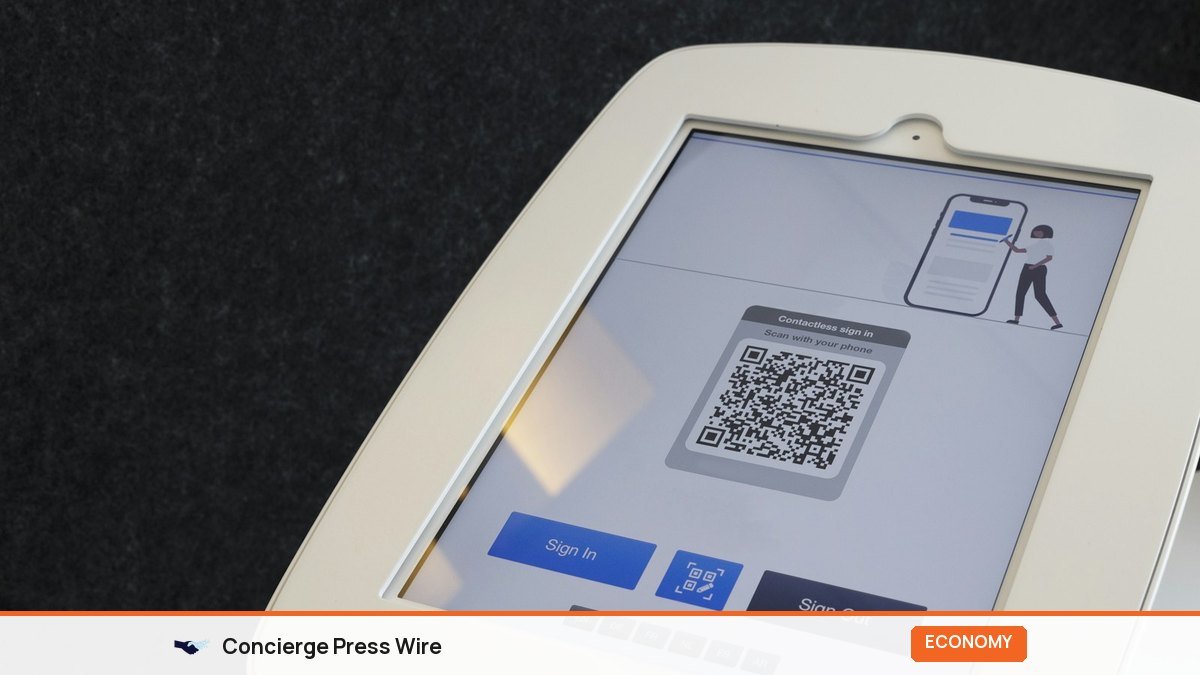
If you run a shop, clinic, tuition class or food stall, accept UPI on a proper merchant QR linked to a current account, not your personal UPI ID, and pair it with a soundbox so staff do not have to check phones. This guide explains the difference between personal, small-merchant and full merchant QR codes, the new UPI merchant discount rate (MDR) rules from 15 October 2026, how settlement works, and the fraud checks every counter needs.
Key Takeaways
- From 15 October 2026, NPCI’s framework (as reported by Business Today and Inc42) brings a 0.4% MDR on person-to-merchant UPI payments above ₹2,000, capped at ₹300. Payments up to ₹2,000 stay at zero MDR.
- Small merchants on the person-to-person-merchant (P2PM) category who receive up to ₹1 lakh a month through UPI QR remain at zero MDR.
- MDR is a merchant-side charge. Reports say merchants cannot pass it on to customers as a surcharge.
- A merchant QR gives you your business name on the customer’s screen, settlement reports, soundbox alerts and cleaner books for GST and income tax.
- Never accept a screenshot as proof of payment. Trust only the soundbox, your bank SMS or the merchant app.
Updated November 2026. MDR details are taken from published reports of the NPCI framework. NPCI’s own circular is the final word, and your bank or payment provider’s agreement sets the exact charges, so confirm with them before you change pricing.
Three types of UPI QR: which one do you have?
| Type | What it is | Typical user | Pros | Cons |
|---|---|---|---|---|
| Personal QR (P2P) | The QR in your own UPI app, linked to your savings account | Individuals receiving money from friends and family | Free, instant | Not meant for business; no reports; customers see your personal name; banks may question heavy commercial use |
| Small merchant QR (P2PM) | A merchant QR with light onboarding for very small businesses, often settling to a savings account | Street vendors, small kirana stores, home businesses | Zero MDR while within the monthly limit; quick to set up | Volume limits; may be moved to full merchant category if you grow |
| Full merchant QR (P2M) | A QR from a bank or payment aggregator, linked to a current account, with full KYC | Shops, clinics, restaurants, service businesses | Business name on screen, settlement reports, soundbox, refunds, integrations with billing | MDR above ₹2,000 (from 15 Oct 2026); paperwork |
Why not just use your personal UPI ID?
- Your books get messy. Shop income mixes with family transfers, making GST returns and income tax filing harder.
- Customers see your personal name instead of the shop name, which looks less professional and makes it easier for a fraudster to confuse them.
- Banks watch patterns. Hundreds of small credits a day into a savings account can trigger questions or limits.
- No soundbox, no reports, no easy refunds.
The new UPI MDR rules from 15 October 2026
Since January 2020 UPI merchant payments carried zero MDR. According to reports by Business Today and Inc42, NPCI’s new framework changes that for larger payments from 15 October 2026:
| Payment type | MDR |
|---|---|
| Person-to-person (P2P) transfers | Free, any amount |
| P2M payment up to ₹2,000 | Zero |
| P2M payment above ₹2,000 | 0.4% of the transaction value |
| P2M payment of ₹75,000 and above | Capped at ₹300 per transaction |
| Small P2PM merchants receiving up to ₹1 lakh a month via UPI QR | Zero |
| Designated sectors such as railways, telecom, insurance, fuel and utilities, above ₹2,000 | Flat ₹5 |
| Mutual funds, securities and broker payments | 0.02%, capped at ₹300 |
Reports also say a P2PM merchant whose UPI QR receipts cross ₹1 lakh a month for three consecutive months moves into the P2M category, and that UPI linked to credit products such as RuPay credit cards follows separate rules.
What this costs in rupees
| Bill amount | MDR at 0.4% | You receive |
|---|---|---|
| ₹1,500 | ₹0 (below ₹2,000) | ₹1,500 |
| ₹3,000 | ₹12 | ₹2,988 |
| ₹10,000 | ₹40 | ₹9,960 |
| ₹50,000 | ₹200 | ₹49,800 |
| ₹1,00,000 | ₹300 (cap) | ₹99,700 |
For a kirana store where almost every bill is under ₹2,000, nothing changes. For a furniture shop, electronics dealer or clinic with larger bills, MDR becomes a real cost: a shop that collects ₹10 lakh a month in bills above ₹2,000 would pay around ₹4,000 a month at 0.4%, before any GST your provider charges on its fees. Build it into your pricing rather than trying to add a surcharge at the counter.
Settlement: when does the money reach your account?
With a personal or many P2PM QR codes, money lands in your account the moment the customer pays. With a full merchant QR from a payment aggregator, collections are often pooled and settled to your current account in batches, commonly the next working day, with some providers offering faster or instant settlement for a fee.
Before signing up, ask your provider:
- What is the settlement cycle, and does it include Sundays and bank holidays?
- Is there any fee for instant settlement?
- Where can I download a daily settlement report, and does it match transaction IDs?
- What is the process and time limit for refunds and disputes?
- What are the charges beyond MDR: soundbox rent, QR stand, annual fee?
Reconcile daily. Match the soundbox or app total with the settlement credit in your bank statement. If a payment shows as successful on the customer’s phone but never settles, raise it with your provider within its dispute window.
Soundboxes: are they worth it?
A soundbox is a small speaker linked to your merchant QR that announces each payment (“₹350 received”) the moment it arrives. Banks and payment apps rent them for a monthly fee or sell them outright; plans and prices vary widely and change often, so compare at least two.
Worth it if:
- You have staff at the counter and do not want them checking your phone.
- You have a busy counter where customers leave quickly after paying.
- You have faced fake-screenshot fraud before.
Check before you rent:
- Monthly rent and whether it is charged even when the device is off.
- Whether it supports your language.
- Battery life and network type (SIM-based or Wi-Fi).
- The return process if you close the shop or switch provider.
Setting up a merchant QR: step by step
- Open a current account in the business name, or confirm your existing one is active. Our guide to Udyam registration helps if you need MSME proof, and GST registration for small businesses explains when GST applies.
- Choose a provider: your bank, or a payment app or aggregator offering merchant QR. Compare MDR terms, settlement time and soundbox charges.
- Complete KYC: PAN, Aadhaar of the owner, business proof such as GST certificate, Udyam certificate, shop and establishment licence, and a cancelled cheque.
- Verify the display name the customer will see. It should be your shop’s name, spelled correctly.
- Get the printed QR and stand from the provider. Do not print a QR downloaded from an unknown site.
- Test it: pay ₹1 from your own phone, check the soundbox, the app, and the next day’s settlement.
- Train staff on the fraud rules below.
Fraud safety at the counter
Most UPI fraud against merchants is simple and preventable. Our longer article on 12 common UPI scams covers customer-side fraud; these are the ones that hit shops:
| Scam | How it works | Your defence |
|---|---|---|
| Fake payment screenshot | Customer shows an edited “payment successful” screen | Only the soundbox, bank SMS or merchant app counts as proof |
| QR sticker swap | Someone pastes their own QR over yours | Check the QR daily; keep it behind the counter or laminated in a stand; customers should see your shop name before paying |
| “Scan to receive money” | A caller says they will pay an order advance and sends a QR or collect request | You never scan a QR or enter a PIN to receive money. A PIN is only for paying. |
| Fake refund request | “I paid twice, please refund” with no second payment | Check the merchant app; refund only through the provider’s refund option |
| Fake support call | Caller claims to be from your payment provider and asks for OTP or screen-sharing app | Hang up. Call the number printed in your provider’s app. |
If you lose money, report it immediately on the national cybercrime helpline 1930 or at cybercrime.gov.in, and inform your bank. Speed improves the chance of freezing the money.
Pricing and display: worked examples
Here is how three illustrative businesses might adjust after 15 October 2026.
A tea stall in Lucknow
Almost every payment is between ₹10 and ₹200, and monthly UPI receipts are under ₹1 lakh. Nothing changes: a small-merchant QR keeps MDR at zero. The owner’s priorities are a soundbox, a laminated QR and a daily check that nobody has stuck a different QR over it.
A pharmacy in Coimbatore
Most bills are under ₹2,000, but about one in ten is larger, for monthly medicine stocks for elderly customers. Say those larger bills add up to ₹3 lakh a month: at 0.4%, MDR is about ₹1,200 a month. The owner decides to absorb it, since margins on those bills cover it, and keeps a card machine and cash as alternatives without pushing customers either way.
An electronics shop in Jaipur
Average bills are ₹15,000 to ₹60,000, so most payments attract MDR, up to ₹240 on a ₹60,000 television. On ₹25 lakh a month of UPI sales above ₹2,000, MDR would be roughly ₹10,000 a month before GST on fees. The owner reviews margins by product, compares MDR on UPI, debit cards and bank transfers for very large orders, and includes payment costs in quoted prices rather than adding a fee at billing.
What to display at the counter
- The QR, with the shop’s name printed clearly beside it.
- A line such as “Please show the payment message on our speaker or wait for the confirmation sound.”
- Your GSTIN, if registered, on the bill, not on the QR stand.
- No surcharge notices for UPI.
Keeping your books clean
- Download the monthly settlement report and match it with sales in your billing software or register.
- UPI receipts are business income. Report them in GST returns (if registered) and your income tax return.
- MDR and soundbox rent are business expenses. Keep the provider’s invoices.
- If a customer needs a GST invoice, issue it from your billing system with the UPI transaction ID noted.
- Send polite reminders for unpaid credit using clear templates; see our payment reminder templates.
This guide is general information. Payment rules and provider charges change; check NPCI notices, your bank, and a tax professional where needed.
Frequently Asked Questions
Is UPI still free for shopkeepers?
For payments up to ₹2,000, yes. From 15 October 2026, reported NPCI rules apply a 0.4% MDR on person-to-merchant payments above ₹2,000, capped at ₹300, while small P2PM merchants receiving up to ₹1 lakh a month via UPI QR stay at zero.
Can I charge customers extra for UPI payments?
Reports of the new framework describe MDR as a merchant-side charge that merchants cannot pass on to customers. Build it into your prices instead of adding a surcharge.
What is the difference between a personal QR and a merchant QR?
A personal QR is linked to your own savings account and meant for person-to-person transfers. A merchant QR is issued to a business after KYC, shows the business name, settles to a business account and comes with reports, refunds and soundbox support.
How long does merchant UPI settlement take?
It depends on your provider. Many settle the next working day, some instantly. Ask for the settlement cycle in writing before you sign up.
Do I need GST registration to get a merchant QR?
Not always. Providers accept other business proofs such as Udyam or a shop licence. GST registration depends on your turnover and type of business, not on whether you accept UPI.
Is a soundbox necessary?
Not mandatory, but it is the simplest protection against fake payment screenshots and saves time at a busy counter.
A one-hour task for this week
Check which QR your counter actually uses, look at last month’s bills above ₹2,000 to estimate your MDR, and ask your provider for its settlement cycle and full charges in writing. Then laminate the QR, put it where only customers facing your counter can scan it, and brief your staff on the five scams above.