Govardhan Puja and Bhai Dooj 2026: Dates, Muhurat and Gifts
Govardhan Puja falls on 10 November and Bhai Dooj on 11 November 2026. Here are the muhurat timings, rituals and gift ideas for both days.
Govardhan Puja falls on Tuesday, 10 November 2026 and Bhai Dooj on Wednesday, 11 November 2026, closing the five days of Diwali. This guide gives you the tithi timings and muhurat for both days, explains why there is a one-day gap after Lakshmi Puja this year, walks through the rituals step by step, and ends with gift ideas for brothers and sisters at every budget.
Key Takeaways
- Diwali Lakshmi Puja is on Sunday, 8 November 2026. Govardhan Puja (Annakut) follows on Tuesday, 10 November, and Bhai Dooj on Wednesday, 11 November.
- For New Delhi, Drik Panchang lists the Govardhan Puja morning muhurat as 6:40 AM to 8:50 AM on 10 November.
- The Bhai Dooj tilak is traditionally done in the Aparahna (afternoon) window, listed as 1:10 PM to 3:20 PM for New Delhi. Some panchangs show slightly different times, so check one for your own city.
- Govardhan Puja remembers Krishna lifting Govardhan hill. Bhai Dooj comes from the story of Yama visiting his sister Yamuna.
- A thoughtful Bhai Dooj gift does not have to be costly. A handwritten note with a small useful gift usually lands better than an expensive gadget picked in a hurry.
Govardhan Puja and Bhai Dooj 2026: Dates at a Glance
The last two days of Diwali are set by the lunar calendar, so the English dates move every year. In 2026 the Kartik Amavasya (new moon) that marks Lakshmi Puja runs into Monday, 9 November. That pushes Govardhan Puja, which needs the Pratipada tithi at sunrise, to Tuesday. The table below uses the New Delhi timings published by Drik Panchang for Govardhan Puja and Drik Panchang for Bhai Dooj.
| Festival | Date (2026) | Tithi window (New Delhi) | Muhurat (New Delhi) |
|---|---|---|---|
| Diwali / Lakshmi Puja | Sunday, 8 November | Kartik Amavasya | Evening, Pradosh Kaal |
| Govardhan Puja / Annakut | Tuesday, 10 November | Pratipada: 12:31 PM, 9 Nov to 2:00 PM, 10 Nov | Pratahkala: 6:40 AM to 8:50 AM |
| Bhai Dooj / Yama Dwitiya | Wednesday, 11 November | Dwitiya: 2:00 PM, 10 Nov to 3:53 PM, 11 Nov | Aparahna: 1:10 PM to 3:20 PM |
Two practical notes. First, muhurat times shift by several minutes from city to city because they depend on local sunrise and sunset. A family in Mumbai or Bengaluru will see different numbers from one in Delhi or Kolkata. Second, panchangs do not always agree. One widely used panchang lists the Bhai Dooj Aparahna window as 1:31 PM to 3:45 PM, a little later than Drik Panchang’s Delhi figure. If your family follows a particular pandit or temple calendar, go with that. If you just want a safe window, doing the tilak in the early afternoon of 11 November keeps you inside the Dwitiya tithi on every calendar we checked.
If you are still planning the earlier days of the festival, our Diwali 2026 decoration ideas on a budget and easy mithai recipes will help you get the house ready.
Why Govardhan Puja Is Celebrated
The story most families tell comes from the Bhagavata Purana. The people of Braj used to hold a large offering for Indra, the rain god. Young Krishna asked them to honour Govardhan hill instead, since the hill gave their cows grass and their village water. Indra, angered, sent days of heavy rain. Krishna lifted the entire hill on the little finger of his left hand and held it up like an umbrella, so that people and cattle could shelter under it. After seven days Indra gave up, and the villagers made a mountain of food to thank Krishna and the hill.
That mountain of food is why the day is also called Annakut, which literally means “heap of food”. Temples, especially in Mathura, Vrindavan, Nathdwara and across Gujarat, prepare dozens of dishes and arrange them in tiers in front of the deity. Many households cook a smaller version at home.
Regional names for the same day
- Annakut in Gujarat, Rajasthan and in many Vaishnav temples. In Gujarat the day after Diwali is also observed as Bestu Varas, the Gujarati New Year, so check your local calendar for this year’s alignment.
- Bali Pratipada or Padwa in Maharashtra, where couples mark the day and wives perform aarti for their husbands.
- Govardhan Puja across Uttar Pradesh, Bihar, Haryana, Delhi and Madhya Pradesh, where a Govardhan figure made of cow dung is worshipped in the courtyard.
How to Do Govardhan Puja at Home: Step by Step
Rituals differ between families and regions, so treat this as a general outline rather than a rulebook. Ask an elder in your family how they did it; that is usually the most meaningful version.
- Clean the courtyard or puja space early. The morning muhurat in Delhi starts at 6:40 AM, so most families prepare the evening before.
- Make the Govardhan figure. In north Indian villages it is shaped from fresh cow dung into a small hill or a reclining human figure, decorated with flowers, grass and small earthen lamps. In flats where that is not practical, families make it with clean mud, or simply place a picture of Krishna holding the hill.
- Prepare the Annakut. Cook a mix of dishes: rice, kadhi, mixed vegetable sabzi, puri, halwa, and sweets. Some Vaishnav families aim for 56 items (chappan bhog), but even five or seven simple dishes made with care are enough at home.
- Perform the puja. Offer water, roli, rice, flowers, sweets and diyas to the Govardhan figure and to Krishna. Many families also honour their cows or offer them food if they keep cattle.
- Do the parikrama. Family members walk around the Govardhan figure, often seven times, singing or chanting.
- Share the prasad. The Annakut is shared with neighbours, relatives and anyone who visits. Some temples distribute it widely in the evening.
A simple Annakut menu for a family of six
| Course | Dish | Why it works |
|---|---|---|
| Main | Mixed vegetable sabzi (Annakut ki sabzi) with whatever seasonal vegetables you have | The traditional centrepiece in UP and Rajasthan |
| Grain | Plain rice and puri | Easy to scale up for guests |
| Side | Besan kadhi | Mentioned in many traditional Annakut menus |
| Sweet | Sooji or atta halwa, plus leftover Diwali mithai | Uses up the festival sweets |
| Extra | Bajra khichdi or a dry fruit chikki | Popular in Gujarat and Rajasthan homes |
Bhai Dooj: The Story and Meaning
Bhai Dooj falls on Dwitiya, the second day of the bright fortnight of Kartik. Its older name, Yama Dwitiya, points to the main legend. Yama, the god of death, visited his sister Yamuna after a long gap. She welcomed him with an aarti, put a tilak on his forehead and fed him a meal. Pleased, Yama declared that any brother who receives a tilak from his sister on this day would be protected. Another popular story tells of Krishna visiting his sister Subhadra after defeating the demon Narakasura, and her welcoming him with tilak and sweets.
The festival has many regional names, and the rituals vary a little with each:
- Bhau Beej in Maharashtra, Goa and parts of Karnataka.
- Bhai Phonta or Bhai Phota in West Bengal, where sisters apply a sandalwood and kajal tilak while reciting a short verse for their brother’s long life.
- Bhai Tika among Nepali-speaking families, with a multi-coloured tika.
- Bhathru Dwitiya in parts of south India.
Bhai Dooj Rituals, Step by Step
Most families follow a version of the steps below. The whole ceremony takes about 20 minutes, so it fits easily in the afternoon window.
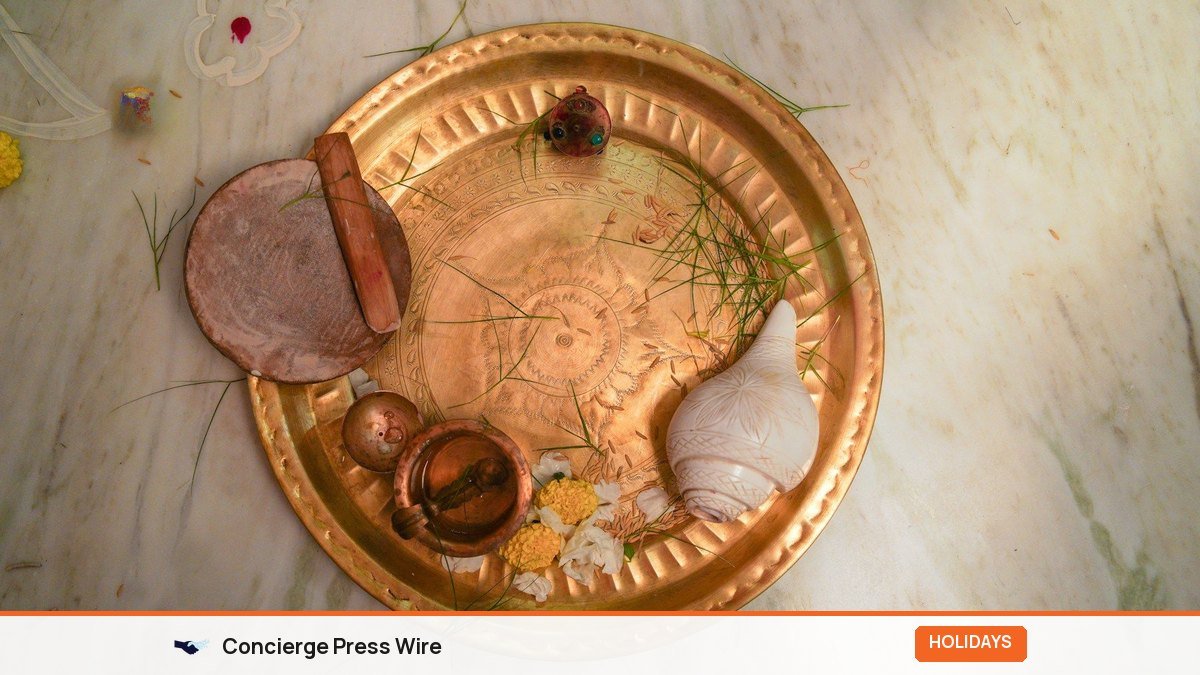
- Prepare the thali. Keep roli or kumkum, rice grains (akshat), a diya, a few flowers, sweets, dry coconut (gola) in some regions, and a small glass of water.
- Seat the brother. He sits on a low stool or a clean cloth, usually facing north or east. Many families draw a small square of rice flour (chowk) for him to sit on.
- Apply the tilak. The sister applies the tilak with her ring finger and places a few rice grains on it.
- Do the aarti. She circles the lit diya in front of her brother and prays for his health and long life.
- Feed him sweets. She offers mithai, and in many homes a full meal follows. In some traditions the brother is meant to eat at his sister’s house on this day.
- Exchange gifts. Brothers give a gift or shagun to their sisters, and increasingly sisters return the favour.
Some families observe a fast until the tilak is done. If you have a health condition, diabetes or are pregnant, please consult your doctor before fasting.
When the brother lives far away
Plenty of siblings are in different cities or countries now. A few ways families keep the ritual alive:
- Do the aarti and tilak on a video call during the muhurat, and have the brother apply a tilak himself at the same moment.
- Send a small Bhai Dooj kit by courier a week early: roli, a few rice grains, a diya, a dry coconut and a note.
- Many sisters perform the puja in front of a photograph of the brother, which is a long-standing practice in several regions.
- If the dates do not work, some families do the tilak on the next weekend. Purists may disagree, but staying connected matters more than a perfect clock.
Bhai Dooj Gift Ideas by Budget
Gifts on Bhai Dooj go both ways now. The ideas below work for brothers and sisters, and for younger cousins who are part of the ceremony. Prices are rough ranges at typical Indian retail and online stores; they change through the festive season.
| Budget | For a sister | For a brother |
|---|---|---|
| Under Rs 500 | Handmade card with a long letter, a scented candle, a set of glass bangles, a plant in a small pot | A good-quality wallet card holder, a book by a favourite author, a dry-fruit pack, a mug with a family photo |
| Rs 500 to Rs 1,500 | A silk or cotton dupatta, a skincare set, a personalised journal, a cookbook | A grooming kit, a fitness band strap or gym bag, a leather belt, a board game for the family |
| Rs 1,500 to Rs 5,000 | A handloom saree or kurta set from a local weaver, wireless earbuds, a small piece of silver jewellery | A pair of running shoes, a smartwatch at the entry level, a backpack for daily commuting |
| Above Rs 5,000 | A gold coin or a recurring deposit or SIP started in her name | A course he has been meaning to take, or a weekend trip together |
Gifts that cost almost nothing
- A “coupon book” of favours: one Sunday breakfast cooked by you, one airport drop, one day of help with tax filing or college forms.
- A printed album of childhood photographs, arranged year by year. Ask your parents to help find the old prints.
- A family recipe written out in your mother’s or grandmother’s words, with a photo of the dish.
- Paying a small bill your sibling keeps forgetting, like a streaming subscription or a phone recharge.
If you want more ideas at fixed price points, our Diwali gift ideas under Rs 500, 1,000 and 5,000 list works just as well for Bhai Dooj.
A note on money gifts
Cash in an envelope is still the most common shagun, and nobody minds it. If you are thinking of something like gold, a deposit or a mutual fund SIP for a sibling, keep in mind that investment products carry risk, rules on gifts and taxation can change, and it is worth a quick check with the official source or a financial adviser before you commit a larger amount. Our Dhanteras gold guide compares the common gold options if that is what you are leaning towards.
Planning the Last Two Days of Diwali Without Burning Out
By the time Govardhan Puja arrives, most households have been cleaning, cooking and hosting for a week. A little planning keeps the last two days enjoyable.
- Cook the Annakut base on Monday. Since 9 November is a gap day this year, use it to chop vegetables and prepare dough so the Tuesday morning muhurat is not a rush.
- Repurpose leftovers. Extra Diwali mithai can go straight into the Annakut offering and into the Bhai Dooj thali.
- Split the hosting. If several sisters are visiting the same brother, or the other way round, agree on one house for lunch rather than three separate meals.
- Book travel early. Trains and buses around Bhai Dooj are heavily booked, especially to Uttar Pradesh, Bihar and Maharashtra. If you need to travel on 10 or 11 November, book as soon as reservations open.
- Keep the eco-friendly habits going. Use earthen diyas, avoid plastic decorations for the Govardhan figure, and compost flower waste where your society allows it.
Frequently Asked Questions
What is the date of Govardhan Puja in 2026?
Govardhan Puja is on Tuesday, 10 November 2026. Drik Panchang shows the Pratipada tithi beginning at 12:31 PM on 9 November and ending at 2:00 PM on 10 November for New Delhi, with a morning muhurat of 6:40 AM to 8:50 AM.
When is Bhai Dooj in 2026?
Bhai Dooj is on Wednesday, 11 November 2026. The New Delhi Aparahna window for the tilak is listed as 1:10 PM to 3:20 PM on Drik Panchang. Other panchangs give slightly different times, and your city’s timings will differ a little.
Why is there a gap between Diwali and Govardhan Puja this year?
Lakshmi Puja is on Sunday, 8 November, but the Amavasya tithi continues until midday on Monday, 9 November. Govardhan Puja is observed when Pratipada prevails at sunrise, which happens on Tuesday, 10 November. Gaps like this happen in some years because tithis do not line up neatly with sunrise.
Can Bhai Dooj be celebrated without a brother?
Yes. Many women apply tilak to a cousin, a close friend they consider a brother, or perform the puja in front of a brother’s photograph. Some sisters also do the ritual for each other. The intent of protecting and honouring a sibling bond is what matters.
Is Govardhan Puja the same as Gujarati New Year?
They are separate observances, but in Gujarat the day after Diwali is celebrated as Bestu Varas, the Gujarati New Year, and Annakut is offered in temples on the same day in many years. Check your local Gujarati panchang for the exact 2026 alignment.
What should be in a Bhai Dooj thali?
A basic thali has roli or kumkum, rice grains, a diya, flowers, sweets and a small glass of water. In north India a dry coconut is often added, and in Bengal sandalwood paste and kajal are used for Bhai Phonta.
A Quiet Close to a Busy Festival
Govardhan Puja and Bhai Dooj are the gentler end of Diwali: one about gratitude for the food and land that keep us going, the other about the siblings who have stood by us since childhood. Mark the dates, 10 and 11 November 2026, check the muhurat for your own city, and keep the rituals as simple or elaborate as your family likes. The tilak, the shared meal and the time together are what people remember.