Easy Rangoli Designs for Diwali 2026: 20 Ideas by Skill Level
Twenty rangoli ideas for Diwali 2026, from a five-minute diya circle to a peacock centrepiece, with materials, eco-friendly colours and drawing tips.
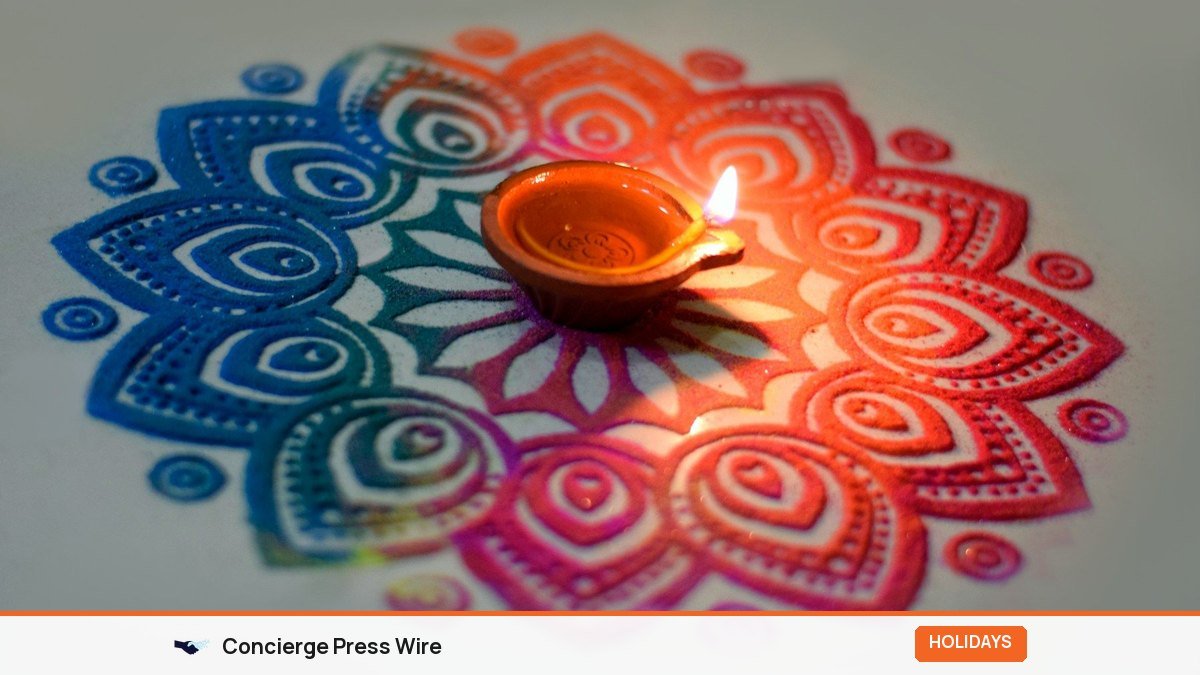
The easiest rangoli designs for Diwali 2026 start from a simple grid of dots or a single circle, use three to five colours, and can be finished in under an hour. Below you will find 20 ideas sorted by skill level, from a five-minute doorstep swastik-and-diya design to a large peacock centrepiece, plus a materials guide, eco-friendly colour options and practical tips to make your rangoli last through the festival.
Key Takeaways
- Lakshmi Puja falls on Sunday, 8 November 2026, so plan to draw your main rangoli on the morning or afternoon of that day, or the evening before.
- Beginners should start with dot grids, circles and stencil-plus-freehand designs; leave peacocks and portraits for when your hand is steady.
- A 2 x 2 feet design needs roughly 250 to 500 grams of colour in total; buy white and your main colour in larger packs.
- Rice flour, turmeric, kumkum, flower petals, leaves and diyas make a fully eco-friendly rangoli that is easy to sweep away afterwards.
- Sketch with chalk first, fill from the centre outwards, and do outlines last for a clean finish.
When to draw your Diwali 2026 rangoli
According to Drik Panchang, Lakshmi Puja in 2026 is on Sunday, 8 November, with the Pradosh Kaal muhurat in the evening (times differ by city, so check your local panchang). Many families draw a fresh rangoli at the entrance on the morning of Lakshmi Puja so it is ready to welcome guests and, by tradition, Goddess Lakshmi. Others make a larger one a day or two earlier and refresh the edges each morning.
A sensible plan for a busy household:
- A week before: choose your design, measure the space, buy colours, and practise one small section on newspaper.
- Two days before: clean and dry the floor. Mop with plain water rather than a soapy cleaner, which can leave a slippery film.
- Lakshmi Puja morning: draw the main design. Leave space for diyas.
- Evening: place lit diyas around (not on top of) the powder, keeping flames away from dupattas and curtains.
Materials and colours: what to buy
You do not need a kit. A few household tools and good-quality powder do most of the work.
| Material | Best for | Tip |
|---|---|---|
| Rangoli powder (stone or marble powder based) | Bright fills and crisp lines | Buy white and your main colour in larger quantities; accents need only small packs |
| Rice flour | Outlines, kolam-style line designs, eco designs | Mix with a little water for a paste that lasts longer on floors |
| Chalk | Sketching the layout | Use white chalk on dark floors, coloured chalk on white tiles |
| Flower petals (marigold, rose, chrysanthemum) | Phool rangoli, borders, centres | Buy the evening before and keep in a damp cloth |
| Diyas and tealights | Centres and borders | Place on small steel plates to protect the design |
| Tools: tea strainer, spoon, comb, bangles, plastic cone, cotton buds | Patterns and textures | A fork or comb drags neat feather lines in filled areas |
For quantity, a 2 x 2 feet rangoli typically uses around 250 to 500 grams of powder in total, depending on how densely you fill it. A 4 x 4 feet centrepiece can need two or three times that. It is far better to have a spare packet than to run out of the main colour halfway.
Choosing a colour palette
Three to five colours look richer than ten. A few combinations that always work for Diwali:
- Deep red, yellow, white and green (classic)
- Magenta, orange and gold with white outlines (festive and warm)
- Royal blue, turquoise and white with a touch of yellow (peacock themes)
- White and orange only, with marigold petals (elegant and quick)
Beginner rangoli designs (ideas 1 to 7)
These take 10 to 40 minutes and suit first-timers, older family members who prefer something quick, and children helping under supervision.
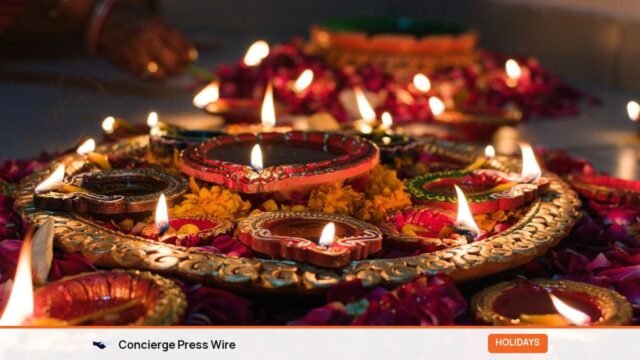
- Diya-in-a-circle. Draw a circle with a bangle or plate as a guide, fill it in yellow, and add four small diya shapes at the north, south, east and west points. Place a real diya in the centre.
- Five-petal flower. Draw five teardrop petals around a small circle. Fill petals in red, outline in white, and dot the centre in yellow.
- Dot-grid kolam (5 x 5). Make a 5 x 5 grid of dots with rice flour, then join them with curved lines that loop around each dot. Kolam-style line designs need only one colour.
- Swastik and Shubh Labh. A small swastik in kumkum flanked by “Shubh” and “Labh” in yellow, with a simple border. Ideal for a narrow doorstep.
- Marigold ring. Lay marigold petals in a ring about one foot wide, with rose petals inside and a diya in the centre. No powder needed.
- Stencil plus border. Use a store-bought stencil for the central motif, then draw a freehand border of dots and waves around it. The border makes it look handmade.
- Lakshmi footprints. Small paired footprints in red or white leading from the door inward. Draw them with fingers dipped in rice paste for a traditional look.
Intermediate rangoli designs (ideas 8 to 14)
These take 45 minutes to two hours. You should be comfortable drawing smooth curves and filling areas evenly.
- Eight-petal lotus mandala. Draw two concentric circles, divide them into eight with light chalk lines, and draw lotus petals in each section. Fill alternating petals in pink and white.
- Diya cluster. Three large diya shapes, side by side, with flames in orange and yellow and a paisley border.
- Ganesha outline. A simple, stylised Ganesha made of a few curved lines (trunk, ears, crown) in white on a coloured background. Keep details minimal; suggestion works better than detail.
- Kalash with mango leaves. A kalash in gold or yellow with a coconut on top and five green leaves fanning out. A good choice beside the puja space.
- Square-in-circle geometric. A square rotated inside a circle, with triangles filled in contrasting colours. Use a ruler or string for straight lines.
- Phool rangoli with powder outline. Draw the outline of a large flower in white powder, then fill it with real petals: marigold, rose and chrysanthemum.
- Corner rangoli. For apartments with small doorways, design a quarter-circle that fits into a corner of the landing, with a fan of petals and dots.
Advanced rangoli designs (ideas 15 to 20)
These are for confident hands and larger spaces, and can take two to five hours. Work with a partner if possible.
- Peacock centrepiece. A peacock body in blue with a fanned tail made of repeating feather “eyes” in turquoise, green, gold and blue. Draw the tail with a comb or fork for texture.
- Shaded lotus with 3D effect. Blend two shades of pink on each petal from dark at the base to light at the tip. Use your fingertips or a soft brush to blend.
- Lakshmi with lotus. A stylised figure of Goddess Lakshmi seated on a lotus. Sketch carefully with chalk first and keep the face simple.
- Large dot kolam (15 x 15 or bigger). Complex interlaced kolams take patience but use a single colour, so they are cheaper than they look.
- Regional motif design. Try alpana (Bengal), mandana (Rajasthan) or aripan (Bihar) motifs. Wikipedia’s rangoli overview lists the regional names and traditional materials, which is a good starting point for research.
- Community or apartment lobby rangoli. A 6 x 6 feet or larger mandala, divided into segments so several families can each fill one. Plan the full sketch the night before.
Step-by-step: how to draw any rangoli cleanly
- Measure and mark the centre. Use a string tied to chalk as a compass for perfect circles.
- Sketch the whole design in chalk. Corrections are easy at this stage and impossible later.
- Fill from the centre outwards. This stops you from leaning on finished parts.
- Fill dark colours before light ones. Stray dark grains on a light area are hard to remove.
- Do outlines last. A thin white line around each section hides uneven edges. Pinch the powder and let it fall in a steady stream, or use a plastic cone with a small hole.
- Add details and texture. Dots, comb lines, bangle prints.
- Place diyas and flowers. Keep flames at least a few inches away from loose powder and fabric.
A tip for beginners: hold the powder between your thumb and index finger, rest your other fingers on the floor for support, and move your whole hand rather than your wrist. Lines become steadier within ten minutes of practice.
Eco-friendly rangoli options
A rangoli made from natural materials is easier to clean up, safer for pets and children who touch it, and can go straight into a compost pit or garden afterwards. Some packaged colours, especially very bright, cheap ones, can stain floors or irritate sensitive skin, so if you are unsure about a product, test it on a small patch and wash your hands after use.
| Colour | Natural material | Notes |
|---|---|---|
| White | Rice flour, chalk powder | Traditional kolam material |
| Yellow | Turmeric mixed with rice flour, marigold petals | Turmeric stains light floors; use a base layer of rice flour |
| Red / maroon | Kumkum, rose petals, dried red chilli flakes (outdoors only) | Keep chilli away from children and pets |
| Green | Mango or ashoka leaves, dried mehendi powder | Leaves work well for borders |
| Brown | Coffee grounds, dried tea leaves | Good for outlines and earthy designs |
| Orange | Marigold petals, a little kumkum mixed with turmeric | Petals last about a day |
Other ideas: use whole lentils (masoor, moong, chana dal) and rice grains for texture, or make a reusable rangoli by gluing coloured sand onto an MDF board. A board rangoli can come out every year and is useful for renters who cannot leave powder on a common landing.
Making your rangoli last (and cleaning it up)
- Choose a low-traffic spot. Just outside the main door, not in the path people actually walk.
- Protect it from wind and fans. Switch off ceiling fans while working indoors.
- Use a boundary. A line of diyas or small flower pots discourages feet.
- Refresh edges each morning. Sweep only the smudged border and redraw it.
- Cleaning up: sweep dry powder first, then vacuum, then mop. Wet mopping first spreads colour into grout lines.
Rangoli for shops, offices and apartment lobbies
Many small businesses make a rangoli at the shop entrance for Lakshmi Puja and the Chopda Pujan or new account books that some traders begin around Diwali. A few practical adjustments help in busy spaces. Keep the design compact, around 2 x 2 feet, and place it to one side of the entrance so customers do not have to step around it. A flower or board rangoli suits a shop better than loose powder, because it survives foot traffic and can be lifted at closing time. In offices, check fire safety rules before placing lit diyas; electric diyas or tealight holders with glass covers are safer near paper and fabric. For apartment lobbies, agree on a design and a cleaning plan with the society committee beforehand, so the rangoli is enjoyed by everyone and swept away on time.
Frequently Asked Questions
When is Diwali in 2026?
Lakshmi Puja, the main day of Diwali, falls on Sunday, 8 November 2026, according to Drik Panchang. Puja muhurat timings vary by city, so check a local panchang for your exact time.
What is the easiest rangoli for a beginner?
A diya inside a circle, a five-petal flower, or a small 5 x 5 dot kolam. Each needs only two or three colours and can be finished in 15 to 30 minutes.
How much rangoli colour do I need?
For a 2 x 2 feet design, around 250 to 500 grams in total is usually enough. Buy more of white and your main fill colour, and only small packets of accent colours.
How can I make rangoli without colours?
Use flower petals, rice flour, turmeric, kumkum, leaves, lentils and diyas. A phool rangoli made only from marigold and rose petals looks festive and needs no powder.
How do I draw straight lines and perfect circles?
Use a ruler or a taut string for straight lines and a string tied to chalk as a compass for circles. Sketch in chalk first, then follow the lines with powder.
Can children help make a rangoli?
Yes. Give them a section to fill with flower petals or rice flour, and keep diyas, chilli flakes and lit flames out of their reach. Wash hands afterwards, especially after using packaged colours.
Pick one design and start practising
Choose one idea from the list that suits your space and your patience, buy colours a week ahead, and practise one section on newspaper. By Lakshmi Puja morning your hand will be steadier, your colours ready, and your doorstep set to welcome everyone who visits. Shubh Deepavali.