Event Press Release in India: Templates, Timeline and IST Embargo
Two templates, a 21-day sending timeline and the right way to write an IST embargo for launches, conferences and store openings in India.
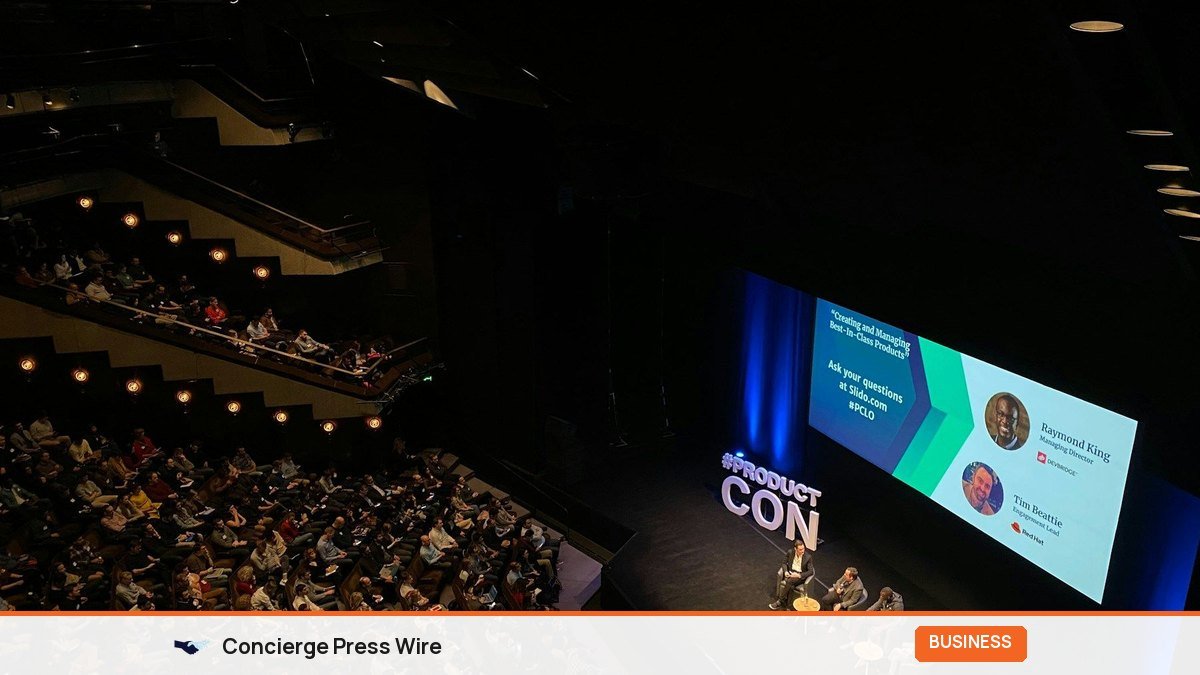
An event press release in India works in two parts: a short announcement sent 7 to 21 days before the event so reporters can plan to attend, and a results-led release sent the same evening so they can file a story. This guide gives you both templates, a sending timeline, the right way to write an embargo in IST, and specific advice for product launches, conferences and store openings.
Key Takeaways
- Plan two releases, not one: a pre-event announcement (or media advisory) and a post-event release with outcomes, quotes and photos.
- Lead with the news value of the event, not the fact that it is happening. “Pune bakery opens a 40-seat cafe with a zero-waste kitchen” beats “Grand opening ceremony”.
- Write embargo times as “EMBARGOED UNTIL 11:00 IST, Thursday, 12 November 2026”. Use the 24-hour clock, the day, the full date and the time zone.
- Send the post-event release within 2 to 4 hours of the event ending, with 3 to 5 captioned photos ready to download.
- Adapt for language: a Hindi, Marathi, Tamil or Gujarati version often matters more for a store opening than an English one.
What an event press release actually has to do
Most event releases fail for one simple reason: they announce that something will happen without explaining why anyone outside the room should care. A reporter at a city desk in Ahmedabad or Kochi gets dozens of invitations a week. They choose the ones that give them a story their readers will want, a photograph worth printing, or a person worth quoting.
So before you write a word, answer three questions on paper:
- What is new? A product, a location, a number (jobs created, investment, capacity), a first for the city or the industry.
- Who is it for? Local residents, a trade audience, investors, a specific community.
- What will a reporter see or get? A demo, a speaker, a data release, a ribbon-cutting by a known local figure, a photo opportunity.
If you cannot answer the first question with something specific, the event probably deserves a social media post rather than a press release. That saves you from sending a release that gets ignored.
If you are new to the format itself, start with our step-by-step guide on how to write a press release in India, then come back here for the event-specific parts.
The three documents you may need
Event communication in India usually involves up to three pieces. Small businesses can often combine the first two, but it helps to know the difference.
| Document | When to send | Length | Purpose |
|---|---|---|---|
| Media advisory (invite) | 5 to 10 days before, reminder the day before | 150 to 250 words | Tells reporters and photographers what, when, where, who, and what they can shoot |
| Pre-event announcement release | 10 to 21 days before | 350 to 500 words | Builds awareness, attracts attendees, gets listings in “what’s on” columns and trade sites |
| Post-event release | Same day, within 2 to 4 hours of close | 400 to 600 words | Reports outcomes, quotes, numbers and photos for reporters who could not attend |
A media advisory is not a story. It is a logistics sheet written for a news desk. Keep it in bullet points with the 5 Ws, a contact name with a mobile number, and a line about parking or entry passes. The release is where you tell the story.
A sending timeline that works for Indian media
Print supplements, city pages and trade magazines work to different deadlines. Online desks move fastest. This timeline covers all of them for a typical event:
- T minus 21 days: Send the pre-event release to trade publications, industry associations and event-listing portals. Monthly magazines need this much notice.
- T minus 10 days: Send the release or advisory to city newspapers, local news sites and regional TV. Call or message key reporters you already know.
- T minus 3 days: Send the media advisory with final details and the RSVP contact. Confirm photographers.
- T minus 1 day: Send a short reminder by email or WhatsApp to those who said yes. Share any embargoed material (speech text, data) with clear embargo lines.
- Event day: Have a printed media kit and a QR code linking to a folder of photos, logos and bios.
- Event day, 2 to 4 hours after close: Send the post-event release with photos. Morning newspapers often finalise city pages in the evening, so do not wait until the next morning.
- T plus 1 to 2 days: Follow up with reporters who asked for extra data or interviews. Publish the release on your own website’s newsroom page.
Avoid sending releases on major festival days when newsrooms run on skeleton staff. For example, Lakshmi Puja (Diwali) falls on Sunday, 8 November 2026, and many offices slow down for much of that week. If your store opening is timed for Diwali shopping, send the announcement in late October instead.
Template 1: the pre-event announcement
Use this structure for a launch, conference or store opening announced in advance. Replace the brackets; keep the order.
FOR IMMEDIATE RELEASE
Headline: [Company] to [do the newsworthy thing] at [event name] in [city] on [date]
Subheadline: [One line with the most interesting number or detail]
[CITY], [Day Month Year] – [Company], a [one-line description], will [what happens] at [venue] on [day, date] from [time] IST. [One sentence on why it matters: what is new, who benefits.]
[Paragraph 2: the details. What attendees will see, who will speak, what is being launched or opened, any numbers such as investment, jobs, seats, exhibitors.]
“[Quote from founder or head that explains the reason behind the event, not just excitement],” said [Name], [Title], [Company].
[Paragraph 4: practical information. Registration link or entry rules, timings, address with landmark, accessibility, parking.]
Event details: Date [ ] | Time [ ] IST | Venue [ ] | Registration [ ]
About [Company]: [50 to 80 words: what you do, since when, where, scale.]
Media contact: [Name, designation, mobile, email]
Two common edits will make this stronger. First, cut adjectives such as “grand”, “exclusive” and “prestigious”. Reporters delete them anyway. Second, put a real number in the subheadline. “Expo to host 120 exhibitors from 14 states” gives a desk something to work with.
Template 2: the post-event release
The post-event release is written in the past tense and leads with the outcome, not the ceremony. Prepare 80 percent of it before the event, leaving gaps for final numbers, quotes and photo captions.
FOR IMMEDIATE RELEASE
Headline: [Company] [launched / opened / announced] [specific thing] at [event], [key result or number]
[CITY], [Day Month Year] – [Company] today [did what], [result in numbers: attendees, orders, MoUs signed, jobs, footfall]. [Who attended or inaugurated, if relevant.]
[Paragraph 2: the most important announcement made at the event, in plain language.]
“[Quote that adds information, such as a next step, a target or a reason],” said [Name, Title].
[Paragraph 4: secondary announcements, a second quote from a partner, customer or guest speaker (with their permission).]
[Paragraph 5: what happens next: availability date, next edition, expansion plans.]
Photos: [Link to a folder with captioned, high-resolution images]
About [Company] / Media contact
If you want to see complete releases written in Indian style, our press release sample collection has formats you can adapt.
Worked example: a store opening
Here is an illustrative before-and-after. Imagine a family-run saree store in Surat opening a second branch.
Weak headline: “Grand Opening of Shree Fabrics New Showroom”
Stronger headline: “Surat’s Shree Fabrics opens 3,000 sq ft Adajan showroom with in-house Tanchoi weavers’ corner”
The stronger version names the city and area, gives size, and offers something a photographer would want to shoot. The post-event version could then read: “Shree Fabrics opened its Adajan showroom on Saturday, welcoming around 600 visitors on the first day…” Only use a visitor figure you have actually counted, and say how you counted it if asked.
How to write an embargo in IST
An embargo asks journalists not to publish information before a stated time. It is useful when you share a keynote speech, financial results or a product price before the event so reporters can prepare. Embargoes rest on trust; they are not legally binding, so only share embargoed material with people you have a relationship with.
India Standard Time is UTC+5:30 and has no daylight saving, which makes it easy to state, but people still get it wrong. Follow these rules:
- Put the embargo line at the very top, above the headline, in capitals: EMBARGOED UNTIL 11:00 IST, THURSDAY, 12 NOVEMBER 2026.
- Use the 24-hour clock. “12:00” is clear; “12 o’clock” can be read as noon or midnight.
- Write the day and the full date. “Thursday” alone or “12/11” alone causes confusion, because US-based editors read 12/11 as December 11.
- Match the embargo to the moment of announcement, such as when the founder goes on stage, not the start of registration.
- If you also pitch international media, add the UTC time in brackets: “11:00 IST (05:30 UTC)”.
| IST time | UTC | London (winter, GMT) | Dubai (GST) | Singapore (SGT) |
|---|---|---|---|---|
| 09:00 | 03:30 | 03:30 | 07:30 | 11:30 |
| 11:00 | 05:30 | 05:30 | 09:30 | 13:30 |
| 15:00 | 09:30 | 09:30 | 13:30 | 17:30 |
| 18:00 | 12:30 | 12:30 | 16:30 | 20:30 |
The London column applies to Greenwich Mean Time in the northern winter; during British Summer Time it is one hour later than UTC. Government press releases on the Press Information Bureau site show a useful habit: each one carries a clear posting date and time, such as this PIB release on the GeM foundation day, which is stamped “Posted On: 08 AUG 2025 4:19PM”. Being that precise saves you from follow-up calls.
Event-specific advice
Product launch events
For a launch, the product is the news and the event is the setting. Lead with what the product does, the price in rupees, the date it goes on sale and where. Put the event details lower down. If prices or specifications are secret until the stage reveal, share them under embargo with a small set of reporters and keep the public pre-event release vague: “will unveil its first electric scooter for city deliveries”.
Prepare a one-page specification sheet as a separate attachment. Tech and auto reporters want numbers in a table, not hidden in paragraphs.
Conferences, summits and seminars
Conference releases fail when they list twenty speakers and no ideas. Pick the two or three sessions most likely to produce news: a government official speaking on policy, a data report being released, a panel on a topic that is already in the headlines. Name them in the pre-event release.
For the post-event release, report what was said, not just who attended. One or two strong quotes from sessions, with the speaker’s permission, give reporters copy they can use directly. If your conference releases a survey, publish the method (sample size, dates, how respondents were chosen) alongside it.
Store, office and factory openings
Openings are local news. That means the right outlets are city newspapers, local news portals, neighbourhood WhatsApp groups and regional-language channels, not national business desks. Give them:
- The exact address with a landmark (“opposite Iskcon temple, SG Highway”).
- Opening offers, if any, with clear start and end dates.
- Jobs created locally and whether you are still hiring.
- A photo opportunity: the inauguration, the first customer, a craft demonstration.
If a local MLA, councillor or well-known personality is inaugurating, confirm in writing before naming them in any release.
Photos, media kits and regional languages
Many event stories in Indian newspapers run because a photo arrived on time. Plan your photography like a deliverable:
- Brief your photographer on five must-have shots: the key moment (ribbon, unveiling, stage), a wide shot with crowd, the product or space close up, the spokesperson portrait, and a candid customer or attendee shot.
- Export at least 1,600 pixels on the long side, in JPEG, under 2 MB each.
- Caption every photo with names left to right, designations, and what is happening.
- Put photos in a shared folder and link it in the release instead of attaching ten heavy files.
For local events, translate the release into the language your target papers publish in. A good translation is not word-for-word: adjust the headline so it reads naturally, and keep names, numbers and dates identical across versions. Mark each version with its language at the top so desks do not confuse them.
Mistakes that get event releases ignored
- Sending only after the event. No reporter can attend something they hear about later.
- Burying the date and venue. They belong in the first paragraph and again in a details box.
- Writing “today” in a pre-event release. Use the actual date; your release may be read days later.
- Quotes that only express happiness. “We are delighted” adds nothing. Give a reason, a number or a plan.
- Unverified numbers. Do not claim “thousands of visitors” without counting. Use “around 600, based on entry passes”.
- Distributing to the wrong list. A shop opening in Indore sent only to national tech desks will not be picked up. See our guide to press release distribution in India for choosing outlets, and our list of common reasons press releases get rejected.
Frequently Asked Questions
How many days before an event should I send a press release in India?
Send the first release 10 to 21 days ahead: three weeks for trade magazines and monthly publications, ten days for city newspapers and news sites. Follow with a media advisory 3 to 5 days before and a short reminder the day before to reporters who confirmed.
Is a media advisory the same as a press release?
No. A media advisory is a short logistics note for reporters and photographers, listing what, when, where, who and the photo opportunities. A press release tells the story in full paragraphs with quotes and background. Small events can combine them, but keep the logistics in a clear box.
Should the post-event release go out the same day?
Yes, ideally within 2 to 4 hours of the event ending. City desks often close their pages in the evening, and online desks want the story while it is fresh. A release that arrives the next afternoon competes with a new day’s news.
How do I write an embargo for an Indian event?
Place it above the headline in capitals with the 24-hour time, the time zone, the day and the full date, for example “EMBARGOED UNTIL 11:00 IST, THURSDAY, 12 NOVEMBER 2026”. Add UTC in brackets if foreign media are on your list, and share embargoed material only with reporters you trust.
Can I invite reporters on WhatsApp instead of email?
Many Indian reporters do use WhatsApp for quick coordination, especially for local events. Use it for reminders and photo links if a reporter has given you their number, but still send the full release by email so it can be filed and searched later.
What should I put in an event media kit?
The release, a fact sheet, speaker or founder bios, high-resolution logos, three to five captioned photos, product specifications if relevant, and one media contact with a mobile number. A QR code on a printed card at the venue that links to this folder works well.
Before you hit send
Read your pre-event release once more and ask whether a stranger would understand, in the first two lines, what is happening, where, when and why it matters. Then check the embargo line, every date and every name. Get those right and keep the post-event release half-written before the doors open, and you will be one of the few senders a busy desk is glad to hear from.