How to Build a Brand Story for Your Indian Small Business
A practical framework, fill-in templates and illustrative examples to help Indian small businesses write a brand story and use it everywhere customers look.
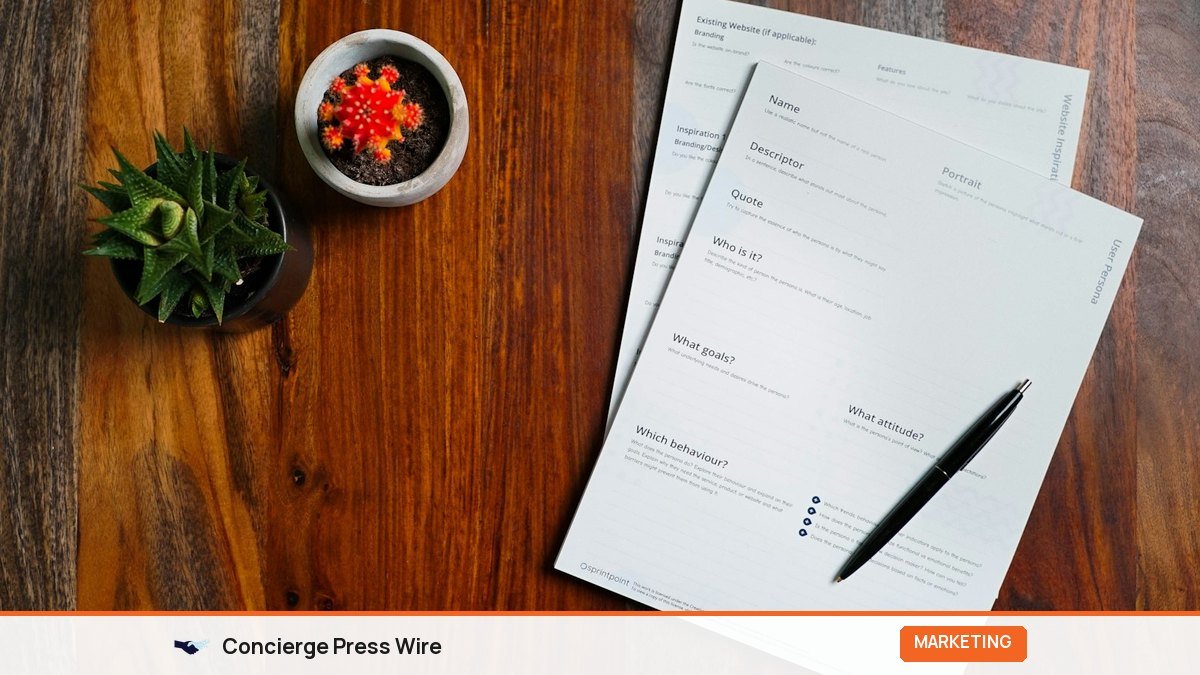
A brand story is the short, true account of why your business exists, who it serves and what it refuses to compromise on. For an Indian small business, a clear brand story is what makes a customer choose your achaar, your clinic or your software over a cheaper option two clicks away. This guide gives you a seven-part framework, fill-in-the-blank templates, illustrative examples from different industries, and exactly where to use the story: website, packaging, social media, sales pitches and PR.
Key Takeaways
- A brand story is not your company history. It is a customer-centred narrative: the problem, why you care, what you do differently and the proof.
- Use the seven-part framework below (origin, customer, problem, belief, difference, proof, promise) and write it in three lengths: one line, one paragraph and one page.
- Every claim in your story must be true and provable. ASCI’s advertising code applies to claims on packaging, ads and social posts.
- Use the same core story everywhere: About page, packaging, Instagram bio, sales deck, founder interviews and media coverage.
- Small, specific details (a town, a grandmother’s recipe, a number you can verify) beat big adjectives like “premium” and “world-class”.
What a brand story is, and what it is not
Most “About us” pages in India read the same way: “Established in 2015, ABC Enterprises is a leading provider of high-quality solutions committed to customer satisfaction.” Nobody remembers a sentence like that, because it could belong to any business.
A brand story answers different questions:
- Why did you start this, really?
- Who exactly is it for?
- What problem did you see that others ignored?
- What do you believe that your competitors do not?
- What do you do differently, in practice?
- What proof do you have?
| Company history | Brand story |
|---|---|
| Dates, milestones, awards | Purpose, conflict and change |
| Written about the company | Written around the customer |
| “We are a leading provider of…” | “We started because our customers kept facing…” |
| Same for every reader | Adapted in length for each channel, same core |
| Lives on one page of the website | Shows up on packaging, pitches, posts and interviews |
The customer is the hero of a good brand story. Your business is the guide that helps them. That small shift changes how every sentence is written.
Why Indian small businesses need one now
Three changes have made the brand story more important for MSMEs and D2C founders than it was ten years ago:
- Marketplaces flatten everyone. On Amazon, Flipkart, Meesho or a quick-commerce app, your product sits next to fifty similar ones with similar photos. A story is one of the few things that cannot be copied overnight.
- Customers check before they buy. Buyers read reviews, look up the founder on LinkedIn and scroll the Instagram feed. A consistent story across these touchpoints builds trust; a confused one raises doubts.
- B2B buyers want to know who is behind the business. Even a component supplier in Rajkot or a packaging firm in Bhiwandi wins larger orders when the buyer understands the owner’s standards and track record.
A brand story will not fix a weak product. But a good product without a story is often treated as a commodity, and commodities compete on price alone.
The seven-part brand story framework
Work through these seven parts on paper before you write a single line of copy. Answer in plain language, as if talking to a friend over chai.
- Origin: the moment or reason the business began. Keep it specific. A place, a year, a person, a problem.
- Customer: one clear description of who you serve. “Working mothers in Tier 2 cities who want home-style snacks without preservatives” is better than “health-conscious consumers”.
- Problem: what was wrong, missing or frustrating for that customer before you arrived.
- Belief: the conviction behind your work. Something you would defend even if it cost you a sale.
- Difference: what you actually do differently, in concrete actions. Not “quality”, but “we use cold-pressed groundnut oil and fry in small batches of 5 kg”.
- Proof: facts that back up the difference: years in business, number of customers served, certifications, a lab test, a repeat-order rate, a named (and willing) client.
- Promise: what the customer can rely on every time they deal with you.
Fill-in-the-blank template
We started [business name] in [year] in [place] because [specific problem we saw or lived]. We serve [specific customer] who [their situation]. We believe [belief]. That is why we [concrete difference 1] and [concrete difference 2]. So far, [proof]. Whenever you buy from us, you can count on [promise].
Fill it in honestly. If a blank is hard to fill, that is a useful signal: maybe your difference is not yet clear, or maybe you have not collected proof. Fix the business gap before polishing the words.
Write it in three lengths
| Version | Length | Where it is used |
|---|---|---|
| One-liner | 10 to 15 words | Instagram bio, WhatsApp Business profile, packaging front, email signature |
| Short story | 60 to 100 words | Website home page, marketplace brand page, pitch deck slide, media boilerplate |
| Full story | 400 to 800 words | About page, founder interviews, investor memos, award applications |
Use our free word counter to keep each version within its limit.
Illustrative examples from different industries
The examples below are illustrative, written to show the framework in action. They are not real companies.
Example 1: A pickle brand from Andhra Pradesh
- Origin: a founder in Guntur who moved to Bengaluru and could not find pickles that tasted like her mother’s.
- Customer: South Indians living away from home.
- Problem: shop-bought pickles were too salty, oily and full of preservatives.
- Belief: pickles should taste like they were made in a home kitchen, because they were.
- Difference: small batches made by six women from the founder’s village, sun-cured and packed in glass jars.
- Proof: FSSAI licence, a lab report on preservative-free status, and a repeat-order rate tracked on its own website.
- Promise: the taste of an Andhra home, shipped anywhere in India.
One-liner: “Andhra home-style pickles, made in small batches by women in Guntur.”
Example 2: A precision machining unit in Rajkot
- Origin: a second-generation owner who took over his father’s lathe workshop.
- Customer: pump and valve manufacturers who need consistent, short-run parts.
- Problem: large suppliers would not accept small orders; small workshops could not hold tolerances.
- Belief: a 200-piece order deserves the same inspection as a 20,000-piece order.
- Difference: CNC machines with in-house inspection and a written report with every batch.
- Proof: ISO certification, the number of years supplying named clients (with permission), and rejection rates tracked monthly.
- Promise: parts that pass your inspection the first time.
Example 3: A physiotherapy clinic in Pune
- Origin: a physiotherapist who saw too many IT professionals with back pain treated only with painkillers.
- Customer: desk workers aged 25 to 45.
- Belief: most desk-related pain is fixable with the right exercise plan and habits.
- Difference: 45-minute one-on-one sessions, a home exercise video plan for each patient, and weekend slots.
- Proof: qualified, registered physiotherapists, patient reviews on Google and an honest description of what the clinic does not treat.
Note for health businesses: avoid cure claims and before-and-after promises. Medical and wellness advertising has specific rules, and an honest story builds more trust than an exaggerated one.
Where to use your brand story
A brand story only works if people see it. Here is how to adapt the same core story for each place.
| Channel | Version | How to adapt |
|---|---|---|
| Website home page | Short story | Lead with the customer’s problem, then your difference. Add one proof point above the fold. |
| About page | Full story | Add founder photo, real workplace photos and a timeline. Close with the promise. |
| Packaging | One-liner plus 2 to 3 lines on the back | Name the place, the process or the people. Keep legal label information separate and complete. |
| Instagram and WhatsApp Business | One-liner in bio; story in pinned posts and highlights | Show process videos, the team, the workshop. People share faces, not logos. |
| Marketplace brand page | Short story | Use the brand store or A+ content section where available. |
| Sales deck and proposals | Short story plus proof slide | B2B buyers care most about proof: clients, certifications, capacity. |
| PR and media | Short story as boilerplate; full story for interviews | Journalists need news first. The story is context, not the headline. |
| Hiring | Short story on job posts | Good candidates want to know why the business exists. |
Using the story in PR and media
Your brand story becomes the “About the company” paragraph (the boilerplate) at the end of every news announcement and media pitch. Keep it to 60 to 100 words, factual and free of adjectives like “leading” or “best”. The news itself, such as a launch, funding round or new plant, goes at the top. Our guide on how to write a press release in India and these ready-to-adapt samples show how the boilerplate fits.
When founders give interviews, the full story gives reporters what they actually want: a real person, a real problem and a specific turning point. Prepare two or three short anecdotes from your origin and difference sections, and keep the numbers handy.
Keep your story honest: claims, trademarks and proof
A brand story is marketing, and marketing claims in India are regulated.
- Claims must be true and substantiated. The Advertising Standards Council of India’s code expects advertisers to back claims with evidence. “No. 1”, “India’s best”, “100% natural” and “clinically proven” invite complaints if you cannot prove them. See the ASCI website for the code and guidelines.
- Keep the proof file. Store lab reports, certificates, client permissions and data behind every claim in one folder.
- Protect your name. Once your story is out there, competitors may copy your name or packaging. File a trademark application early through the Intellectual Property India portal. Our trademark registration guide explains the steps.
- Do not invent a past. A “legacy since 1952” claim for a business started in 2022 will be found out. Newness is a perfectly good story.
- Be careful with customer stories. Get written permission before naming customers or using their photos, and never edit a testimonial so it says something the customer did not.
Common mistakes and how to fix them
| Mistake | Why it fails | Fix |
|---|---|---|
| Making the founder the hero | Customers care about their problem, not your journey alone | Start with the customer’s situation, bring in the founder as the guide |
| Using big adjectives | “Premium”, “world-class” and “innovative” mean nothing without proof | Replace each adjective with a fact |
| A different story on every channel | Looks inconsistent and confuses buyers | Write one core story; adapt only the length |
| Copying a big D2C brand’s tone | Sounds borrowed and generic | Use your own language, region and quirks |
| Never updating it | Proof and numbers go stale | Review the story every year with fresh data |
A one-week plan to write your brand story
- Day 1: answer the seven framework questions on paper. Do not edit.
- Day 2: call five loyal customers and ask why they chose you and what they would tell a friend. Note their exact words.
- Day 3: list your proof points and collect the documents behind them.
- Day 4: write the full version (400 to 800 words) using customer language where it fits.
- Day 5: cut it down to the short version and the one-liner.
- Day 6: read all three aloud to two people outside the business. Remove anything they find confusing or boastful.
- Day 7: update your website, Instagram bio, WhatsApp Business profile and sales deck.
Frequently Asked Questions
What is a brand story in simple words?
It is a short, true account of why your business exists, who it helps, what problem it solves, what you do differently and what customers can count on. The customer is the hero; your business is the guide.
How long should a brand story be?
Write three versions: a one-liner of 10 to 15 words, a short version of 60 to 100 words and a full version of 400 to 800 words. Use the one that fits the channel.
Can a new business with no history have a brand story?
Yes. A story is about purpose and difference, not age. A clear problem, a specific customer and a concrete way of working are enough. Do not invent a long history.
Where should I put my brand story?
On your website’s home and About pages, packaging, social media bios and pinned posts, marketplace brand pages, sales decks, job posts, and as the boilerplate in media announcements.
Do advertising rules apply to a brand story?
Yes. Claims on packaging, ads and social media should be truthful and backed by evidence. ASCI’s code covers misleading claims, and health and food claims have extra rules.
How often should I update my brand story?
Review it once a year or after any major change, such as a new product line, a new market or a significant milestone, and refresh the proof points with current numbers.
Start with the customer, end with a promise
Your brand story already exists in the way you started, the customers who trust you and the standards you keep when no one is watching. The work is to write it down clearly, prove every line and repeat it everywhere your customers meet you. Set aside one week, follow the framework, and you will have a story that a buyer can remember and repeat to someone else, which is what a brand really is.