Kali Puja 2026: Date, Nishita Muhurat, Rituals and Kolkata Guide
Kali Puja 2026 falls on Sunday, 8 November, with the Nishita puja in Kolkata from 10:55 PM to 11:46 PM. Here are the timings, rituals and festival-week dates.
Kali Puja 2026 falls on Sunday, 8 November 2026, the Kartik Amavasya night that is also Diwali. In Kolkata the Nishita puja window runs from 10:55 PM to 11:46 PM, according to Drik Panchang. This guide (updated October 2026) gives you the tithi timings, a city-wise timing table, what happens on each night of the festival week in Bengal, the main rituals, and practical notes for families, visitors and shop owners planning around the festival.
Key Takeaways
- Date: Kali Puja (Shyama Puja) is on Sunday, 8 November 2026, the same day as Lakshmi Puja and Diwali.
- Amavasya tithi: begins 11:27 AM on 8 November and ends 12:31 PM on 9 November 2026.
- Nishita muhurat, Kolkata: 10:55 PM to 11:46 PM on 8 November (about 51 minutes).
- Nishita muhurat, New Delhi: 11:39 PM on 8 November to 12:31 AM on 9 November.
- Bhoot Chaturdashi is on the night of 7 November, and Bhai Phonta (Bhratri Dwitiya) is on Wednesday, 11 November.
Kali Puja 2026 date and muhurat at a glance
Kali Puja is performed on the night when Amavasya prevails at midnight. Drik Panchang notes that it usually coincides with Diwali’s Lakshmi Puja but can fall one day earlier in some years. In 2026 both fall on the same Sunday. The timings below are taken from Drik Panchang’s Bengal Kali Puja page, checked for Kolkata and New Delhi.
| Detail | Kolkata | New Delhi |
|---|---|---|
| Kali Puja date | Sunday, 8 Nov 2026 | Sunday, 8 Nov 2026 |
| Nishita puja time | 10:55 PM to 11:46 PM | 11:39 PM to 12:31 AM (9 Nov) |
| Duration | about 51 minutes | about 53 minutes |
| Amavasya begins | 11:27 AM, 8 Nov | 11:27 AM, 8 Nov |
| Amavasya ends | 12:31 PM, 9 Nov | 12:31 PM, 9 Nov |
Why do the two cities differ by almost 45 minutes? Nishita kaal is calculated from local midnight based on sunset and sunrise, and Kolkata sits much further east than Delhi. If you live in Guwahati, Bhubaneswar, Siliguri or elsewhere, check your own city on Drik Panchang or a family panchang, and follow your purohit’s timing if your home or para pandal follows a specific almanac such as Gupta Press or Bisuddha Siddhanta. Different almanacs can differ by a few minutes.
The festival week in Bengal: night by night
Kali Puja sits in the middle of the five-day Diwali period. The Drik Panchang Diwali calendar for 2026 lists the days below for New Delhi; Bengal follows the same lunar dates with its own customs.
| Date (2026) | Day | Observance |
|---|---|---|
| Fri, 6 Nov | Trayodashi | Dhanteras; shops see heavy buying of utensils, gold and silver |
| Sat, 7 Nov | Chaturdashi | Kali Chaudas; in Bengal, Bhoot Chaturdashi with 14 lamps and 14 shaak (greens) |
| Sun, 8 Nov | Amavasya | Kali Puja / Shyama Puja, Lakshmi Puja, Diwali |
| Mon, 9 Nov | Amavasya ends | Diwali Snan; many pandals continue darshan |
| Tue, 10 Nov | Pratipada | Govardhan Puja, Annakut; Gujarati New Year |
| Wed, 11 Nov | Dwitiya | Bhai Phonta in Bengal (Bhai Dooj elsewhere) |
Bhoot Chaturdashi (7 November)
On the eve of Kali Puja, Bengali households light fourteen small lamps (choddo prodip) around the house, especially near doors, staircases and dark corners, and eat a dish of fourteen leafy greens (choddo shaak). The belief is that these keep away the spirits of ancestors and restless souls on the darkest fortnight of the month. Many families buy the bundled fourteen greens from local markets like Gariahat or Maniktala on the morning of Chaturdashi.
Bhai Phonta (11 November)
Sisters put a phonta (tilak) of sandalwood paste, kajal and curd on their brothers’ foreheads and pray for long life. The West Bengal government’s holiday calendar marks Bhratri Dwitiya as a holiday, with an extra day after it; check your employer’s list.
What makes Kali Puja different from Diwali elsewhere
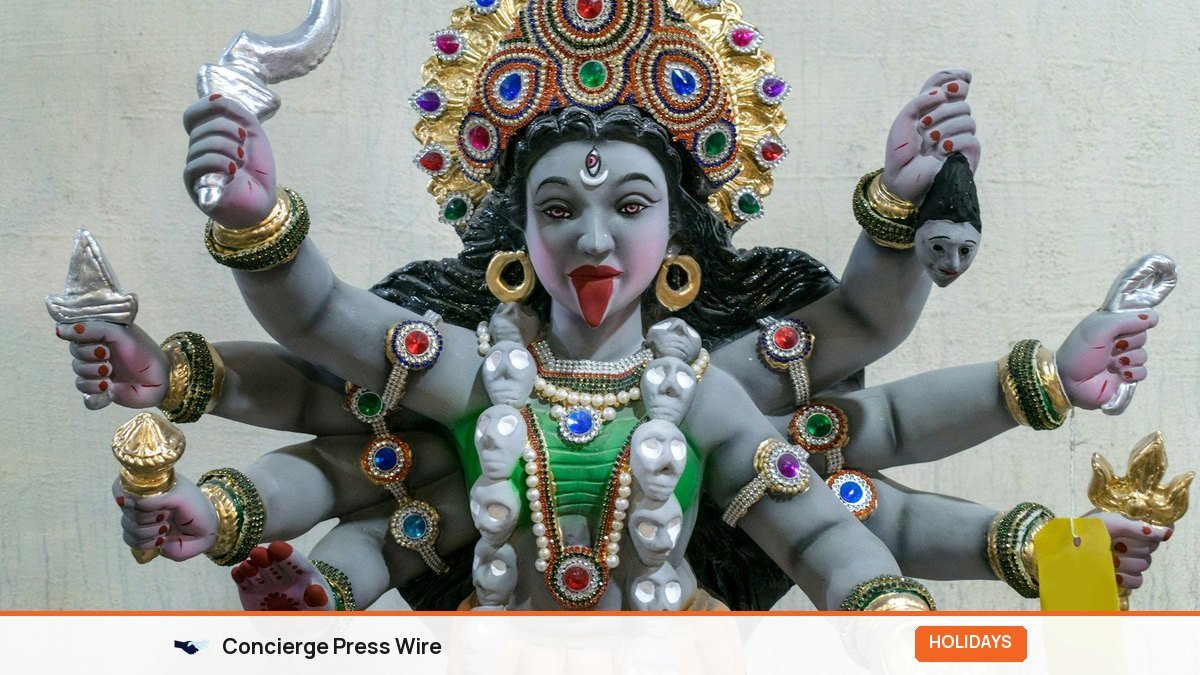
In most of north and west India, Amavasya night is about Lakshmi, prosperity and the new account books. In Bengal, Odisha and Assam, the same night belongs to Kali, the fierce form of the Goddess who destroys evil. The mood is different: the puja happens late at night, the idols are dark-skinned with a red tongue and a garland of heads, and the offerings include hibiscus (joba) flowers, which are associated with Kali.
Many Bengali homes still do a small Lakshmi Puja in the evening, sometimes called Dipanwita Lakshmi Puja, and then attend the Kali Puja at a pandal or temple after dark. Business families from Marwari, Gujarati and Punjabi communities in Kolkata usually do their Lakshmi-Ganesh and chopda puja on the same evening, so the city effectively celebrates both festivals at once.
Kali Puja rituals: a simple step-by-step
Home pujas vary widely by family tradition and almanac. The outline below is a general guide, not a priestly manual; follow your purohit or family practice where it differs.
- Prepare the space. Clean the puja room, draw an alpana (rice-paste design) at the entrance, and place the idol or a framed image of Ma Kali on a red cloth.
- Light lamps at dusk. Diyas and candles go on windows, balconies and the main door, as on Diwali.
- Sankalpa. At the start of the Nishita window, the person performing the puja states the intention, date and family name.
- Offerings. Common items are red hibiscus flowers and garlands, incense, a lamp of mustard oil or ghee, sindoor, fruit, sweets such as sandesh and rasgulla, and bhog.
- Bhog. Many households and pandals offer khichuri, labra (mixed vegetables), fried items and payesh. Some traditions offer fish or meat as bhog; others keep it strictly vegetarian.
- Mantra and aarti. Recitation of Kali mantras or the Chandi path, followed by aarti with conch shells and dhak drums.
- Pushpanjali. Family members offer flowers with folded hands while the priest chants.
- Prasad. Bhog is shared with family, neighbours and visitors after midnight or the next morning.
Some temples and traditions historically include animal sacrifice. Many community pujas now use symbolic offerings such as ash gourd, pumpkin or sugarcane instead. Visitors should simply follow the rules of the temple they visit.
A short samagri checklist
- Idol or framed picture, red cloth, small wooden stool
- 108 or 1,008 red hibiscus flowers (or as your family tradition requires), garlands
- Mustard oil, ghee, cotton wicks, earthen diyas
- Incense, camphor, sindoor, sandalwood paste
- Fruits, sweets, rice, lentils for khichuri bhog
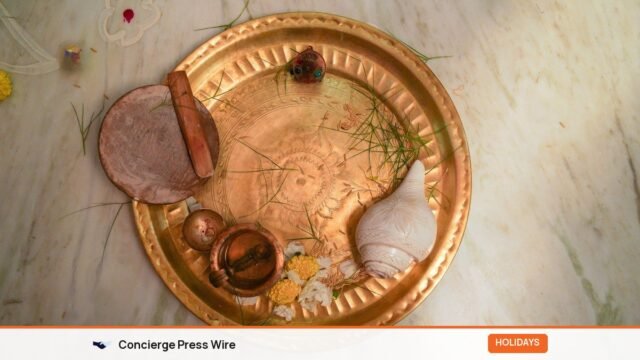
- Conch shell, bell, aarti plate
Kali Puja food: bhog, sweets and what families cook
Food on Kali Puja night depends heavily on the family and the pandal. A few patterns are common across Bengal:
- Khichuri bhog: the most familiar pandal offering, made with gobindobhog rice and moong dal, served with labra (mixed vegetables), beguni (fried brinjal) and chutney.
- Luchi and alur dom: a favourite at home after the puja, often eaten well after midnight.
- Sweets: sandesh, rasgulla, narkel naru (coconut balls) and payesh. Sweet shops in Kolkata stay open late on the night.
- Choddo shaak: the fourteen greens of Bhoot Chaturdashi, eaten the day before, usually stir-fried with mustard oil.
- Fish and meat: some families and community pujas include non-vegetarian bhog as part of their tradition; many others keep the day vegetarian, especially when Lakshmi Puja is also performed at home.
If you are hosting guests from outside Bengal, it helps to tell them in advance whether the bhog is vegetarian, and to keep a fruit or sweet option for anyone fasting. Home cooks should plan the khichuri for the late evening, since the bhog is offered during or after the Nishita window and served once the puja ends.
Where to experience Kali Puja in and around Kolkata
Kali Puja in Kolkata is quieter than Durga Puja but has its own crowd-pullers. Expect heavy footfall from about 8 PM to 2 AM.
- Kalighat Kali Temple: one of the most visited Shakti Peeth shrines; queues on Amavasya night can run for hours.
- Dakshineswar Kali Temple: on the Hooghly, linked to Sri Ramakrishna; very crowded on the night, so arrive early or visit the next morning.
- Barasat: known for elaborate theme pandals and lighting, about an hour north of central Kolkata.
- Naihati: the tall Boro Maa idol draws large crowds; local trains are packed.
- Tarapith (Birbhum): a major Shakti Peeth for those willing to travel; book stays well ahead.
Practical tips: use the Metro where you can, as roads near big pandals get closed; carry cash for small offerings; wear comfortable footwear because you will remove shoes at temples; and keep children close in crowds. Check Kolkata Police traffic advisories in the days before the festival for diversions.
Crackers, noise and pollution: be careful
Kali Puja and Diwali night is when firecracker use peaks in Bengal. Rules on which crackers are allowed, permitted hours and noise limits are set by courts, the state pollution control board and local police, and they can change each year. Before buying, check the latest West Bengal Pollution Control Board and police notices, buy only from licensed stalls, and keep a bucket of water and sand nearby. Pets, elderly relatives and people with asthma suffer most on this night, so consider quieter celebrations with diyas and lights.
For shop owners and small businesses
For traders in Bengal, the Kali Puja and Diwali week is one of the busiest sales periods of the year. A few planning points:
- Holidays: the West Bengal government’s 2026 calendar puts Kali Puja on a Sunday, so it adds no extra state holiday this year. Banks and offices may still be closed on nearby days; check your bank’s holiday list for Kolkata before scheduling payments.
- Stock timing: diyas, flowers, sweets and decorative lights sell from Dhanteras (6 November) to Kali Puja night. Flower prices, especially hibiscus, usually rise sharply on the day itself.
- Staff: plan shifts early; many staff want 8 November night and 11 November (Bhai Phonta) off.
- Customer messages: keep greetings simple and respectful, such as “Wishing you and your family a blessed Kali Puja and Shubho Dipaboli.” Avoid using deity images in discount banners.
- Accounts: if your business follows the Diwali new-year book tradition, schedule the chopda puja within your family’s preferred muhurat on 8 November.
Kali Puja 2026 vs 2025 and 2027
Because the festival follows the lunar calendar, its Gregorian date moves each year. In 2025, Kali Puja was celebrated on 20 October. In 2026 it shifts to 8 November because of the extra (Adhik) month in the Hindu calendar this year, which pushed the autumn festivals later. Durga Puja 2026 likewise moved into mid-to-late October. Expect it to move back towards late October in 2027; check Drik Panchang’s 2027 page when it is closer.
Frequently Asked Questions
Is Kali Puja on 8 or 9 November 2026?
Kali Puja is on Sunday, 8 November 2026. Amavasya begins at 11:27 AM that day and prevails at midnight, which is the rule for Kali Puja. The tithi ends at 12:31 PM on 9 November, so 9 November is used for Diwali Snan, not the main puja.
What is the Nishita muhurat for Kali Puja 2026 in Kolkata?
Drik Panchang gives 10:55 PM to 11:46 PM on 8 November 2026 for Kolkata, a window of about 51 minutes. Your family almanac may differ by a few minutes.
Are Kali Puja and Diwali on the same day in 2026?
Yes. Lakshmi Puja (Diwali) and Kali Puja both fall on Sunday, 8 November 2026. Many households do Lakshmi Puja in the evening and Kali Puja at night.
What is Shyama Puja?
Shyama Puja is another name for Kali Puja, used widely in Bengal. Shyama refers to the dark complexion of the Goddess.
When is Bhai Phonta in 2026?
Bhai Phonta (Bhratri Dwitiya) is on Wednesday, 11 November 2026. In Bengal it is usually observed on Dwitiya, which can sometimes fall a day apart from Bhai Dooj in north India; check your local panchang.
Can Kali Puja be done at home?
Yes. Many families perform a simple home puja with lamps, flowers, sweets and mantras during the Nishita window, or invite a purohit. Others offer prayers at home in the evening and visit a pandal or temple at night.
Plan your night around the Nishita window
The two numbers to remember are 8 November and the Nishita window for your city: 10:55 PM to 11:46 PM in Kolkata. Lamps go up at dusk, the main puja happens close to midnight, and the week wraps up with Bhai Phonta on 11 November. Timings in this guide were checked on Drik Panchang in October 2026; confirm against your family almanac or temple before the day, as local practice always comes first.