Shop and Establishment Registration: Gumasta Licence Guide
What shop and establishment registration is, who needs it, how Delhi, Maharashtra and Gujarat differ, the documents you need and how renewal works.
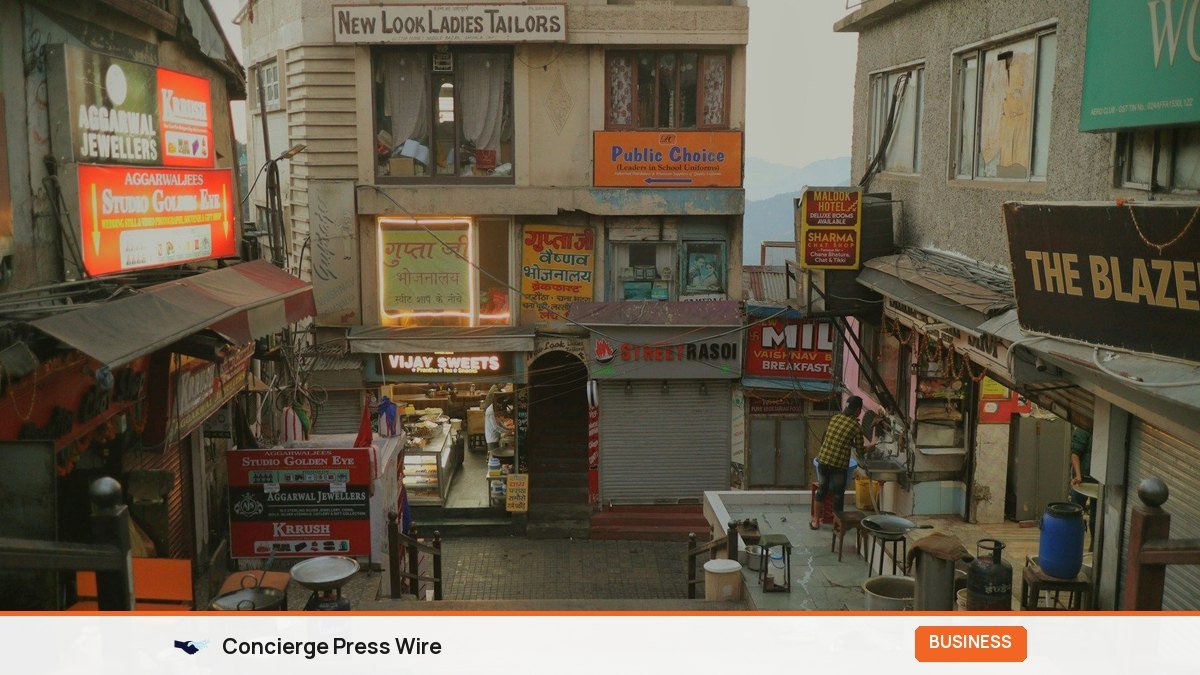
If you run a shop, office, clinic, salon, restaurant or almost any commercial premises in India, your state’s Shops and Establishments Act probably requires you to register or at least inform the labour department. This guide explains what the registration (often called a Gumasta licence) is, who needs it, how the rules differ in Delhi, Maharashtra and Gujarat, which documents to keep ready, and how renewal works, with a clear reminder that each state writes its own rules.
Key Takeaways
- Shops and Establishments Acts are state laws. Fees, forms, thresholds and renewal rules differ from state to state, so always check your own state’s labour department portal.
- Several states now exempt small establishments from full registration. In Maharashtra and Gujarat, units with fewer than 10 workers file a simple intimation instead.
- Delhi’s labour department says registration under the Delhi Shops and Establishments Act, 1954 is online, free and issued in real time without inspection.
- Banks often ask for this certificate to open a current account in your business name, which is why many new businesses get it in the first month.
- Keep PAN, ID and address proof of the owner, proof of the premises, photographs and employee details ready before you apply.
What Is Shop and Establishment Registration?
Every Indian state and union territory has a law that regulates working conditions in shops and commercial establishments: working hours, weekly holidays, overtime, leave, opening and closing times, and the employment of women at night. To bring businesses under this system, the law requires them to register with, or notify, the state labour department.
The certificate goes by different names. In Maharashtra and Gujarat people often call it a Gumasta licence or “shop act licence”. Elsewhere it may be called a shop licence, establishment registration or labour registration. It is different from a municipal trade licence, which a city corporation issues for the type of trade you carry on, and different from GST or Udyam registration.
Who usually needs it
- Retail shops, from kirana stores to showrooms
- Offices of companies, firms, consultants, CAs and IT businesses
- Restaurants, cafes, hotels and eating houses
- Salons, gyms, coaching centres and clinics
- Theatres and places of public amusement
- Warehouses and godowns attached to a business
Factories are generally covered by factory laws instead, and some states exempt specific categories such as government offices. A home-based business with no staff may or may not need to register, depending on the state’s definitions. When in doubt, read your state’s Act or ask the local labour office.
Why the Registration Matters
Many small business owners treat this as paperwork they can skip. In practice it comes up early:
- Bank accounts. Banks frequently ask for a shop and establishment certificate as proof of business when you open a current account for a proprietorship.
- Proof of business address. It is a commonly accepted document for other registrations, vendor onboarding with larger companies, and payment gateway applications.
- Labour compliance. It sets the base for the registers, holidays and leave rules your staff are entitled to.
- Penalties. Running without the required registration or intimation can attract penalties under your state’s Act. For example, a Khaitan & Co analysis of Gujarat’s 2019 Act notes that it raised the general penalty for non-compliance from Rs 250 to Rs 50,000.
If you are setting up a new business, it fits naturally alongside Udyam registration and GST. Food businesses will also need FSSAI, as our cloud kitchen setup guide explains.
State-Wise Rules: Three Examples
Because the rules vary so much, here are three states we checked in detail. Treat them as examples of how different the systems can be, not as a template for your state.
| State | Law | Who registers | Fee | Where to apply |
|---|---|---|---|---|
| Delhi | Delhi Shops and Establishments Act, 1954 | Shops and establishments in Delhi | Free, as per the Delhi labour department | Online through the labour department’s portal (labourcis.nic.in); certificate issued in real time |
| Maharashtra | Maharashtra Shops and Establishments (Regulation of Employment and Conditions of Service) Act, 2017 | 10 or more workers: registration. Fewer than 10: one-time intimation in Form F within 60 days of starting | Reported as no government fee; confirm on the portal | State labour department’s online services |
| Gujarat | Gujarat Shops and Establishments (Regulation of Employment and Conditions of Service) Act, 2019 | 10 or more workers: registration in Form A. Fewer than 10: intimation of commencement | Rs 500 for a commercial establishment; Rs 1,000 to Rs 5,000 for categories such as hotels, restaurants and theatres | Online, commonly through the state’s eNagar portal |
Delhi
The Delhi labour department’s service page states that registration of shops and establishments under the Delhi Shops and Establishments Act, 1954 is available online free of cost, is processed on a real-time basis, and that no physical inspection is carried out for registration through the department’s website. Secondary sources disagree on whether and when Delhi certificates need renewal, so check the current position on the portal when you apply.
Maharashtra
Maharashtra replaced its 1948 Act with a 2017 law that changed the approach for small businesses. Establishments employing fewer than 10 workers do not take a full registration. They file an online intimation in Form F, and the department issues an acknowledgement in Form G. Establishments with 10 or more workers apply for a registration certificate. Several sources report that the state charges no government fee for these applications. If you use an agent, you pay only for their service.
Gujarat
Gujarat’s 2019 Act and its 2020 Rules follow the model law on shops and establishments. According to a Khaitan & Co note on the Gujarat Rules, an employer with 10 or more workers applies in Form A, with a fee of Rs 500 for a commercial establishment and Rs 1,000 to Rs 5,000 for other categories, while establishments with fewer than 10 workers are exempt from most of the Act apart from intimation of commencement and closure. The same note says the Act allows shops to stay open all seven days, as long as every worker gets a weekly holiday of at least 24 consecutive hours.
Other states
Karnataka, Tamil Nadu, Telangana, West Bengal, Uttar Pradesh, Rajasthan and other states each have their own Act, forms and fees, and several have revised their laws in recent years. Search for “[your state] labour department shops and establishments registration” and use only the official government website or your state’s single-window business portal. Avoid paying unofficial sites that look like government portals.
Worked example (illustrative)
Take a salon in Surat that opens with six staff. Under Gujarat’s 2019 Act it falls below the 10-worker threshold, so it files an intimation of commencement rather than a full registration, and keeps the acknowledgement for its bank and vendor paperwork. A year later it opens a second floor and the team grows to 12. At that point it crosses the threshold and should apply for registration in Form A, pay the fee for its category, and start keeping the registers and weekly holiday notice the Act requires. Contrast that with a similar salon in Delhi, which would register online under the 1954 Act from the start, free of charge, whatever its staff count. Same business, two very different paths, which is why the first step is always to check your own state.
Documents You Will Usually Need
Exact requirements depend on the state, but most applications ask for the following. Scan them as clear PDFs or JPGs before you start.
| Document | Examples |
|---|---|
| Identity proof of owner, partners or directors | Aadhaar, PAN, passport, voter ID |
| PAN of the business | For firms, LLPs and companies |
| Proof of premises | Rent agreement with owner’s NOC, or property tax receipt, or electricity bill |
| Photographs | Owner’s photo; some states want a photo of the shop front with the name board |
| Constitution documents | Partnership deed, LLP agreement, or certificate of incorporation with MOA and AOA |
| Business details | Nature of business, date of starting, working hours, weekly off day |
| Employee details | Number of workers, split by men and women, sometimes with names |
How to Apply Online: Step by Step
The general process is similar across most states that have moved online:
- Find the right portal. Go to your state labour department’s website or the state single-window portal. Check the URL ends in gov.in or nic.in.
- Check which route applies. Count your workers honestly, including part-timers if the Act counts them. Decide whether you need registration or only intimation.
- Create a login. Usually with your mobile number and email, verified by OTP.
- Fill the form. Name of establishment, address, category, nature of business, date of commencement, employer details, worker count, working hours and weekly holiday.
- Upload documents. Follow the size and format limits shown on the portal.
- Pay the fee, if any. Online by UPI, net banking or card.
- Download the certificate or acknowledgement. Some states issue it instantly; others after review or inspection.
- Display it. Most Acts require the certificate to be displayed prominently at the premises.
Timelines to keep in mind
Many states require you to apply within a set period after starting business, commonly 30 or 60 days. Maharashtra’s Form F intimation, for example, is due within 60 days of commencing business. Do not wait until a bank asks for the certificate.
Renewal, Changes and Closure
Renewal is where state rules differ most:
- Some states have moved to one-time registration or lifetime validity, especially for small establishments filing an intimation.
- Others issue certificates for a fixed period, such as one or five years, and require renewal before expiry with a fee.
- Changes must be notified. If you change your business name, address, owner, nature of business or number of workers crosses a threshold, most Acts require you to inform the department within a set number of days.
- Closure must be notified. When you shut the shop or office, file the closure intimation so you are not treated as a running establishment.
Put the renewal date, if any, in your calendar with a 30-day reminder. Missing a renewal can attract late fees.
Common Mistakes to Avoid
- Confusing trade licence with shop act registration. They are separate. A restaurant in Ahmedabad, for example, deals with the municipal corporation for its trade or food-related licences and with the labour authorities for shop act compliance.
- Under-counting workers. If you have 12 staff and file as a small establishment with 8, you may face trouble during an inspection.
- Using the home address for a separate shop. The certificate must reflect the actual premises where business is carried on.
- Ignoring the registers. Registration is only the start. Most Acts require attendance, wages and leave records, and a notice of the weekly holiday.
- Paying a fake portal. Many private websites look official and charge for “registration”. Use only government domains or a known professional.
Frequently Asked Questions
Is the Gumasta licence the same as shop and establishment registration?
Yes. “Gumasta” is the popular term in Maharashtra and Gujarat for registration under the state Shops and Establishments Act. The legal name depends on your state’s law.
Do I need shop act registration if I work from home?
It depends on your state’s definitions and whether you employ anyone. Many states cover commercial activity at any premises, while some exempt businesses without workers. Check your state’s Act or ask the local labour office.
Is there a fee for shop and establishment registration?
It varies. Delhi’s labour department lists registration as free. Gujarat charges Rs 500 for a commercial establishment with 10 or more workers and more for some categories. Maharashtra is reported to charge no government fee. Confirm on your state’s portal.
Can I open a current account with only a shop act certificate?
Many banks accept it as one of the proofs of business for a proprietorship, often with a second document such as GST registration or Udyam. Ask your bank for its exact list.
How long does registration take?
Some states issue certificates instantly online, as Delhi does. Others take a few days or require an inspection. The intimation route for small establishments is usually the fastest.
What happens if I do not register?
You may face penalties under your state’s Act, and practical problems with banks and vendor registrations. Penalty amounts vary widely between states.
Check Your State, Then File Early
Shop and establishment registration is simple once you know your state’s rules: count your workers, find the official portal, gather a handful of documents, and file within the deadline. Because these are state laws that are amended from time to time, confirm fees, forms and renewal rules on your state labour department’s website, or with a CA or compliance professional, before you rely on any figure in this guide.