Air Purifier Buying Guide for Indian Homes: CADR, HEPA, Size
Choose the right air purifier for your room this winter using CADR, genuine HEPA grades and a simple running cost check, with no brand promotion.
To choose an air purifier for an Indian home, measure the room, then buy a model whose particle CADR (clean air delivery rate) is at least about two-thirds of the floor area in square feet, which is roughly 130 cfm or 220 m³/h for a 200 sq ft bedroom, with a genuine HEPA filter (H13 or better), no ozone-producing features, and filters you can afford to replace. This guide explains CADR and HEPA in plain language, gives a room size table in both cfm and m³/h, shows how to estimate the running cost, and lists the mistakes buyers make every winter. It contains no brand recommendations.
Key Takeaways
- CADR is the number that matters most. The US EPA’s sizing chart works out to a minimum CADR of about 0.65 cfm per square foot of floor area for an 8-foot ceiling.
- HEPA H13 filters are rated to capture at least 99.95 percent of particles at their most penetrating size under the European EN 1822 standard. H14 is rated at 99.995 percent. “HEPA-type” or “HEPA-like” claims are not the same thing.
- CADR covers particles only. For smells and gases you need a substantial activated carbon filter, and no rating system for gas removal is widely used.
- Avoid devices that deliberately produce ozone. The EPA advises against ozone-generating air cleaners.
- An air purifier helps indoors with doors and windows closed. It does not replace other steps on very polluted days. Anyone with asthma, heart or lung conditions should consult a doctor.
Updated October 2026. Sizing figures come from the US Environmental Protection Agency and the Association of Home Appliance Manufacturers (AHAM), the main published references for portable air cleaner performance.
Quick answer: what size air purifier do you need?
The table converts the EPA’s Guide to Air Cleaners in the Home sizing chart into the units you see on Indian product boxes. It assumes a standard 8 to 9 foot ceiling. Many Indian brands list CADR in m³/h; 1 cfm equals about 1.7 m³/h.
| Room size (sq ft) | Approx. (sq m) | Minimum CADR (cfm) | Minimum CADR (m³/h) | Typical room |
|---|---|---|---|---|
| 100 | 9.3 | 65 | 110 | Small study or kid’s room |
| 150 | 14 | 98 | 166 | Small bedroom |
| 200 | 18.6 | 130 | 221 | Standard bedroom |
| 250 | 23 | 163 | 276 | Large bedroom |
| 300 | 28 | 195 | 331 | Master bedroom or small living room |
| 400 | 37 | 260 | 442 | Living room |
| 500 | 46.5 | 325 | 552 | Large living-dining space |
| 600 | 56 | 390 | 663 | Open-plan hall |
These are minimums. In North Indian winters, when outdoor AQI often sits in the “Poor” to “Severe” range, it is sensible to go one size up so the purifier can work at a lower, quieter speed. A higher CADR than you need does no harm; it simply cleans the air faster.
CADR explained in plain language
CADR tells you how much clean, filtered air a purifier delivers per minute (cfm) or per hour (m³/h). It combines two things: how much air the fan moves, and how well the filter removes particles from that air. A powerful fan with a weak filter, or a great filter with a weak fan, both give a low CADR.
- Three CADR numbers. Under AHAM’s test, a purifier gets separate CADRs for tobacco smoke, pollen and dust. Smoke particles are the smallest and closest to the PM2.5 that troubles Indian cities, so look at the smoke CADR first.
- The two-thirds rule. AHAM’s air cleaner directory advises a tobacco smoke CADR of at least two-thirds of the room’s area in square feet. A 10 x 12 ft room (120 sq ft) needs a smoke CADR of at least 80. For ceilings higher than 8 feet, it advises choosing a unit rated for a larger room.
- Measured at top speed. The EPA notes CADR is typically measured at the highest fan speed. At night you will probably run it lower, so a bit of headroom helps.
- Particles only. CADR does not tell you anything about removal of gases, smells or VOCs.
Air changes per hour, the other way to check
You can also check how many times an hour the purifier can clean the full volume of the room. Multiply CADR in cfm by 60 and divide by the room volume in cubic feet. For example, a 200 sq ft bedroom with an 8 ft ceiling has 1,600 cubic feet. A purifier with a 130 cfm CADR gives 130 x 60 / 1,600, or about 4.9 air changes per hour. Around 4 to 5 is a reasonable target for a bedroom.
HEPA, H13, H14 and “HEPA-type”: what the labels mean
HEPA stands for high-efficiency particulate air. It is the filter that does most of the work in a good purifier. The labels can be confusing, so here is how they compare.
| Label | What it means | Rated efficiency |
|---|---|---|
| H13 (EN 1822) | European filter class, tested at the most penetrating particle size (MPPS) | At least 99.95 percent |
| H14 (EN 1822) | Higher European class, same test method | At least 99.995 percent |
| “True HEPA” (US usage) | Commonly refers to the US definition of 99.97 percent at 0.3 microns | 99.97 percent at 0.3 microns |
| “HEPA-type”, “HEPA-like”, “99 percent HEPA” | Marketing terms with no standard behind them | Unknown |
For most homes, an H13 filter is enough. H14 is better on paper, but the purifier’s seal and airflow matter just as much: a great filter in a leaky housing lets dirty air bypass it. That is why the measured CADR, which reflects the whole machine, is a better guide than the filter grade alone.
Pre-filter and activated carbon
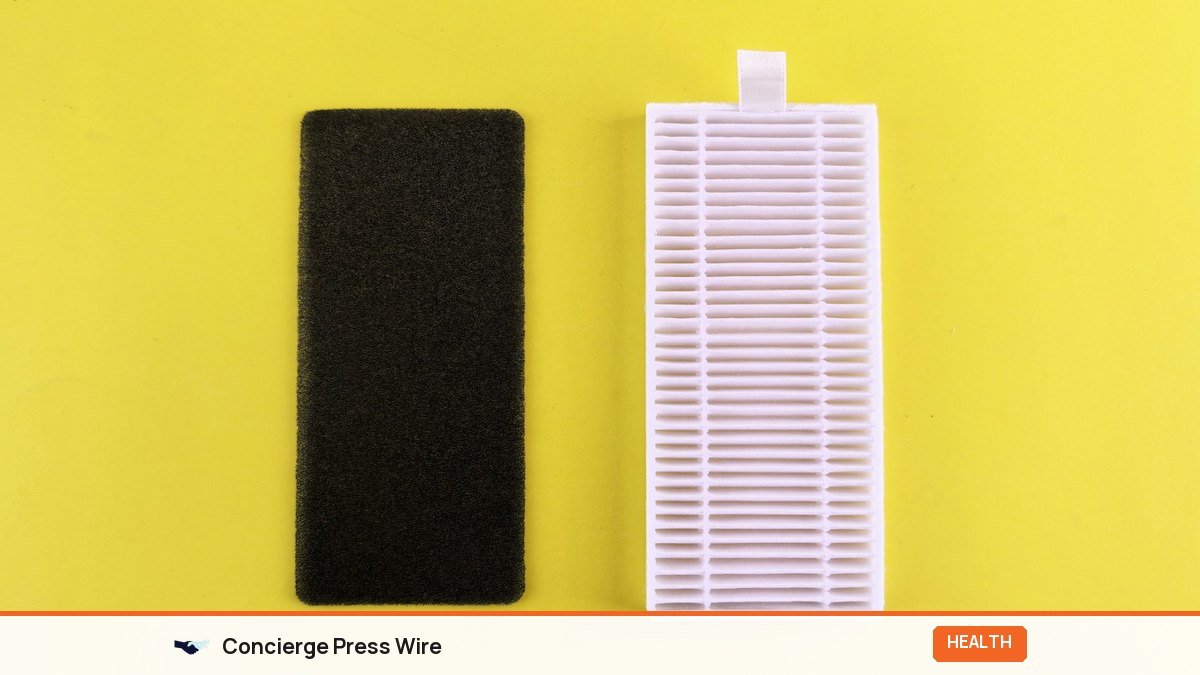
- Pre-filter: a washable mesh that catches hair, lint and big dust so the HEPA filter lasts longer. Clean it every few weeks.
- Activated carbon: absorbs smells, smoke odour and some gases. The EPA notes that carbon filters need enough material to be effective. A thin carbon-dusted sheet does little; a thick bed of carbon granules does more.
Features worth paying for, and ones to avoid
Worth having
- A PM2.5 sensor and auto mode. Useful for seeing trends and letting the machine adjust speed. Treat the number as an estimate, not a lab reading.
- Low noise on sleep mode. Look for the noise level in decibels at low speed if you will use it in a bedroom.
- Filter replacement indicator. Helpful, though most are timer-based rather than measuring the filter.
- Easily available filters. Check that genuine replacement filters are sold widely in India, and their price.
- Clear published CADR. A brand that states its smoke CADR, test standard and room size openly is easier to trust.
Avoid or be cautious with
- Ozone generators. The EPA advises avoiding air cleaners that intentionally produce ozone, a lung irritant, and notes some ionisers, electrostatic precipitators, uncoated UV lamps and plasma devices can emit it. If a product has an ioniser, check if it can be switched off.
- “Kills 99.9 percent of viruses” claims without a named test and lab.
- No CADR stated at all. Room size claims alone (“covers up to 500 sq ft”) are not enough, since the brand may assume fewer air changes per hour.
Running cost: electricity and filters
The purchase price is only part of the cost. Over three years, filters and power can add up to a large share of the total.
Electricity
Check the rated power (watts) on the label. As an illustration, a purifier drawing 50 W for 10 hours a day uses 0.5 kWh a day, or about 15 units a month. At an assumed Rs 8 per unit, that is about Rs 120 a month. Your actual tariff depends on your state and slab, and most purifiers use much less power on low speed.
Filters
HEPA and carbon filters are consumables. Manufacturers usually quote a life in hours or months, which shortens sharply when air is very polluted. Before you buy, note the replacement filter price and the brand’s suggested replacement interval, then work out the yearly cost.
| Cost item | How to estimate it | Example working (illustrative) |
|---|---|---|
| Electricity | Watts x hours per day x 30 / 1,000 x your rate per unit | 50 W x 10 h x 30 / 1,000 x Rs 8 = Rs 120 a month |
| HEPA filter | Filter price x replacements per year | Check the brand’s price and interval before buying |
| Carbon filter (if separate) | Filter price x replacements per year | Often replaced alongside HEPA |
| Pre-filter | Usually washable; minimal cost | Clean every few weeks |
Using your air purifier properly
- Close doors and windows in the room while it runs. A purifier cannot keep up with an open window on a high-AQI day.
- Place it with space around it, at least a foot or so from walls and furniture, and not behind a sofa or curtain.
- Run it continuously during polluted months, especially in the bedroom at night, rather than switching it on only when you feel unwell.
- Check outdoor AQI on the Central Pollution Control Board’s national AQI portal or app. India’s AQI bands run from Good (0 to 50) and Satisfactory (51 to 100) to Moderate (101 to 200), Poor (201 to 300), Very Poor (301 to 400) and Severe (401 to 500).
- Reduce indoor sources: avoid incense, mosquito coils and frying with the kitchen door open, and use the kitchen exhaust.
- Replace filters on time. A clogged filter lowers airflow and CADR.
Common buying mistakes
- Buying for the house instead of the room. One mid-size unit in the hall will not clean the bedrooms. Start with the room where you sleep.
- Trusting the “room size” claim without CADR. Always ask for the CADR and the test standard.
- Ignoring noise. If it is too loud on the speed that actually cleans your room, you will turn it down or off.
- Forgetting filter cost. A cheap machine with expensive or hard-to-find filters costs more over time.
- Expecting it to remove gases. CADR is about particles. Smell and gas removal depends on the amount of carbon, which is rarely rated.
- Opening the windows “to let fresh air in” on a severe AQI day and expecting the purifier to compensate.
Shop-floor checklist
Carry these questions to the store or keep them open while comparing online listings:
- What is the smoke CADR, and in which unit (cfm or m³/h)?
- Which standard was used to test it, and is there a test report?
- Is the main filter H13 or H14 under EN 1822, or only “HEPA-type”?
- How much activated carbon does the filter contain, if smells matter to you?
- What is the noise level on the lowest and highest speeds?
- What does a replacement filter cost, and how often does the brand suggest changing it?
- Does it have an ioniser or any ozone-producing feature, and can it be turned off?
For large open-plan homes, the EPA notes that more than one unit can be used to cover a bigger space. Two mid-size purifiers in separate rooms usually do more good than one large unit in a hallway.
Frequently Asked Questions
What CADR do I need for a 150 sq ft bedroom?
By the EPA chart, a minimum of about 98 cfm, or roughly 166 m³/h, for an 8-foot ceiling. During high-pollution months, choosing a model with a bit more CADR lets you run it on a quieter setting.
Is H13 HEPA enough, or do I need H14?
H13 is rated to capture at least 99.95 percent of particles at the most penetrating size and is enough for most homes. The purifier’s total CADR and how well it is sealed matter more than the step from H13 to H14.
Do air purifiers remove PM2.5?
A purifier with a real HEPA filter and adequate CADR can reduce PM2.5 indoors when doors and windows are closed. It cannot change outdoor air, and results depend on room size, leaks and how long it runs.
Should I keep the air purifier on all night?
During polluted months, yes, in the room where you sleep, with the door closed. Use sleep or low mode if noise bothers you, as long as the CADR at that speed still suits the room.
Are ionisers safe?
Some ionisers and other electronic air cleaners can produce ozone, which irritates the lungs. The EPA recommends avoiding devices that intentionally produce ozone. If your purifier has an ioniser, check whether it can be turned off.
Can an air purifier replace a mask outdoors?
No. A purifier only cleans air inside the room it is in. Outdoors, follow health advisories, and speak to a doctor about personal protection if you have a respiratory or heart condition.
Before you pay
Write down three things for every model you shortlist: smoke CADR (in cfm or m³/h), the HEPA grade and test standard, and the yearly cost of replacement filters. Match the CADR to the room using the table above, skip anything that relies on ozone, and buy for the bedroom first. If someone at home has asthma, COPD or a heart condition, talk to their doctor about what else they need this winter.