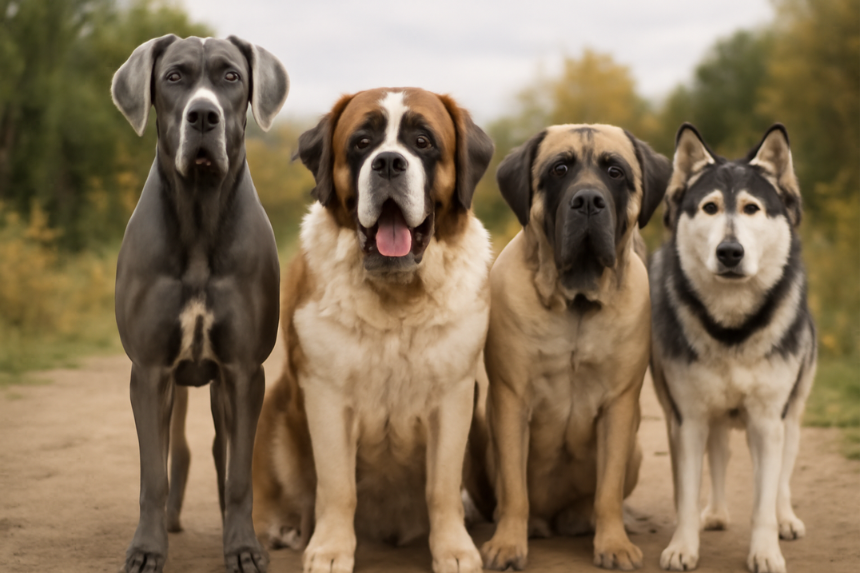
Big dogs have a way of making an even bigger impact on our hearts. Whether it’s their massive paws, warm eyes, or protective instincts, large dog breeds often get a bad rap for being “too much.” But truth be told, many of these gentle giants are just oversized cuddle buddies waiting for someone to love them.
- Benefits of Owning a Big Dog
- Things to Consider Before Getting a Large Dog
- Top 20 Big Dog Breeds
- More Big Dog Breeds Worth Knowing
- Training Tips for Large Big Dog Breeds
- Common Health Issues in Big Dogs
- How to Care for a Big Dog
- Living with a Big Dog in a Small Space
- Big Dogs and Kids: A Perfect Match?
- Are Big Dogs Good with Other Pets?
- Conclusion
- FAQs
There’s a common myth that big dogs are aggressive or hard to handle—but that’s far from the truth. Most large breeds are surprisingly calm, affectionate, and patient, especially with kids. In this article, we’ll explore 20 of the best big dog breeds, what makes them special, and how to care for them properly.
Benefits of Owning a Big Dog
They Make Great Protectors
Large dogs naturally have a commanding presence. Intruders usually think twice before crossing a threshold guarded by a 150-pound Saint Bernard or Mastiff.
Loyal to the Core
Big dogs are often extremely loyal and protective of their families. Once they bond with you, you’re theirs for life.
Affectionate and Gentle
Despite their size, many big dogs have gentle, even sensitive personalities. They often think they’re lapdogs and love to snuggle.
Things to Consider Before Getting a Large Dog
Space Needs
While some big dogs adapt well to apartments, most need space to stretch, walk, and play. A fenced yard is ideal.
Feeding and Grooming
Bigger dog = bigger appetite. Be prepared for higher food costs and frequent grooming, especially with breeds like the Newfoundland or Leonberger.
Health & Vet Costs
Large breeds tend to have shorter lifespans and are prone to specific health issues. Vet visits, joint supplements, and occasional surgeries can add up.
Top 20 Big Dog Breeds
1. Great Dane
Nicknamed “the Apollo of dogs,” the Great Dane can stand over 30 inches tall at the shoulder. Despite their intimidating size, they’re often referred to as gentle giants—laid-back, friendly, and great with kids.
2. Saint Bernard
Originally bred to rescue travelers in the Swiss Alps, these dogs are strong, patient, and gentle. They drool a bit (okay, a lot), but their loveable nature more than makes up for it.
3. Newfoundland
Known for their webbed feet and swimming skills, Newfoundlands are natural-born rescuers. They adore water and children, earning the nickname “nanny dog.”
4. Bernese Mountain Dog
These fluffy, tri-colored dogs are not only gorgeous but also great with families. They do best in cooler climates and need daily exercise to stay happy.
5. Mastiff
Mastiffs are massive—some can weigh up to 230 pounds! But don’t let that fool you. They’re often calm, patient, and even a little lazy indoors.
6. Irish Wolfhound
This is the tallest dog breed in the world. Despite their imposing height, Irish Wolfhounds are soft-hearted and incredibly loyal. They don’t bark much and are surprisingly good with small animals.
7. Leonberger
With their lion-like manes and playful personalities, Leonbergers are great family pets. They’re known to be kind, gentle, and eager to please.
8. Alaskan Malamute
Bred to haul freight across the Arctic, Malamutes are tough, strong, and built for cold weather. They need a lot of exercise and aren’t ideal for first-time dog owners.
9. Anatolian Shepherd
This Turkish breed is a livestock guardian through and through. They’re independent, alert, and very protective of their families.
10. Tibetan Mastiff
Used to guard monasteries in the Himalayas, these ancient dogs are aloof, powerful, and very territorial. They’re not a beginner’s breed but make fierce protectors.
More Big Dog Breeds Worth Knowing
11. Cane Corso
This Italian Mastiff breed is a powerhouse. Loyal, alert, and a great family protector if trained early.
12. Komondor
Known for their “mop-like” appearance, Komondors were bred to guard sheep. Their unique coat needs serious grooming.
13. Kuvasz
An elegant Hungarian breed, Kuvasz dogs are protective, intelligent, and independent.
14. Greater Swiss Mountain Dog
A cousin to the Bernese, these dogs are energetic, affectionate, and great with kids.
15. Boerboel
A South African working breed known for being fearless yet gentle with their families.
16. Dogue de Bordeaux
Made famous by the movie Turner & Hooch, this breed is strong, drooly, and extremely loyal.
17. Akita
A noble and dignified breed from Japan, Akitas are aloof with strangers but deeply bonded to their owners.
18. Rottweiler
Smart, confident, and powerful—Rottweilers are often misunderstood but thrive with structure and training.
19. Belgian Malinois
Though slightly smaller, they’re so active and muscular that they feel like a large breed. Often used in police and military work.
20. German Shepherd
One of the most versatile breeds around. Smart, trainable, and fiercely loyal.
Training Tips for Large Big Dog Breeds
Training should start early and be consistent. Use positive reinforcement, short sessions, and be patient. Socialize your pup early so they grow into a well-mannered adult.
Common Health Issues in Big Dogs
Big dogs are prone to:
- Hip Dysplasia
- Elbow Dysplasia
- Bloat (Gastric Dilatation-Volvulus)
- Heart Conditions
Annual vet check-ups and preventive care go a long way.
How to Care for a Big Dog
- Feed high-quality food formulated for large breeds.
- Brush regularly to keep shedding in check.
- Exercise daily: long walks, fetch, swimming, or hiking.
- Use orthopedic dog beds to support their joints.
Living with a Big Dog in a Small Space
While not ideal, it is possible!
- Choose low-energy breeds (Great Danes, Mastiffs).
- Ensure daily outdoor exercise.
- Use crate training and provide interactive toys.
- Keep furniture minimal to give them room.
Big Dogs and Kids: A Perfect Match?
Yes, but supervision is key. Teach kids how to:
- Approach gently
- Avoid pulling ears/tails
- Not disturb during meals or sleep
Many large breeds are patient and tolerant, but kids should be respectful too.
Are Big Dogs Good with Other Pets?
That depends on the breed and socialization. Early introductions and training help. Some are very friendly (Newfoundlands), while others need more guidance (Tibetan Mastiff).
Conclusion
Big dogs might take up more space, eat more food, and require stronger leashes, but they give back tenfold with loyalty, love, and unforgettable companionship. Whether you’re looking for a gentle family companion or a steadfast protector, there’s a big dog breed out there perfect for you.
FAQs
1. Are big dog breeds hard to train?
Not necessarily. Many large breeds are intelligent and eager to please. Consistency is key.
2. Do large dogs need more exercise?
Most do. Breeds like Malamutes and Shepherds need daily activity, while Mastiffs are more laid-back.
3. How much does it cost to own a big dog?
Expect higher costs in food, vet bills, grooming, and larger supplies (beds, crates, etc.). It’s a big investment—literally.
4. Which big dog breeds are best for first-time owners?
Try a Bernese Mountain Dog, Newfoundland, or Great Dane—they’re gentle and forgiving with training mistakes.
5. Can big dogs live in apartments?
Yes, with proper exercise and attention. Look for low-energy breeds and commit to daily walks.