How to Announce a New Branch or Store in India: Media Plan
A 30-day plan to announce a new branch, store or office in India, covering paperwork, Google Business Profile, local media and a ready-to-edit announcement template.
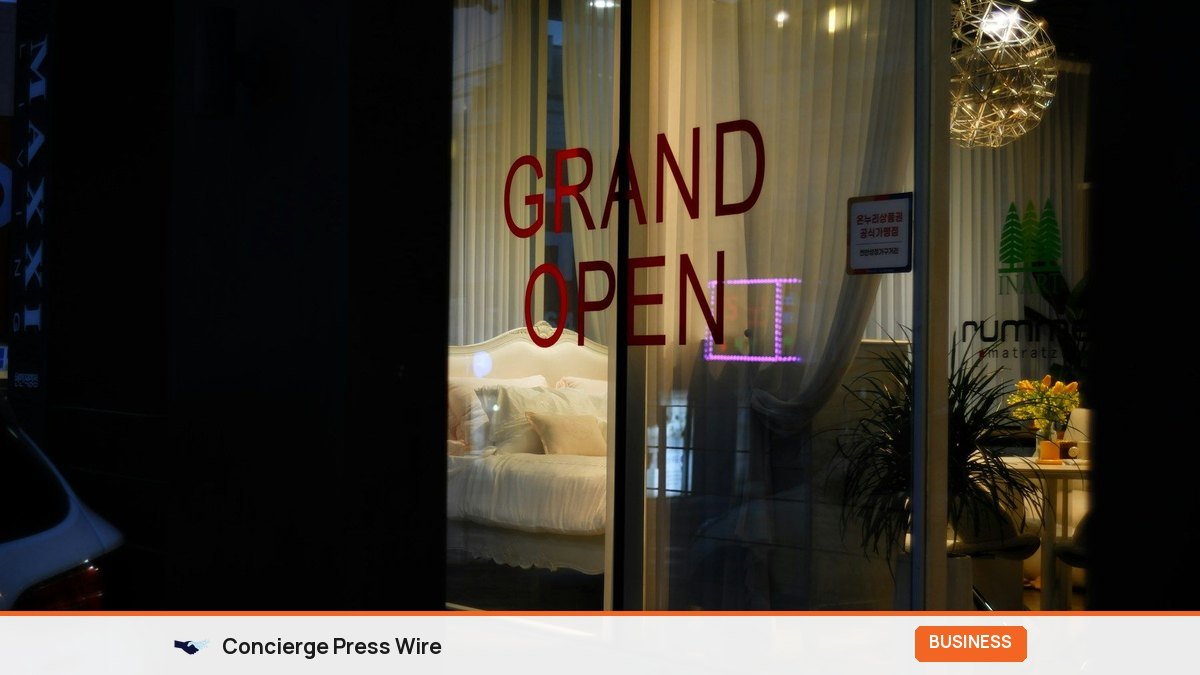
To announce a new branch, store or office in India, work in three layers: get the compliance and Google Business Profile listing right first, then reach local media and community channels two to three weeks before opening, and finally convert the launch-week buzz into reviews and repeat visits. This guide gives you a 30-day timeline, a local media plan for Indian cities and towns, a ready-to-edit announcement template, and the exact Google Business Profile steps so customers can actually find the new location.
Key Takeaways
- Sort paperwork before publicity: if you are GST-registered, the new premises must be added as an additional place of business through Form GST REG-14 within 15 days of the change.
- Create and verify a separate Google Business Profile for the new location before you announce it; verification can take days.
- Local newspapers, city news pages on Instagram, resident WhatsApp groups and trade associations usually beat national media for a single-store opening.
- Send the media note 7 to 10 days before opening with photos, address, opening date and one genuine local angle.
- Track footfall, calls and direction requests for the first 30 days so you know which channel actually worked.
Start with what has to be legally ready
A launch that gets coverage but leaves the paperwork half-done creates problems later: invoices from an unregistered address, a signboard that does not match records, or a Google listing that fails verification. Close these items before your announcement date.
| Item | Why it matters | Typical timing |
|---|---|---|
| GST: additional place of business | Under Rule 19 of the CGST Rules, changes to registration particulars are filed in Form GST REG-14 within 15 days; a new premises is a core-field amendment approved by the officer. | File as soon as the premises is in use; keep the rent agreement and utility bill ready. |
| Shops and Establishments registration | Each state has its own Act; most require registration of each shop or office within a set period of opening. | Check your state labour department portal. |
| Trade licence from the municipal body | Required by most city corporations for commercial premises. | Apply before opening; timelines vary by city. |
| FSSAI licence (food businesses) | Each premises handling food needs its own registration or licence. | Before you start selling. |
| Signage permission | Large hoardings or illuminated boards may need municipal approval. | Before installing. |
Rules differ by state and sector, so confirm the list with your CA or a local consultant. The point here is order: compliance first, publicity second.
Set up the Google Business Profile for the new location
For a physical store, the Google Business Profile listing is often the single most important part of the announcement, because it decides whether someone searching “bakery near me” or “CA office in Wakad” finds you. Each location needs its own profile.
- Add the location. Go to business.google.com/add and follow the steps described in Google’s guide to adding or claiming a Business Profile. If a listing for that address already exists (customers sometimes add one), claim it instead of creating a duplicate.
- Use the exact name on your signboard. Do not stuff keywords into the name. “Sharma Sweets, Kharadi” is fine if that is what the board says; “Sharma Sweets Best Mithai Shop Pune” is not.
- Drop the pin carefully. In Indian markets, the auto-pin often lands on the wrong lane or building. Zoom in and place it on the entrance.
- Pick the primary category that describes the location’s core business, then add two or three secondary ones.
- Add hours, including opening date. Set the hours that will apply after opening. Google lets you set a future opening date so the profile can appear before you open.
- Verify. Choose the verification method Google offers (video, phone, email or postcard, depending on the business). Start early: verification can take days, and Google may double-check phone numbers in India.
- Add photos. Exterior with signboard (helps people recognise the shop), interior, team and products. Real photos beat stock images.
- Link from your website. Add a location page with the same name, address and phone number as the profile.
Google reviews edits before they go live, and a change of name or address after verification can trigger re-verification, as Google’s profile editing help page explains. Get the details right the first time.
The 30-day announcement timeline
Here is a timeline that works for most single-location openings in Indian cities. Adjust if your launch coincides with a festival, when media space is crowded.
| When | Task |
|---|---|
| Day -30 | Lock opening date; file GST amendment; start Google Business Profile; book photographer. |
| Day -21 | Prepare announcement note, fact sheet and photos; list 10 to 20 local media and community contacts. |
| Day -14 | “Coming soon” signage and posts; invite neighbours, resident welfare associations and local business owners to the opening. |
| Day -10 to -7 | Send the media note to local papers, city news pages and trade bodies; follow up once by phone. |
| Day -3 | Confirm guest list; brief staff on what to say if a journalist or influencer visits. |
| Day 0 | Opening event; photos and short videos; post on all channels within two hours. |
| Day +1 to +7 | Send opening-day photos to media who covered or showed interest; ask happy first customers for reviews. |
| Day +30 | Review what drove footfall and calls; decide on a second push. |
A local media plan that fits Indian cities
A new store in Nagpur or a second clinic in Thane is local news. National business papers rarely cover single openings unless the brand is large or the launch has a wider story. Spend your time where the readers actually live.
Tier 1: hyperlocal and city channels
- City supplements and local editions of Hindi, Marathi, Gujarati, Tamil, Bengali and other regional language dailies. Many have a “city” or “business briefs” column.
- Neighbourhood newspapers and free weekly tabloids that circulate in specific areas of large cities.
- City-focused Instagram pages and YouTube channels (food, shopping, “what’s new in Indore” type pages). Many charge for posts; label any paid post clearly as an ad or collaboration.
- Local cable channels and FM radio in tier 2 and 3 towns, where they still have strong reach.
Tier 2: community channels
- Resident welfare associations, society WhatsApp groups and apartment notice boards (ask the committee first).
- Local trade associations, chambers of commerce, and the market association if you are in a commercial street.
- Rotary, Lions and other service clubs, which often welcome a new business member.
- Schools, colleges and gyms nearby, for relevant categories.
Tier 3: industry and wider media
If the opening means something bigger, such as your first branch outside your home state, a large investment, or a format no one in the city has, pitch trade publications in your sector and the business pages. The guide to press release distribution in India covers how wider distribution works.
What makes a new-branch story worth printing
“We are opening a new store” is an advert, not a story. Editors look for something their readers will care about. Find at least one of these angles:
- Jobs: how many local people you have hired.
- First in the area: the first of its kind in the locality, if it is true and you can show it.
- Local roots: a founder from the same town returning to open the branch.
- Community link: a free health check, a library corner, a tie-up with a local school.
- Growth milestone: your fifth branch, or your first outside the home city.
- Customer demand: for example, “we opened in Baner because 40% of our online orders came from this area” (only with your own real data).
Announcement template you can adapt
Keep it to one page. Use plain facts, one quote that sounds like a person, and complete contact details. For structure and tone, the step-by-step guide to writing a press release in India goes deeper; the template below is tuned for openings.
FOR IMMEDIATE RELEASE
[Brand name] opens its [number/first] [store/branch/office] in [locality, city]
[One-line subhead with the local angle, e.g. “New outlet creates 18 local jobs and adds a children’s reading corner”]
[City], [date]: [Brand name], a [one-line description, e.g. Pune-based chain of organic grocery stores], will open its [new branch] at [full address with landmark] on [day, date] at [time]. The [store/office] will [what it offers, in one or two sentences].
[Second paragraph: the local angle with facts, e.g. number of jobs, size of the store, products or services specific to this branch, any community initiative.]
“[Quote from founder or branch head that says why this location, in natural language],” said [Name], [Designation], [Brand name].
[Opening offer or event details, if any, stated plainly: date, time, who can attend.]
About [Brand name]: [Two or three lines: founding year, number of locations, what you do.]
Media contact: [Name, phone, email]. Photos of the new [store] are available on request.
Attach three to five high-resolution photos: exterior with signboard, interior, founder or team, and a product shot. Name the files clearly (“brandname-baner-store-exterior.jpg”). For more filled-in formats, see these press release samples for Indian businesses.
Translate for regional media
If you are opening in Surat, Coimbatore or Lucknow, send a version in Gujarati, Tamil or Hindi along with the English one. A clean regional-language note saves the reporter time and shows respect for the readership. Have a native speaker check it; machine translation of names and addresses often goes wrong.
Opening-day plan that creates content
The opening itself should produce photos, videos and quotes you can use for weeks. A simple plan:
- Ribbon-cutting or puja: invite a respected local figure, such as a long-time customer, a school principal or the market association head. It gives local media a reason to attend.
- Clear signage: make sure the signboard is visible in photos; it helps people recognise the shop later.
- A short video tour filmed vertically for Instagram Reels and YouTube Shorts.
- Staff introductions: customers like knowing the branch manager’s name.
- Review requests: ask genuinely satisfied first customers to leave a Google review; do not offer rewards for reviews or post fake ones, which breaks Google’s policies.
Track what worked
Most small businesses never find out which part of their launch brought customers in. Set up simple tracking before day zero:
| Channel | What to measure | How |
|---|---|---|
| Google Business Profile | Calls, direction requests, website clicks | Profile performance view |
| Newspaper or city page | Walk-ins mentioning it | Ask at billing: “How did you hear about us?” |
| WhatsApp groups | Enquiries | Use a dedicated WhatsApp Business number or a coupon code |
| Profile visits, DMs, saves | Instagram insights | |
| Opening offer | Redemptions | Unique code per channel |
Frequently Asked Questions
Do I need a separate GST registration for a new branch in the same state?
Usually no. A branch in the same state can be added as an additional place of business under your existing GSTIN through an amendment in Form REG-14. A branch in a different state generally needs its own registration in that state. Confirm your case with a CA.
Should a new branch have its own Google Business Profile?
Yes. Each physical location that serves customers should have its own profile with its own address, phone number and hours, so it can appear in local searches for that area.
When should I send the announcement to local newspapers?
Seven to ten days before opening works well for most local papers. Follow up once by phone two days later, and send opening-day photos the same evening.
Is paying a local Instagram page for a post worth it?
It can be for food, retail and lifestyle businesses in cities. Ask for the page’s recent post insights, start with one post, and track with a unique code. Make sure the post is labelled as a paid collaboration.
What if my opening date changes?
Tell every reporter you contacted, update your Google Business Profile opening date and hours, and post a short update on social media. A quiet date change that leaves people at a closed shutter does more harm than a short delay.
Can I announce an office opening the same way as a store?
Yes, but the angle changes. For an office, focus on jobs created, clients served in that region and hiring plans. Trade publications and LinkedIn usually matter more than city lifestyle pages.
Make the first month count
A good launch is less about one big splash and more about doing the basics in the right order: paperwork, a verified Google listing, a short local story with real photos, and steady follow-up for 30 days. Start the clock a month out, keep the message local and specific, and measure where your first customers came from so the next branch costs less to launch.